


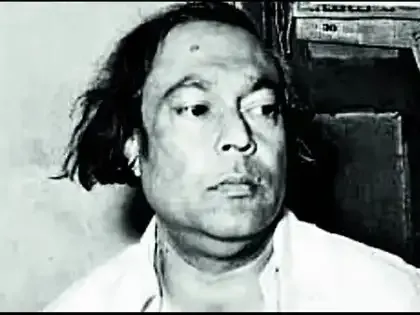
Most of literary, never mind literate, India hasn't heard of Shibram Chakraborty. To be fair, why should it? This notoriously difficult-to-translate Bengali writer - his genius with word-play and gift of the dead-pan makes him a class by himself - is anyway available only in a couple of English editions. But even among Bengali readers who have read him, Shibram's reputation as a children's comic writer eclipses his status as one of India's greatest writers.
His name popped into my head earlier this week when I was out in my Kolkata neighbourhood for a quick phuchka and walked into a BJP victory rally. Amid the jollity and a very jagran-sounding song with the chorus line, 'Hindu hain hum!' playing on loudspeakers, there were celebratory 'Jai Sri Ram!'s being flung happily into the gerua Garia air. In the holler of 'Jai Sri Ram!' I heard, 'Jai Shibram!'
The thought of Kolkata finally loudly celebrating the greatness of Shibram Chakraborty gave me no little pleasure.
Shibram's writing falls into the curious zone of 20th c. populist literature and deceptively sharp social satire. His creation of two wealthy Bengali brothers from Assam, Harshavardhan and Govardhan, are cultural icons at par with Laurel and Hardy, Beavis and Butthead, Vladimir and Estragon. Their experiments in truth in the big city - compounded by the regular frustration of not being able to spend enough of their vast sums of money there - has Shibram take the Bengali's pride in all things cultural, turn it upside down, and shake out every last sikka out of the bhadralok's dhoti pockets.
The most searing Shibram story has to be 'Debotar Jonmo,' (Birth of the Deity). It tells the story of a narrator tripping on a stone on his way home and almost falling under an approaching car. In his effort to remove the stone, he uses a shovel to dig up and flatten the footpath from which it was sticking out. A crowd gathers, including a gentleman who takes special care to see that the stone is safe under a nearby peepal tree.
Over the next few days, our narrator notices the stone's 'evolution' into a shiv ling. Soon, a temple is built around it, and the gentleman who had first shown an unusual interest in the stone has become its saffron-clad, tilak-ticked, rudraksh-wearing custodian. Over time - and after an epidemic scare - our sceptical narrator, too, becomes a believer of the stone being a manifestation of Trilokeshwar Shiv, Swambhu who has risen out of the earth.
The searing irreverence in Shibram's writings is worn lightly. It's conversational comedy of the highest form that pretends to not recognise itself as comedy. In 'Gokhale, Gandhiji and Gobindababu,' he writes of a Kolkata resident, whom Gopal Krishna Gokhale would regularly reach out to whenever he or one of his relatives visited the city, being given the task of taking a Mohandas Karamchand Gandhi around town.
At the station, Gobindababu is thoroughly unimpressed with this Mohandas, whom he thinks to be some sort of durwan. Nevertheless, the two go about the city, with Gobindababu increasingly irritated by his 'subaltern' companion.
The two of them have an altercation with a racist Englishman on a bus. Despite being impressed by Mohandas' courage in putting his feet up to him, he's irritated by his refusal to return a physical blow with physical blow as Gobindababu did. His surprise on being told by Gokhale later that this Mohandas is the South Africa-returned Gandhi was, Shibram writes, 'perhaps the most unprepared anyone in the history of the world has been'.
Much has, of late, been talked about of Bengali pride, and a new dispensation in Kolkata chaperoning it into the gleaming future. Shibram's intensely urban, modernist take on Bengali - and human - foibles can serve as a perceptive template. His memoir, 'Ishwar, Prithibi, Bhalobasha' (God, World, Love) remains a testament to being humane, far from the foppery of the much-mythologised bhadralok-class.
Which is all the more reason why the crumbling, decrepit building at 134 Muktaram Babu Street in north Kolkata, the mess house where the eternally financially-strapped bachelor lived most of his life till his death in 1980 must be renovated. Turn it into a museum celebrating the great writer, a place where laughter is worshipped without fear, favour, or fervour. Jai Shibram!
His name popped into my head earlier this week when I was out in my Kolkata neighbourhood for a quick phuchka and walked into a BJP victory rally. Amid the jollity and a very jagran-sounding song with the chorus line, 'Hindu hain hum!' playing on loudspeakers, there were celebratory 'Jai Sri Ram!'s being flung happily into the gerua Garia air. In the holler of 'Jai Sri Ram!' I heard, 'Jai Shibram!'
The thought of Kolkata finally loudly celebrating the greatness of Shibram Chakraborty gave me no little pleasure.
Shibram's writing falls into the curious zone of 20th c. populist literature and deceptively sharp social satire. His creation of two wealthy Bengali brothers from Assam, Harshavardhan and Govardhan, are cultural icons at par with Laurel and Hardy, Beavis and Butthead, Vladimir and Estragon. Their experiments in truth in the big city - compounded by the regular frustration of not being able to spend enough of their vast sums of money there - has Shibram take the Bengali's pride in all things cultural, turn it upside down, and shake out every last sikka out of the bhadralok's dhoti pockets.
The most searing Shibram story has to be 'Debotar Jonmo,' (Birth of the Deity). It tells the story of a narrator tripping on a stone on his way home and almost falling under an approaching car. In his effort to remove the stone, he uses a shovel to dig up and flatten the footpath from which it was sticking out. A crowd gathers, including a gentleman who takes special care to see that the stone is safe under a nearby peepal tree.
Over the next few days, our narrator notices the stone's 'evolution' into a shiv ling. Soon, a temple is built around it, and the gentleman who had first shown an unusual interest in the stone has become its saffron-clad, tilak-ticked, rudraksh-wearing custodian. Over time - and after an epidemic scare - our sceptical narrator, too, becomes a believer of the stone being a manifestation of Trilokeshwar Shiv, Swambhu who has risen out of the earth.
The searing irreverence in Shibram's writings is worn lightly. It's conversational comedy of the highest form that pretends to not recognise itself as comedy. In 'Gokhale, Gandhiji and Gobindababu,' he writes of a Kolkata resident, whom Gopal Krishna Gokhale would regularly reach out to whenever he or one of his relatives visited the city, being given the task of taking a Mohandas Karamchand Gandhi around town.
At the station, Gobindababu is thoroughly unimpressed with this Mohandas, whom he thinks to be some sort of durwan. Nevertheless, the two go about the city, with Gobindababu increasingly irritated by his 'subaltern' companion.
The two of them have an altercation with a racist Englishman on a bus. Despite being impressed by Mohandas' courage in putting his feet up to him, he's irritated by his refusal to return a physical blow with physical blow as Gobindababu did. His surprise on being told by Gokhale later that this Mohandas is the South Africa-returned Gandhi was, Shibram writes, 'perhaps the most unprepared anyone in the history of the world has been'.
Much has, of late, been talked about of Bengali pride, and a new dispensation in Kolkata chaperoning it into the gleaming future. Shibram's intensely urban, modernist take on Bengali - and human - foibles can serve as a perceptive template. His memoir, 'Ishwar, Prithibi, Bhalobasha' (God, World, Love) remains a testament to being humane, far from the foppery of the much-mythologised bhadralok-class.
Which is all the more reason why the crumbling, decrepit building at 134 Muktaram Babu Street in north Kolkata, the mess house where the eternally financially-strapped bachelor lived most of his life till his death in 1980 must be renovated. Turn it into a museum celebrating the great writer, a place where laughter is worshipped without fear, favour, or fervour. Jai Shibram!



Indrajit Hazra
Editor, Views