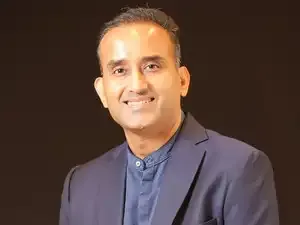
Rohit Jain of Lionsgate Play
Streaming platform Lionsgate Play, which recently transitioned from Lionsgate ownership to a management-led buyout led by long-time executive Rohit Jain, is targeting the creation of at least Rs 1,000 crore worth of intellectual property over the next few years as it sharpens its India ambitions with a stronger push into premium content, AI-led production and multi-platform monetisation.
The company is looking to transform itself from a distribution-focused streamer into a full-stack entertainment company with a sharper focus on franchise-building, original content and technology-led storytelling.
Speaking after taking full ownership of the business, Jain said the move to a founder-led structure would help accelerate growth plans that were earlier constrained by global priorities.
He indicated that his role has also evolved from largely running operations to now overseeing long-term investment decisions as the company scales up spending on content, AI infrastructure and franchise creation. While he acknowledged that streaming remains a capital-intensive business with long gestation periods, he did not indicate any immediate plans to raise external funding.
Also read | Beyond the Boundary: AI, influencers rewrite the cricket playbook
Lionsgate will continue to own and operate its film and television distribution business across India and Southeast Asia.
Over the years, Lionsgate has invested an estimated $100 million in its streaming operations in the region.
Under a multi-year agreement, Lionsgate will continue licensing the Lionsgate Play brand and provide access to its film and television catalogue, enabling the company to continue scaling its operations in the region.
“Some things have changed, some haven’t, and some will now accelerate,” Jain told ET, adding that several global media companies are reassessing where they deploy capital and management bandwidth. “We reached a point where business priorities and shareholder priorities were different, and both perspectives were valid in their own way.”
Jain said Lionsgate Play would continue to retain its focus on action, crime and thriller content targeted largely at the 20-45 age group while sharply scaling up investments.
The company plans to more than double its annual movie slate from around 50-60 films last year to over 100 titles this year. The company clarified that content from Lionsgate Studios forms only a small part of its overall catalogue, with programming sourced from several global studios and production houses, including ITV, BBC, Millennium Media and AGC Studios.
The company is also renewing its focus on Indian originals after pausing productions last year amid shifting global priorities. It has resumed investments in Hindi films as well as regional cinema, including Tamil and Telugu content.
Also read | Streaming firms eye one-stop shops to build scale and profitability
At the core of the new strategy is a plan to build a large intellectual property portfolio spanning content, technology and distribution.
“We’re gradually transforming into a deeply IP-led, multi-platform company,” Jain said, adding that the business would increasingly monetise content across streaming, theatrical releases, television, YouTube, gaming and other formats.
Jain said the company has already built its entire technology stack in-house and is now developing an AI-led studio and production workflow, positioning artificial intelligence as a tool that democratises production budgets rather than replacing creativity.
“AI is not going to replace anything. It will become an extension of the existing ecosystem,” Jain said. “What it does is allow us to tell stories that we may not otherwise have been able to tell.”
Among the projects currently under development is a superhero universe spanning comics, films, series and gaming, backed by four National Award-winning directors.
Despite intensifying competition from deep-pocketed global and domestic streaming giants, the company said it is not looking to compete directly with mass-market platforms such as Netflix, Amazon Prime Video and JioHotstar. Instead, it plans to deepen its positioning among premium young adult audiences.
Jain said the company currently has around five million paying subscribers and is targeting 15 million over time.
“Our positioning is very clear. We cater primarily to the 20-40 male-skewed audience,” he said, adding that the company remains focused on premium storytelling rather than chasing scale at any cost.
The company also plans to expand internationally in Southeast Asia, which it sees as a promising streaming market.
While several streaming services are increasingly adopting hybrid advertising-supported models, Lionsgate Play said it intends to remain subscription-focused for now, arguing that advertising may not align with its premium brand positioning.
According to Tofler data, Lions Gate Play LLP, which operates Lionsgate Play in India, reported a 57% decline in net loss to Rs 26 crore in FY25, while operating revenue fell more than 7% to Rs 75 crore.
Commenting on the broader streaming industry, Jain said the market had moved beyond the aggressive “land-grab” phase where films were recovering costs even before release through streaming deals.
“The phase of subsidisation is over. The economics are now returning to what they should be. Make good cinema and make your money,” he said.
The company is looking to transform itself from a distribution-focused streamer into a full-stack entertainment company with a sharper focus on franchise-building, original content and technology-led storytelling.
Speaking after taking full ownership of the business, Jain said the move to a founder-led structure would help accelerate growth plans that were earlier constrained by global priorities.
He indicated that his role has also evolved from largely running operations to now overseeing long-term investment decisions as the company scales up spending on content, AI infrastructure and franchise creation. While he acknowledged that streaming remains a capital-intensive business with long gestation periods, he did not indicate any immediate plans to raise external funding.
Also read | Beyond the Boundary: AI, influencers rewrite the cricket playbook
Lionsgate will continue to own and operate its film and television distribution business across India and Southeast Asia.
Over the years, Lionsgate has invested an estimated $100 million in its streaming operations in the region.
Under a multi-year agreement, Lionsgate will continue licensing the Lionsgate Play brand and provide access to its film and television catalogue, enabling the company to continue scaling its operations in the region.
“Some things have changed, some haven’t, and some will now accelerate,” Jain told ET, adding that several global media companies are reassessing where they deploy capital and management bandwidth. “We reached a point where business priorities and shareholder priorities were different, and both perspectives were valid in their own way.”
Jain said Lionsgate Play would continue to retain its focus on action, crime and thriller content targeted largely at the 20-45 age group while sharply scaling up investments.
The company plans to more than double its annual movie slate from around 50-60 films last year to over 100 titles this year. The company clarified that content from Lionsgate Studios forms only a small part of its overall catalogue, with programming sourced from several global studios and production houses, including ITV, BBC, Millennium Media and AGC Studios.
The company is also renewing its focus on Indian originals after pausing productions last year amid shifting global priorities. It has resumed investments in Hindi films as well as regional cinema, including Tamil and Telugu content.
Also read | Streaming firms eye one-stop shops to build scale and profitability
At the core of the new strategy is a plan to build a large intellectual property portfolio spanning content, technology and distribution.
“We’re gradually transforming into a deeply IP-led, multi-platform company,” Jain said, adding that the business would increasingly monetise content across streaming, theatrical releases, television, YouTube, gaming and other formats.
Jain said the company has already built its entire technology stack in-house and is now developing an AI-led studio and production workflow, positioning artificial intelligence as a tool that democratises production budgets rather than replacing creativity.
“AI is not going to replace anything. It will become an extension of the existing ecosystem,” Jain said. “What it does is allow us to tell stories that we may not otherwise have been able to tell.”
Among the projects currently under development is a superhero universe spanning comics, films, series and gaming, backed by four National Award-winning directors.
Despite intensifying competition from deep-pocketed global and domestic streaming giants, the company said it is not looking to compete directly with mass-market platforms such as Netflix, Amazon Prime Video and JioHotstar. Instead, it plans to deepen its positioning among premium young adult audiences.
Jain said the company currently has around five million paying subscribers and is targeting 15 million over time.
“Our positioning is very clear. We cater primarily to the 20-40 male-skewed audience,” he said, adding that the company remains focused on premium storytelling rather than chasing scale at any cost.
The company also plans to expand internationally in Southeast Asia, which it sees as a promising streaming market.
While several streaming services are increasingly adopting hybrid advertising-supported models, Lionsgate Play said it intends to remain subscription-focused for now, arguing that advertising may not align with its premium brand positioning.
According to Tofler data, Lions Gate Play LLP, which operates Lionsgate Play in India, reported a 57% decline in net loss to Rs 26 crore in FY25, while operating revenue fell more than 7% to Rs 75 crore.
Commenting on the broader streaming industry, Jain said the market had moved beyond the aggressive “land-grab” phase where films were recovering costs even before release through streaming deals.
“The phase of subsidisation is over. The economics are now returning to what they should be. Make good cinema and make your money,” he said.