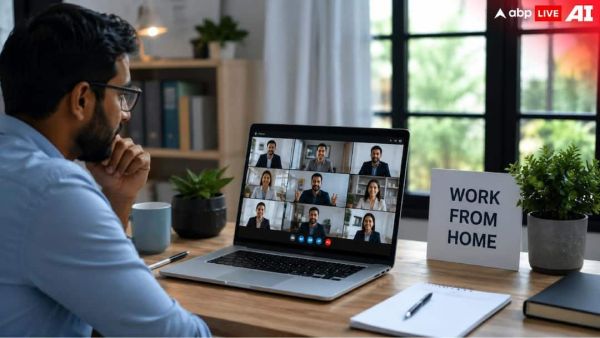
Prime Minister Narendra Modi’s recent appeal encouraging companies to adopt work from home practices again has reignited a major debate across India Inc. While the Prime Minister has urged organisations to reduce travel and fuel consumption through remote work and virtual meetings, legal experts say employers are still under no obligation to allow employees to work from home.
Addressing a gathering in Secunderabad on Sunday, PM Modi suggested that businesses and citizens revisit pandemic-era habits such as “online meetings, video conferences and work from home" as India deals with rising fuel costs and pressure on foreign exchange reserves.
However, despite the public appeal, labour law specialists clarify that the statement is advisory in nature and does not automatically create a legal right for employees to demand remote work.
India currently does not have a standalone law that guarantees employees the right to work remotely. Workplace attendance rules are largely determined by employment contracts, company HR policies, internal operational guidelines, and state-level labour regulations.
Legal experts point out that although the new labour codes acknowledge remote and hybrid work structures for the first time, they stop short of making work from home mandatory. The framework allows employers to introduce virtual work arrangements, but only through mutual agreement between employer and employee.
For most white-collar professionals, the governing framework continues to be state Shops and Establishments Acts in regions such as Delhi, Karnataka, and Maharashtra. These laws mainly deal with issues like working hours, leave policies, employee welfare, overtime, and workplace conditions rather than granting location flexibility.
Under existing Indian labour and contract laws, companies generally retain the authority to decide where employees work from. Experts say employers can legally ask workers to return to office as long as the rules are non-discriminatory and do not violate signed employment agreements.
This is one of the key reasons why many firms in sectors such as IT, banking, consulting, and media have already implemented hybrid attendance rules or compulsory office days over the past two years.
Unless remote work has been specifically guaranteed in an employee’s contract, companies continue to have the legal advantage in deciding workplace models.
There are, however, a few situations where employees may be able to seek flexible work arrangements.
The Rights of Persons with Disabilities Act, 2016, requires employers to provide reasonable accommodation to employees with disabilities. Similarly, the Maternity Benefit Act, 1961, includes provisions allowing eligible women to opt for work from home arrangements after maternity leave “if the nature of work permits".
Section 5(5) of the Maternity Benefit Act specifically allows employers and employees to mutually agree on WFH after childbirth. Even then, experts note that the law does not create a blanket right applicable to all employees.
Experts believe the Centre could still mandate remote work in exceptional circumstances. If India faces severe fuel shortages, transport disruptions, or other emergencies, governments may invoke powers under the Disaster Management Act or other emergency regulations to direct companies to adopt work from home measures temporarily.
Such directives would likely focus on sectors where remote operations are feasible, including IT services, finance, consulting, customer support, and digital media.
For now, though, no such notification has been issued.
Despite PM Modi’s remarks, the technology sector is not expected to make dramatic changes to existing workplace structures. According to a Moneycontrol report, most IT companies are likely to continue with hybrid models that have gradually stabilised after years of pandemic disruption.
Industry body NASSCOM also said companies across the technology sector are continuing to decide office attendance and work-from-home policies based on operational needs, client expectations, and employee roles rather than broad public appeals.