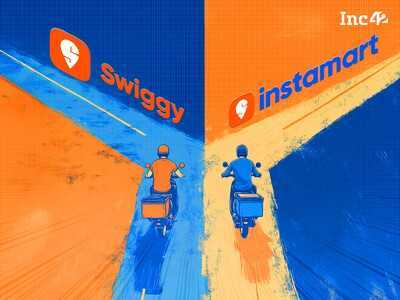
Foodtech major Swiggy has kickstarted the process of becoming an Indian-owned and controlled company (IOCC). As part of this, the foodtech major has sought shareholder approval to amend its articles of association and rejig its board nomination framework.
In a clarification filed with the bourses, Swiggy said that the proposed framework is aimed at becoming an IOCC under the country’s foreign exchange laws.
“The company wishes to clarify that the Proposed Amendment also forms part of a broader endeavour by the company to become an Indian Owned and Controlled Company (IOCC) under applicable Indian foreign exchange laws and regulations…,” said the foodtech major.
Under current Foreign Exchange Management Act (FEMA) rules, a company can qualify as an IOCC only if both ownership and control rest with resident Indian citizens or eligible Indian entities. An IOCC’s board composition and nomination framework should also back domestic control.
The company added that it will require shareholder approval and other corporate actions to complete the process.
This follows the company last month issuing a postal ballot notice, seeking shareholder approval for amendments to its articles of association and the appointment of Renan De Castro Alves Pinto as a non-executive nominee director. The remote e-voting commenced on April 21 and will close on May 20.
Why Is Swiggy Pushing For Domestic Ownership?The foodtech major is looking to become an IOCC to likely build safeguards to maintain domestic control in the absence of an “identifiable promoter group holding a substantial stake” in the company.
The IOCC tag is expected to unlock new opportunities for the company in the quick commerce space. Just like its rival Eternal, the push is aimed at helping its quick commerce vertical Instamart transition to an “inventory ownership” model from the current marketplace model led by third-party sellers.
The transition would allow it to procure directly from brands and sell them on its platform, replacing commission revenue with net sales. This would mean higher margins, better control over the supply chain, including warehousing and logistics, and better customer service.
This pivot to inventory model would also help the company enhance margins in fragmented or unbranded categories as well as established FMCG categories.
Notably, Swiggy has been preparing for the pivot for some time now. In May last year, it rolled out a separate Instamart app, indicating that the quick commerce venture needed its own brand identity and growth engine. Afterwards in September, the it also hived off its quick commerce vertical into a step-down subsidiary to prepare for the potential pivot.
Later during the company’s Q2 FY26 earnings call in October 2025, CEO Sriharsha Majety said that Instamart would eventually move to an inventory-led model.
This follows rival Blinkit making a similar transition in September last year after parent Eternal became an IOCC in April 2025. Since then, the company moved from recognising only commissions to recording the full value of sales, resulting in Q4 FY26 operating revenue growing 3X year-on-year to ₹17,292 Cr.
Meanwhile, Swiggy Instamart clocked a 48.7% YoY jump in adjusted revenue to ₹1,090 Cr in Q4 FY26, while profitability remained elusive as adjusted EBITDA loss widened 2% YoY to ₹858 Cr.
The post Inventory Model Pivot? Swiggy Seeks Shareholder Nod To Cap Foreign Ownership appeared first on Inc42 Media.