The humble eatery drew unexpected global attention last weekend after Nvidia CEO Jensen Huang stopped by during a visit alongside U.S. President Donald Trump and a delegation of American business leaders including Elon Musk, Tim Cook and David Solomon.
Photos shared on Chinese social media on May 15 showed Huang, the world’s seventh-richest person with an estimated net worth at $194.5 billion according to the World’s Real-Time Billionaires updated by Forbes, dressed in his trademark black leather jacket, casually eating a bowl of noodles outside the restaurant on Nanluo Old Street.
Restaurant staff said Huang visited around lunchtime and was invited to try the shop’s signature black bean noodles with pork, priced at 38 yuan (US$5.58), AP reported.
With the restaurant full, Huang stood outside to eat while chatting with passersby.
|
Customers queue at Fangzhuanchang noodle restaurant in Beijing. Photo by Tripadvisor |
Located in the heart of Nanluoguxiang, one of Beijing’s best-preserved historic hutong districts, Fangzhuanchang sits among narrow alleyways, courtyard homes and a dense cluster of traditional snack shops and local eateries.
The restaurant has repeatedly earned recognition in the Michelin Bib Gourmand category, which highlights restaurants offering high-quality food at affordable prices.
Michelin inspectors have praised the restaurant for preserving the atmosphere of a traditional family-run eatery while focusing almost exclusively on one specialty dish, which starts at around 30 yuan per bowl.
The restaurant is known for long queues, with diners often waiting up to 20 minutes during peak hours.
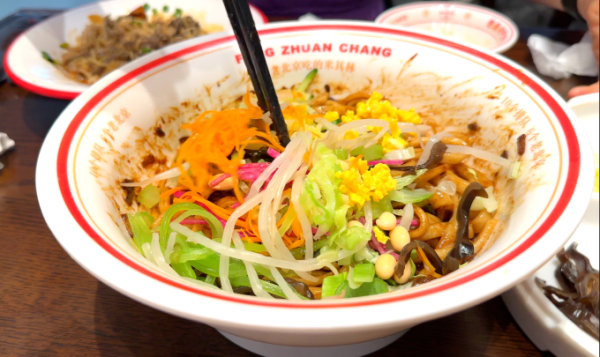
Its signature zhajiangmian features handmade noodles served with fermented soybean sauce, minced pork and an assortment of fresh vegetables including cucumber, bean sprouts, cabbage and shredded radish.
|
Beijing-style zhajiangmian at Fangzhuanchang noodle restaurant in China. Photo courtesy of Elias Family Kitchen |
The dish originated in Shandong Province and later became one of Beijing’s most iconic. In China, it is commonly divided into Beijing and Sichuan styles. The Beijing version is characterized by a thick, savory-sweet soybean paste sauce, while the Sichuan variation incorporates chili oil and Sichuan peppercorns for a spicier, numbing flavor.
At Fangzhuanchang, the noodles follow the classic Beijing tradition. Michelin reviewers have singled out the handmade noodles for their texture and consistency, noting that many regulars pair the dish with pickled garlic and chili sauce for added flavor.
Unlike the fiery Sichuan variation, Beijing-style Zhajiangmian emphasizes richness and depth, allowing the fermented soybean paste to take center stage.
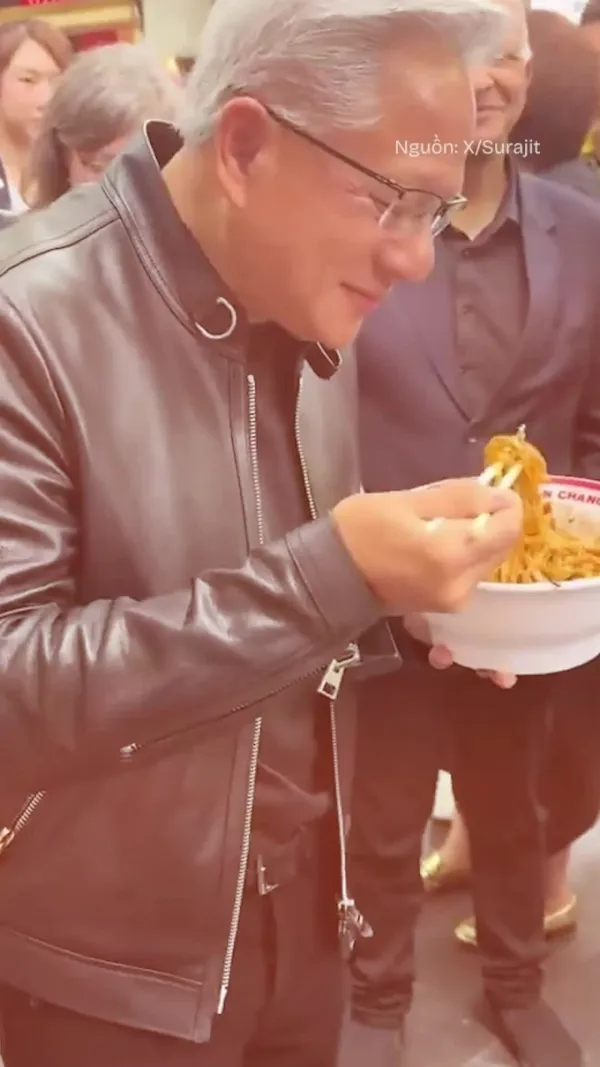
Jensen Huang eats noodles at Fangzhuanchang restaurant in Nanluoguxiang area in Beijing, China, on May 15, 2026. Video by X/AB KuaiDong