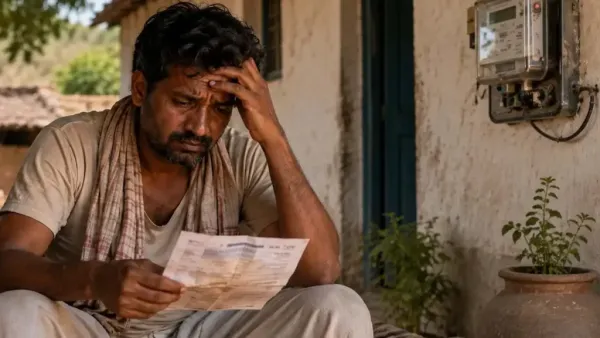
The heat temperature in the country is continuously creating new records. The temperature in Nagpur and its surrounding areas, which is one of the hottest cities in the world, has crossed 40 degrees Celsius. To prevent the power grid from stalling amid this scorching heat, large cooling systems and fans are being installed. The infrastructure is getting stronger, but the financial burden it is putting on the general public is very worrying. The rising prices of electricity are now becoming a burden on the budget of middle and lower income group families, due to which poor people are not able to use coolers or fans even if they want to.
According to the report of Economics Times, in working areas like Sudam Nagari of Nagpur, a huge crowd of people can be seen outside the houses even after 10 pm. People are unable to muster the courage to stay inside their tin roofed houses due to the scorching heat. Anuradha Shravan Kawale, 40, who lives here, is a domestic help. There is a cooler in the corner of his house, but it is switched off. For using 188 units of electricity in the month of April, he got a bill of Rs 1,960, which works out to more than Rs 10 per unit.
This amount is approximately 10 percent of their total family monthly salary. Due to this increasing expenditure, they have to compromise even on their health- needs, so that they can meet the expenses of their children’s education. The situation for consumers has become such that they are forced to spend most of the day outside their homes so that the electricity bill can be kept low.
Maharashtra is getting the most expensive electricity in the country. The main reason for this is the state’s large industrial base and the huge investment made to run the huge electricity grid smoothly. Maharashtra State Electricity Distribution Company (MSEDCL) has increased its capital expenditure (capex) by a massive 85 per cent to Rs 234.5 billion ($2.4 billion) in the financial year ending March 2026 to improve the power supply network.
Although the state government has prepared a plan to reduce electricity rates for residential consumers by 26 percent by the year 2030, there is a big catch behind it. The main benefit of this relief will be available only to those consumers who consume less than 100 units of electricity.
This crisis is not limited to cities only, but is also badly affecting the rural economy. The problems of the farmers of Kelapur, about 100 kilometers away from Nagpur, are different. The government is providing subsidized electricity for farming, but its timing is not right. Electricity is supplied from 8 a.m. to noon, when the sun is at its most lethal.
Farmers say that this may be the right time for the power companies to balance the grid, but going to the fields in this deadly heat, driving a motor vehicle and doing irrigation is like risking one’s life. Due to this impractical time table, many farmers’ lands are lying vacant and they are forced to depend only on the monsoon. If electricity supply is at the right time, both crop yields and farmers’ income can improve.
The think tank ‘Integrated Research and Action for Development’ (IRADe) believes that states should consider providing special summer seasonal subsidies for low-income people, to prevent loss of productivity and increased burden on the health system.