India and South Korea are poised to jointly develop and produce next-generation weapon systems, with defence minister Rajnath Singh saying that the success of industrial cooperation in the commercial sector should now be extended to the field of defence technologies.
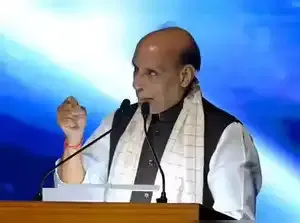
Sources said that among several agreements signed during Singh's bilateral visit to Seoul are plans to jointly develop next-generation technologies, including laser weapons and mobile air defence platforms, to counter emerging aerial threats. "Korea's technological excellence, combined with India's scale, talent, manufacturing ecosystem, and innovation capabilities, creates a powerful foundation for cooperation. Together, our two countries can jointly develop and produce advanced technologies and defence systems for the future," Singh said.
Singh held bilateral discussions with Minister of National Defence, Republic of Korea (RoK), Ahn Gyu-back. The talks focused on expanding collaboration in areas such as industrial cooperation, joint production, maritime security and emerging technologies.
Sources said during the visit, Indian defence company Larsen & Toubro signed agreements to co-develop and produce futuristic directed energy weapons and self-propelled air defence systems. The two agreements with Hanwha Co. Ltd. signal a promising future for India-Korea defence innovation and technology partnership, officials said.
Singh also met Minister for Defense Acquisition Program Administration, Lee Yong-chul, with both leaders agreeing to harness their symbiotic efforts to create avenues for joint development as well as joint exports. Singh also chaired India-RoK Defence Industry Business Roundtable, which brought together senior government officials and leading defence industry representatives from both countries.
Army's new long-range rockets demonstrate accurate firing
Army's new long-range rocket systems, procured using emergency financial powers after Operation Sindoor, have demonstrated accurate targeting during live-firing trials carried out at Chandipur in Odisha. The Suryastra Universal Rocket Launcher, made by Nibe Limited, fired rockets at ranges of 150 km and 300 km, with targets being hit with precision. The rockets achieved an accuracy of hitting targets within 2 metres when fired from a distance of 300 km.
The absence of long-range precision rockets has been felt by Army, especially in light of recent conflicts where such systems have been used effectively in battle, particularly in Russia-Ukraine war.
Sources said that among several agreements signed during Singh's bilateral visit to Seoul are plans to jointly develop next-generation technologies, including laser weapons and mobile air defence platforms, to counter emerging aerial threats. "Korea's technological excellence, combined with India's scale, talent, manufacturing ecosystem, and innovation capabilities, creates a powerful foundation for cooperation. Together, our two countries can jointly develop and produce advanced technologies and defence systems for the future," Singh said.
Singh held bilateral discussions with Minister of National Defence, Republic of Korea (RoK), Ahn Gyu-back. The talks focused on expanding collaboration in areas such as industrial cooperation, joint production, maritime security and emerging technologies.
Sources said during the visit, Indian defence company Larsen & Toubro signed agreements to co-develop and produce futuristic directed energy weapons and self-propelled air defence systems. The two agreements with Hanwha Co. Ltd. signal a promising future for India-Korea defence innovation and technology partnership, officials said.
Singh also met Minister for Defense Acquisition Program Administration, Lee Yong-chul, with both leaders agreeing to harness their symbiotic efforts to create avenues for joint development as well as joint exports. Singh also chaired India-RoK Defence Industry Business Roundtable, which brought together senior government officials and leading defence industry representatives from both countries.
Army's new long-range rockets demonstrate accurate firing
Army's new long-range rocket systems, procured using emergency financial powers after Operation Sindoor, have demonstrated accurate targeting during live-firing trials carried out at Chandipur in Odisha. The Suryastra Universal Rocket Launcher, made by Nibe Limited, fired rockets at ranges of 150 km and 300 km, with targets being hit with precision. The rockets achieved an accuracy of hitting targets within 2 metres when fired from a distance of 300 km.
The absence of long-range precision rockets has been felt by Army, especially in light of recent conflicts where such systems have been used effectively in battle, particularly in Russia-Ukraine war.