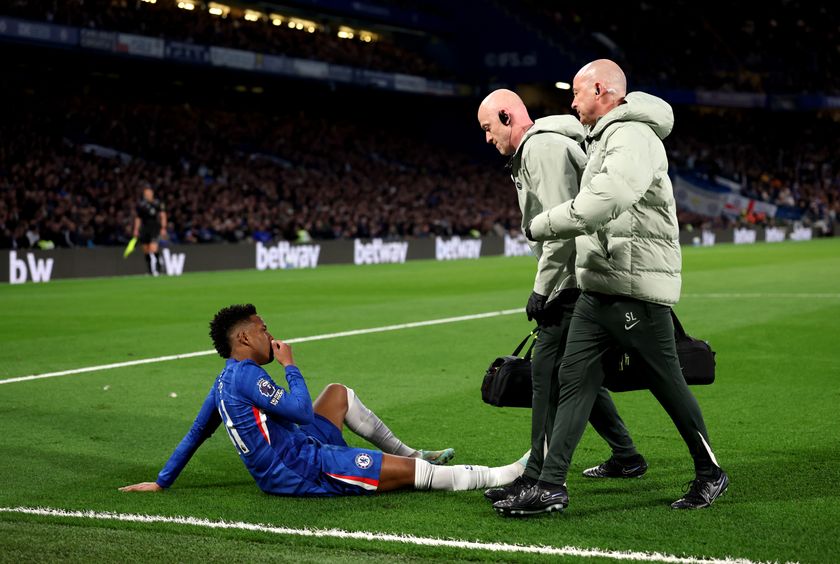
An ACL injury in football can sideline a player for up to a year. Here’s a detailed look at what this injury involves.
Among all football-related injuries, an ACL tear is often considered the most severe, and unfortunately, it happens more regularly than players, clubs, or fans would prefer.
Inside the knee are the cruciate ligaments, which cross each other in an 'X' shape. The Anterior Cruciate Ligament (ACL) is positioned at the front, while the Posterior Cruciate Ligament (PCL) sits at the back. Together, they help control the knee’s forward and backward movement.
Similar to ankle sprains or hamstring strains, ACL injuries generally occur without physical contact. They are most often caused by awkward movements rather than direct collisions between players.
Dr. Funmi Salawu, a medical doctor with a strong interest in sports medicine and athlete health, blends clinical knowledge with her passion for sports. With a medical background and specialisation in Sports & Exercise Medicine, she focuses on explaining sports-related injuries in simple, engaging ways.
Funmi has collaborated with platforms like FourFourTwo to create informative videos and articles that explore common football injuries such as ACL tears, ankle sprains, and hamstring strains.
Beyond her medical work, she actively shares her expertise across social media, helping athletes, fans, and the general public understand complex medical issues in sports.
An ACL tear can occur due to a sudden change in direction, abrupt halting, slowing down during a sprint, landing incorrectly after a jump, or from direct contact.
Common symptoms include hearing a popping sound, a sensation that the knee has “given way,” swelling, reduced range of motion, and tenderness.
Treatment typically involves surgery, but non-surgical options may be suitable for non-athletes, individuals with Grade 1 tears, or elderly patients who face higher surgical risks or have limited mobility.
Non-surgical treatment usually includes the RICE protocol (rest, ice, compression, elevation), along with bracing, use of crutches, and physiotherapy sessions. Surgical treatment often uses a graft—commonly from the patellar tendon—to reconstruct the damaged ligament. Recovery duration largely depends on the severity or grade of the injury.
Grade 1 – The ACL is slightly stretched but remains stable. Recovery generally takes around 2 to 4 weeks.
Grade 2 – The ACL is partially torn. Recovery can take approximately 6 to 8 weeks.
Grade 3 – The ACL is completely torn into two parts. This is the most frequent type and usually requires surgery, followed by an average recovery period of about 9 months before returning to play.
Preventative measures are crucial. Proper stretching before and after physical activity can significantly reduce injury risk. Useful stretches include the long sitting calf stretch, popliteal stretch, standing or wall calf stretch, and knee slides.
Notably, ACL injuries are more common among women footballers compared to men, and several factors may explain this difference.
During the second week of the menstrual cycle, oestrogen levels peak. Research suggests that higher oestrogen can loosen joints, making them less stable. Additionally, women often land from jumps in a valgus position, where the knees angle inward, increasing the risk of knee injuries.
Beyond physiological differences, the women’s game often faces challenges such as lower-quality facilities, uneven pitches, and less suitable equipment—all of which can contribute to a higher rate of injuries.
Another contributing factor is footwear design. Most football boots are made for male foot anatomy. Since women generally have higher foot arches and different foot shapes, wearing boots not designed for their structure can add to the likelihood of ACL injuries.
Typically, ACL injuries result from sudden twisting motions, awkward landings after a jump, abrupt deceleration, or contact during play. Non-contact injuries, in particular, often occur when a player changes direction quickly, causing the knee to twist unnaturally.
Recovery time can vary between 6 and 12 months depending on the injury’s severity, treatment type, and adherence to a structured rehabilitation plan.
Many professional footballers successfully return to competitive play following ACL surgery and rehabilitation. However, recovery demands consistent physiotherapy and patience, with a continuous risk of re-injury if proper care isn’t taken.
Players in certain positions—especially wingers, attacking midfielders, and forwards—are more vulnerable to ACL injuries due to frequent direction changes, rapid sprints, and sudden stops. Defenders too can be at risk, particularly during tackles or when challenging for the ball.
Dr. Funmi Salawu