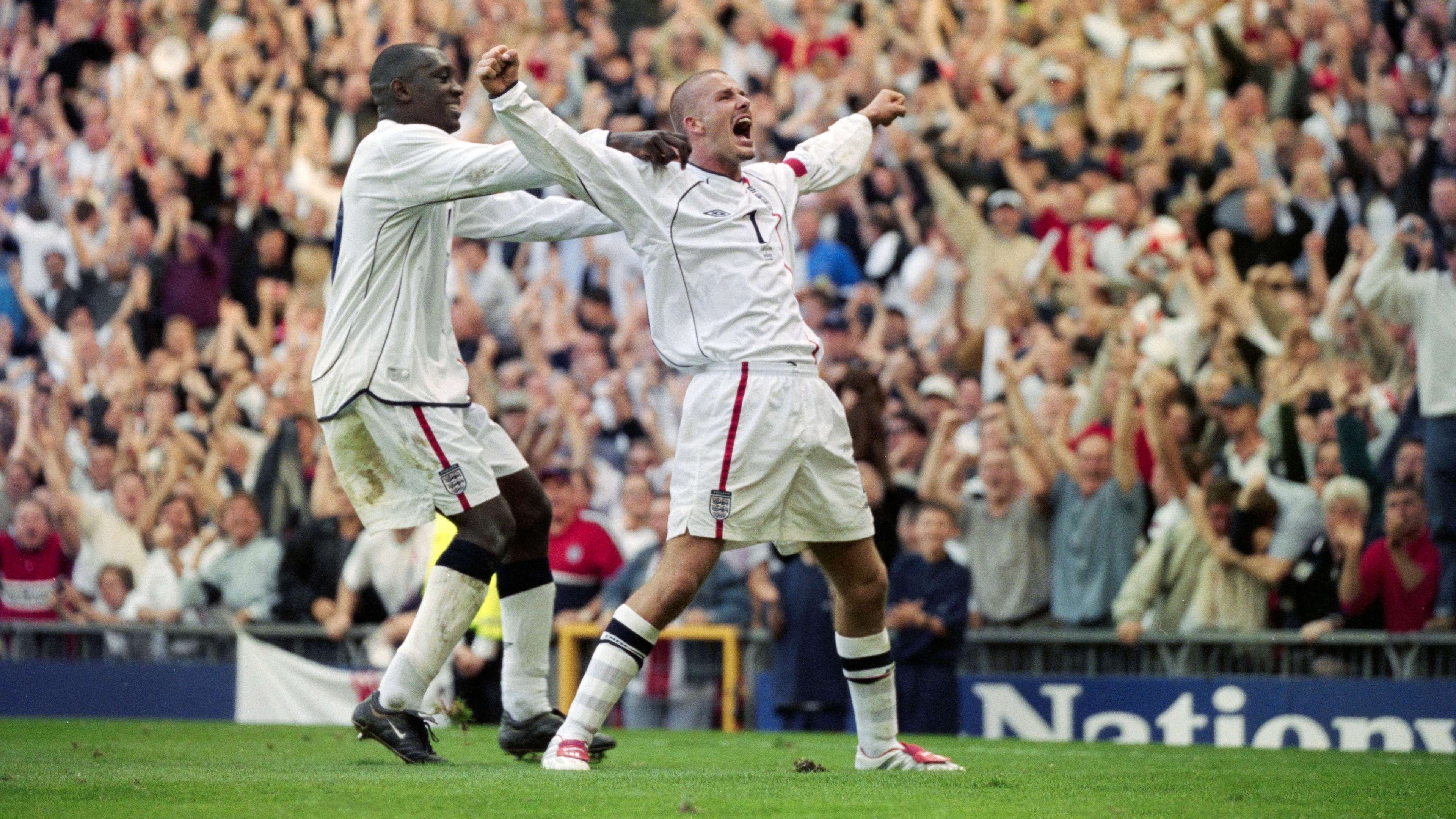
This feature is part of Legacy, GOAL’s ongoing series and podcast in the build-up to the 2026 World Cup. Each week, it delves into the defining stories, emotions, and lessons from the nations that have shaped football’s global identity. This edition examines what England must learn from their 2002 World Cup failure — and why Thomas Tuchel’s challenge ahead is rooted not in tactics, but in belief, identity, and courage under pressure.
Since their glorious 1966 triumph on home soil, England’s World Cup journey has been defined by heartbreak. The Three Lions fell victim to Argentina and Diego Maradona’s infamous ‘Hand of God’ in the 1986 quarter-finals and were then eliminated by Germany in the 1990 semis following extra-time agony. Their torment continued in 1998 and 2010, once again at the hands of Argentina and Germany, while Portugal ended their run in the 2006 quarters.
Gareth Southgate rekindled hope in 2018 as England surprisingly reached the semi-finals, but their 2022 campaign ended in familiar disappointment — a 2-1 quarter-final loss to France, marked by Harry Kane’s worst penalty miss in national colours.
England have entered 11 World Cups since 1966, failing to qualify only in 1974, 1978, and 1994. Their lowest point came in 2014, when they crashed out in the group stage. Though bad luck often played a role, every generation has fallen short — either paralyzed by pressure or unable to replicate club-level form for the national team.
The 2002 campaign represented the perfect storm of both. That year should have heralded England’s long-awaited second crown. As coach Sven-Göran Eriksson lamented after returning from South Korea and Japan, bruised and beaten, the team had everything to go all the way.
“We always told the players that we should fear no one, and if luck favoured us a little, we could win it all,” Eriksson reflected later. “I still believe we could have done it.”
But fear won out. The 2002 squad’s collective collapse remains one of the most striking examples of psychological fragility in football history. For Tuchel’s England to succeed where Eriksson’s faltered 24 years earlier, those lessons from the Far East must not be ignored.
Dramatic Qualification
Eriksson took charge at a time when England were in turmoil. They had crashed out of Euro 2000 in the group stage, then opened their 2002 World Cup qualifiers with a 1-0 loss to Germany — the final game at the old Wembley. After the match, FA director David Davies tried to talk manager Kevin Keegan out of resigning inside a Wembley toilet cubicle, but Keegan was adamant.
“You can’t change my mind,” he said. “I’m not up to it. I can’t motivate these players. I’m going to tell the press I’m stepping down.” True to his word, the Liverpool legend quit, later describing his 20-month tenure as “soulless.”
England had hit rock bottom. The FA turned to a proven winner — Eriksson, who had guided Lazio to the 1999-2000 Serie A title. Appointed as England’s first foreign boss, the calm Swede quickly silenced doubters by winning his first five matches — against Spain, Finland, Albania, Mexico, and Greece.
Then came an unforgettable night in Munich. England crushed Germany 5-1 at the Olympiastadion, with Michael Owen netting a sensational hat-trick. The result shocked world football, and a 2-0 win over Albania soon after left England needing only to match Germany’s result in the final qualifier to top their group.
That task, however, turned into a nerve-wracking ordeal. Greece led 2-1 at Old Trafford deep into stoppage time before David Beckham salvaged England’s campaign with a stunning 30-yard free-kick. With Germany drawing 0-0 against Finland, Beckham’s heroics booked England’s automatic ticket to Asia’s first World Cup finals.
Injury Setbacks
The high from Munich and Beckham’s dramatic goal quickly gave way to anxiety as England were drawn into the dreaded ‘Group of Death’ — with Argentina, Sweden, and Nigeria. The situation worsened when Beckham, Gary Neville, and Steven Gerrard suffered serious injuries, while Eriksson was splashed across tabloids over an affair with TV presenter Ulrika Jonsson.
His final squad choices drew criticism: Wes Brown and Danny Mills were preferred to Jamie Carragher and Phil Neville; Steve McManaman and Frank Lampard were omitted; and Andy Cole retired from international football after being overlooked. “If Michael Owen isn’t scoring, who will?” asked pundit Andy Gray. “Where are the goals coming from?”
Eriksson was accused of being overly cautious with eight defenders, yet risked including Beckham — still recovering from a broken foot sustained in April. His fitness, and the word ‘metatarsal’, dominated headlines. Gerrard and Neville were ruled out, Danny Murphy broke his foot days before kickoff, and Trevor Sinclair was drafted in. Kieron Dyer and Nicky Butt were also carrying knocks, leaving many predicting disaster.
Narrow Escape
Despite the setbacks, England’s squad brimmed with quality — David Seaman, Sol Campbell, Paul Scholes, Owen Hargreaves, and Teddy Sheringham among them, alongside young stars Owen, Rio Ferdinand, and Ashley Cole.
The opener against Sweden offered a chance to make a statement. Beckham’s precise corner set up Campbell’s early header, but England retreated instead of pressing home their advantage. Niclas Alexandersson equalised after a defensive lapse, and Sweden dominated the second half. England escaped with a 1-1 draw — a fortunate result given Argentina’s 1-0 win over Nigeria earlier that day.
Still, Eriksson remained positive: “When you draw after leading, it feels like a loss. But I told the players — this isn’t a funeral. We’ve only just begun. Everything is still possible.”
Revenge Served
England’s second match, against Argentina, was fuelled by vengeance for 1998. Beckham, sent off in that infamous clash, faced his demons at the Sapporo Dome. This time, he led with fire and composure. After Owen was fouled by Mauricio Pochettino, Beckham stepped up to score from the spot, driving home a low, decisive penalty that exorcised his past. England defended resolutely, with Campbell and Ferdinand immense, clinching a 1-0 win that restored belief. Sweden’s 2-1 win over Nigeria meant a draw in the final group game would be enough.
Progress and Peril
England drew 0-0 with Nigeria to advance but looked lethargic in the heat. That meant facing Group A winners Denmark instead of Senegal. The Danes had impressed, beating Uruguay and holders France, yet England produced their best half of the tournament in Niigata. Ferdinand, Owen, and Heskey all scored before halftime in a dominant display. A 3-0 victory set up a blockbuster quarter-final with Brazil — a team that had looked vulnerable against Belgium.
Pele even predicted an England victory, saying, “If they keep their cool and discipline, they’ll win.”
Costly Mistakes
The quarter-final in Yokohama took place in stifling 28°C heat and 57% humidity — conditions favouring Brazil. Yet England struck first when Owen capitalised on Lucio’s poor touch to score. Suddenly, Pele’s prediction seemed prophetic. But instead of pushing on, Eriksson’s men sat deep. Just before halftime, Brazil equalised through Rivaldo after a series of defensive errors starting with Beckham’s half-hearted challenge.
At the break, no tactical shift came. Years later, Southgate recalled: “We expected Winston Churchill and got Iain Duncan Smith.” Within minutes of the restart, Ronaldinho’s audacious 42-yard free-kick caught Seaman off his line. “Cafu told me Seaman plays high, so I tried to chip him — and got lucky,” Ronaldinho later explained. England were stunned, Seaman humiliated, and the team mentally broken. Even after Ronaldinho saw red for a foul on Mills, England failed to rally, resorting to aimless long balls. The final whistle merely ended their misery.
No Belief, No Glory
While injuries and heat were factors, England’s downfall stemmed from fear and conservatism. Eriksson’s caution stifled creativity, and key players disappeared under pressure. Brazil didn’t outplay them — they simply believed more. Owen’s post-match shrug summed it up: “Brazil are a good side, so it’s not hard to accept losing to them.”
Brazil went on to win the tournament, beating Turkey and Germany. England, meanwhile, were left ruing what might have been. Eriksson’s later tournaments ended the same way — quarter-final exits to Luiz Felipe Scolari’s Portugal in 2004 and 2006. “We should have made the final,” Eriksson said in 2018. “No team was better than us. None.”
Lessons for Tuchel
Critics often claimed Eriksson squandered England’s ‘Golden Generation’, but ex-players have since admitted the real issue was ego. Gerrard revealed in 2023: “We were all egotistical losers. The culture was wrong. We weren’t united, not a real team.”
That toxic culture persisted under Steve McClaren, Fabio Capello, and Roy Hodgson until Southgate finally restored unity and belief. Yet by 2024, despite progress, England still lacked silverware. Familiar patterns repeated — Croatia in 2018, Italy in 2020, and Spain in 2024, where England equalised before collapsing 2-1 in the Euro final.
Unless belief becomes ingrained, England will continue to falter. In 2002, Eriksson had a winning hand but played it safe. Tuchel’s challenge next summer is clear: to ensure his players truly believe they belong on the world stage — and to free them from fear once and for all. Only then will England’s long wait for redemption end.