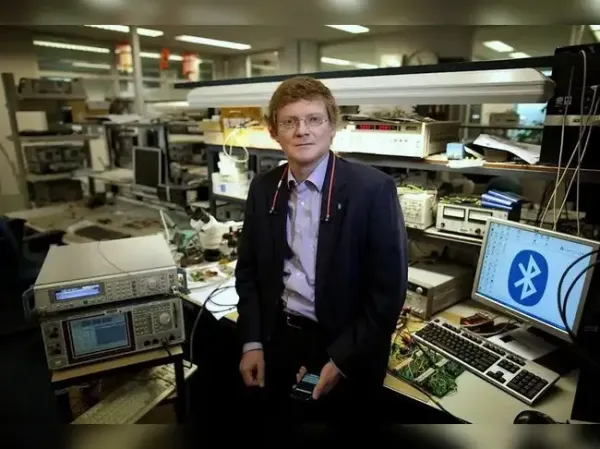
Today, people connect earbuds, phones, laptops, speakers, and even cars without thinking twice. A tap, a beep and devices instantly communicate wirelessly. But before Bluetooth transformed modern technology, tangled cables ruled everyday life. The breakthrough began in 1994 when Jaap Haartsen developed the core technology behind Bluetooth while working at Ericsson. His invention allowed electronic devices to exchange data wirelessly over short distances using radio waves.
At the time, it sounded futuristic. Today, it powers billions of devices worldwide. What started as a technical solution inside a telecommunications company quietly became one of the most important inventions of the digital age.
Engineers began searching for a universal wireless solution that could work across different gadgets.That’s where Jaap Haartsen entered the picture. Working at Ericsson, Haartsen developed a short-range wireless communication system that used low-power radio signals to allow devices to “talk” to one another without cables.
The technology was designed to be simple, energy-efficient and reliable. Few people at the time realized how dramatically it would reshape daily life.
Developers chose the name as a symbol. Just as Harald united people and regions, Bluetooth technology would unite different electronic devices and communication systems.
The now-famous Bluetooth logo also reflects that Nordic inspiration. It combines ancient runic symbols representing the initials of Harald Bluetooth. What began as a temporary codename eventually became permanent, and one of the most recognizable tech brands in the world.
Bluetooth didn’t explode overnight. In its early years, the technology seemed more like a convenience than a revolution. But as mobile phones, laptops and portable electronics became more common, Bluetooth quickly proved essential.
Wireless headphones removed the frustration of tangled cords. Bluetooth speakers changed how people listened to music. Smartwatches, gaming controllers, car systems and fitness trackers all began relying on the same technology.
Today, Bluetooth operates quietly in the background of modern life. People use it daily without even noticing. From streaming songs in cars to connecting wireless keyboards and sharing files between devices, Bluetooth became the invisible bridge linking personal technology together.
Wireless communication became the future. Bluetooth helped push electronics companies toward that future by proving that short-range wireless connections could be practical, affordable and efficient.
Its success also paved the way for broader wireless ecosystems, influencing how companies approached wearable devices, smart homes and mobile accessories. Today, billions of Bluetooth-enabled products are sold globally every year.
The Dutch engineer spent much of his career working in wireless communication and engineering research. His work on Bluetooth earned him major recognition in technology circles, including awards celebrating his contribution to modern connectivity.
Unlike celebrity tech founders, Haartsen largely stayed out of the spotlight. Yet his invention arguably changed how people interact with technology more than many far more famous innovations.
That ease of use helped Bluetooth become universal across brands and countries. Today, it powers everything from wireless earbuds and televisions to medical devices and smart appliances. Entire industries now depend on the wireless communication system Haartsen helped create back in 1994.
And like many transformative inventions, its biggest success may be how invisible it became.People rarely stop to think about Bluetooth anymore, until it suddenly disconnects.
At the time, it sounded futuristic. Today, it powers billions of devices worldwide. What started as a technical solution inside a telecommunications company quietly became one of the most important inventions of the digital age.
The problem Bluetooth was designed to solve
In the early 1990s, connecting electronic devices often meant dealing with bulky wires and incompatible ports. Phones needed physical cables to transfer information. Computers relied on connectors that varied between brands and manufacturers. Even simple communication between devices could become frustrating and messy.Engineers began searching for a universal wireless solution that could work across different gadgets.That’s where Jaap Haartsen entered the picture. Working at Ericsson, Haartsen developed a short-range wireless communication system that used low-power radio signals to allow devices to “talk” to one another without cables.
The technology was designed to be simple, energy-efficient and reliable. Few people at the time realized how dramatically it would reshape daily life.
Why the name “Bluetooth” sounds so unusual
One of the strangest parts of Bluetooth’s story is its name. The technology was inspired by Harald Bluetooth, a Viking king known for uniting Danish tribes during the 10th century.Developers chose the name as a symbol. Just as Harald united people and regions, Bluetooth technology would unite different electronic devices and communication systems.
The now-famous Bluetooth logo also reflects that Nordic inspiration. It combines ancient runic symbols representing the initials of Harald Bluetooth. What began as a temporary codename eventually became permanent, and one of the most recognizable tech brands in the world.
How Bluetooth changed everyday life
Bluetooth didn’t explode overnight. In its early years, the technology seemed more like a convenience than a revolution. But as mobile phones, laptops and portable electronics became more common, Bluetooth quickly proved essential.Wireless headphones removed the frustration of tangled cords. Bluetooth speakers changed how people listened to music. Smartwatches, gaming controllers, car systems and fitness trackers all began relying on the same technology.
Today, Bluetooth operates quietly in the background of modern life. People use it daily without even noticing. From streaming songs in cars to connecting wireless keyboards and sharing files between devices, Bluetooth became the invisible bridge linking personal technology together.
The invention that helped launch the wireless era
Bluetooth arrived at a pivotal moment in technological history. The mid-1990s marked the beginning of the internet boom and the rapid growth of mobile communication. Consumers increasingly wanted devices that were portable, compact and easy to use.Wireless communication became the future. Bluetooth helped push electronics companies toward that future by proving that short-range wireless connections could be practical, affordable and efficient.
Its success also paved the way for broader wireless ecosystems, influencing how companies approached wearable devices, smart homes and mobile accessories. Today, billions of Bluetooth-enabled products are sold globally every year.
Who is Jaap Haartsen?
Despite helping create one of the world’s most widely used technologies, Jaap Haartsen remains relatively unknown outside the tech industry.The Dutch engineer spent much of his career working in wireless communication and engineering research. His work on Bluetooth earned him major recognition in technology circles, including awards celebrating his contribution to modern connectivity.
Unlike celebrity tech founders, Haartsen largely stayed out of the spotlight. Yet his invention arguably changed how people interact with technology more than many far more famous innovations.
Why Bluetooth became indispensable
The genius of Bluetooth lies in its simplicity. Most users never need to understand radio frequencies, pairing systems or wireless protocols. They simply tap “connect” and expect devices to work instantly.That ease of use helped Bluetooth become universal across brands and countries. Today, it powers everything from wireless earbuds and televisions to medical devices and smart appliances. Entire industries now depend on the wireless communication system Haartsen helped create back in 1994.
And like many transformative inventions, its biggest success may be how invisible it became.People rarely stop to think about Bluetooth anymore, until it suddenly disconnects.