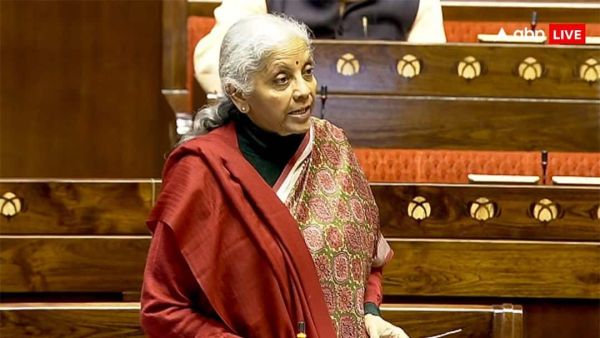
As petrol and diesel prices continue to climb amid the prolonged West Asia conflict, Union Finance Minister Nirmala Sitharaman on Monday outlined what she described as the three biggest external pressures confronting the Indian economy: fuel, fertiliser and foreign exchange.
Speaking at the SIDBI Foundation Day programme in Mumbai, the finance minister said soaring global commodity prices and ongoing geopolitical tensions were creating fresh economic challenges even as India’s domestic fundamentals remained resilient.
Her remarks came just hours after petrol and diesel prices were increased for the fourth time in less than two weeks.
Petrol prices were raised by Rs 2.61 per litre and diesel by Rs 2.71 per litre on Monday, taking the cumulative increase since May 15 to nearly Rs 7.50 per litre.
The latest revision follows a sharp rise in global crude oil prices triggered by the ongoing West Asia conflict and disruptions in international energy supply chains.
The government has repeatedly argued that oil marketing companies have been unable to fully absorb the increase in import costs for an extended period.
During her address, Sitharaman directly linked India’s external economic pressures to what she called the “three Fs”.
“Three Fs, fuel, fertiliser, and foreign exchange. And the foreign exchange is for, in this context, the purchase of gold,” the minister said.
She explained that elevated global prices of crude oil, fertilisers and gold were putting pressure on India’s foreign exchange outflows.
“All these three payments will have to be in foreign exchange. There is no rupee trading there. We should please understand the context of these three Fs,” she said.
Sitharaman said the ongoing West Asia crisis was no longer only a diplomatic or geopolitical concern but had already started affecting businesses and consumers directly.
“For businesses and common people, it can mean higher fuel cost, delayed cargo, costlier shipping, shortage of inputs, pressure on working capital, and uncertainty in export orders,” she said.
The minister added that the conflict had now persisted for more than 80 days, creating highly volatile energy prices.
“It is because of high international crude prices,” she said while explaining the Prime Minister’s appeal to conserve foreign exchange and reduce unnecessary spending.
“And the high crude prices are ever changing. It's seriously dynamic. One rate at one point in time, within a week another, within a week another, and so on. Like that it has been for over now 80, 90 days,” Sitharaman said.
The finance minister also defended the Centre’s fuel tax cuts, saying the government had sacrificed substantial revenue to cushion consumers from the full impact of rising crude oil prices.
According to Sitharaman, the reduction of excise duty on petrol and diesel by Rs 10 per litre would cost the government more than Rs 1 lakh crore in revenue.
The Centre has maintained that the tax cuts were necessary to prevent a sharper rise in transportation and logistics costs, which could have worsened inflationary pressures.
Sitharaman said the government’s current strategy was centred on protecting citizens, supporting MSMEs, safeguarding exporters and ensuring supply chains remain functional.
She also highlighted measures taken to support exporters during the ongoing disruptions, including simplification of customs formalities to help businesses reroute or store stranded cargo.
For MSMEs, the government has launched the Emergency Credit Liquidity Guarantee Scheme 5.0, which aims to provide an additional Rs 2.55 lakh crore in credit support with 100 per cent government guarantee coverage.
Despite acknowledging external headwinds, Sitharaman argued that India’s domestic economic indicators continued to remain strong.
“We must also recognise that India's domestic economic situation remains positive and resilient even today,” she said.
The minister cited rising GST collections, improving tractor sales, passenger vehicle demand and life insurance premium growth as signs of underlying economic strength.
“Gross GST collections crossed $22,000,000 crores for the year 2025-26, rising 8.3 per cent,” she said.
She added that domestic wholesale tractor sales rose by 26 per cent, while passenger vehicle domestic sales grew by 25 per cent.
Sitharaman also criticised what she described as attempts to undermine India’s economic achievements through pessimistic narratives.
“There is a section, I would think, of Indians who very quickly want to decry the achievements of our own people,” she said.
“A pessimistic, cynical narrative is generated which is just not right. It's not right is one thing, but it is wrong because it is fear-mongering. India cannot afford fear-mongering.”
Even as the government attempts to balance inflation concerns, fuel prices, subsidy burdens and foreign exchange pressures, the prolonged geopolitical crisis continues to create uncertainty for policymakers.
For consumers and businesses alike, the impact is already visible through higher fuel costs, rising transportation expenses and concerns over imported inflation.