There is a reason smart rings are suddenly becoming far more mainstream. A growing number of people want health tracking without constantly looking at another screen on their body. Smartwatches are incredibly capable, but they are still screens strapped to your wrist, buzzing all day with notifications, metrics, reminders, and distractions. Smart rings take the opposite approach. Passive, invisible, always there.
That is exactly where the Oura Ring 4 fits in. Over the last few weeks, I have been using it alongside my daily driver, the Apple Watch Ultra. The Watch Ultra remains one of the best wearables for workouts, outdoor activities, and fitness tracking overall, but the Oura Ring made me realise something fairly quickly: data quality matters more than feature count, especially when it comes to sleep. And sleep data is where Oura’s biggest strength lies.
But what’s beyond that? We answer it in this review.
Price & Availability
The Oura Ring 4 starts at Rs. 28,900 for the silver and black finishes, while premium finishes go up to Rs. 39,900. There is also a subscription attached to the experience. After the first free month, Oura charges Rs. 599 per month, and without it the app becomes extremely limited, only retaining three days of historical data alongside the headline scores. Realistically, if you are considering this ring, you should factor the subscription into the purchase decision from the start because most of the meaningful insights sit behind it.
One practical recommendation for Indian buyers: buy the sizing kit first. It costs Rs. 999, but the amount gets adjusted against the final purchase price. Since the ring is designed to stay on your finger almost 24/7, getting the fit wrong on a product this expensive would be significantly more frustrating than spending a little extra upfront.
Set-up
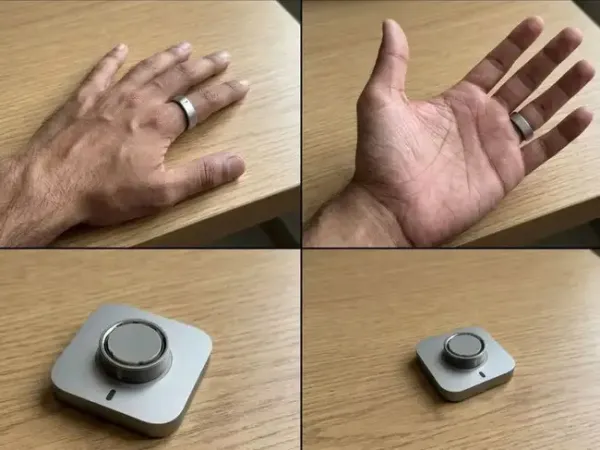
Setup is refreshingly uncomplicated. Inside the box, you get the ring, a compact magnetic charging puck, and a USB-C cable. The puck itself deserves a mention because it is genuinely tiny and disappears onto a bedside table without adding clutter.
Pairing takes only a few minutes. Download the app, tap the ring against your phone, and you are essentially ready to go. The app itself is also genuinely beautiful to use. Every morning, it revolves around three core metrics: Sleep, Activity, and Readiness. Out of the three, Readiness became the one I found myself paying the most attention to. It combines resting heart rate, HRV balance, body temperature trends, respiratory rate, sleep quality, and previous activity levels into one recovery-focused score that tells you how prepared your body actually is for the day ahead.
What Oura gets right is that it does not just throw numbers at you. Every metric is tappable, so you can understand exactly why your recovery improved or dropped on a particular day. After a couple of weeks, the app also starts surfacing longer-term trends like stress resilience, sleep debt, and cardiovascular age estimates. The cardiovascular age feature is interesting, although I would personally treat it more as a directional wellness indicator than a hard medical reading.
There is also meal logging through image recognition alongside an AI advisor built into the app. The meal tracking works surprisingly well most of the time, but the AI assistant felt far less important than the underlying health data itself. The real value here is the quality of the tracking, not the chatbot layer built around it.
Design & Comfort
The first thing you notice about the Oura Ring 4 is how understated it looks. The titanium construction feels premium without being flashy, and the sensors sit flush against the inner surface rather than aggressively pressing into your finger. That said, the ring is noticeably thick. If you are not used to wearing rings daily, there will absolutely be an adjustment period during the first few days where you are constantly aware that something is sitting on your finger. Thankfully, that sensation fades over time.
The bigger compromise comes during workouts. Eventually, if you wear the ring in the gym consistently, you will realise it can become slightly uncomfortable during certain exercises, especially weight training where bars or dumbbells press directly against the ring. Over time, you either adjust your grip or simply take it off during heavier lifting sessions.
But the trade-off becomes worth it once you start sleeping with it regularly. This is where the ring completely outclasses most smartwatches from a comfort perspective. I rarely enjoyed sleeping with the Apple Watch Ultra because even with good straps, you are still wearing a relatively large device on your wrist overnight. The Oura Ring, on the other hand, simply fades away after a point. And because it is comfortable enough to wear consistently through the night, the sleep monitoring becomes significantly more reliable over time. That balance between comfort and passive tracking is arguably the biggest reason smart rings are becoming more popular in the first place.
User Experience with Fitness
It is important to understand what the Oura Ring 4 is actually designed for. This is not a sports watch replacement. If you care about pace tracking, GPS routes, cadence data, advanced workout analytics, or athletic performance metrics, a smartwatch still makes far more sense.
The ring sits firmly in the wellness and recovery category: sleep tracking, stress monitoring, fatigue management, and recovery insights. And within that lane, it performs extremely well. The sleep tracking consistently felt more dependable than the Apple Watch Ultra during my testing. Finger-based optical sensing naturally benefits from cleaner blood flow signals and less movement interference compared to wrist-based tracking, and that advantage shows up in real-world use.
The practical consequence of this is bigger than it sounds. Once you start trusting the recovery data, you begin making different decisions throughout the day. You think more carefully about sleep timing, caffeine intake, workout intensity, and recovery habits because the numbers actually feel believable. Ironically, the ring ended up improving my sleep routine more than any smartwatch ever has.
Battery life is also excellent. Oura claims up to eight days, and in real-world usage I consistently averaged around seven days per charge. Charging takes roughly an hour, and the compact magnetic puck makes the entire experience effortless.
Verdict
The Oura Ring 4 succeeds because it understands exactly what it wants to be. It is not trying to replace a smartwatch or become a miniature fitness computer sitting on your finger. Instead, it focuses almost entirely on passive recovery and wellness tracking through extremely reliable sleep and readiness data.
If your priority is hardcore workout tracking, detailed running metrics, or smartwatch functionality, the Apple Watch Ultra still makes more sense. But if you want a wearable that quietly tracks your body in the background without constantly demanding your attention, the Oura Ring 4 makes a very compelling argument for itself. Especially once you realise that the best wearable is often the one you forget you are even wearing.
That is exactly where the Oura Ring 4 fits in. Over the last few weeks, I have been using it alongside my daily driver, the Apple Watch Ultra. The Watch Ultra remains one of the best wearables for workouts, outdoor activities, and fitness tracking overall, but the Oura Ring made me realise something fairly quickly: data quality matters more than feature count, especially when it comes to sleep. And sleep data is where Oura’s biggest strength lies.
But what’s beyond that? We answer it in this review.
Price & Availability
The Oura Ring 4 starts at Rs. 28,900 for the silver and black finishes, while premium finishes go up to Rs. 39,900. There is also a subscription attached to the experience. After the first free month, Oura charges Rs. 599 per month, and without it the app becomes extremely limited, only retaining three days of historical data alongside the headline scores. Realistically, if you are considering this ring, you should factor the subscription into the purchase decision from the start because most of the meaningful insights sit behind it.One practical recommendation for Indian buyers: buy the sizing kit first. It costs Rs. 999, but the amount gets adjusted against the final purchase price. Since the ring is designed to stay on your finger almost 24/7, getting the fit wrong on a product this expensive would be significantly more frustrating than spending a little extra upfront.
Set-up
Setup is refreshingly uncomplicated. Inside the box, you get the ring, a compact magnetic charging puck, and a USB-C cable. The puck itself deserves a mention because it is genuinely tiny and disappears onto a bedside table without adding clutter.Pairing takes only a few minutes. Download the app, tap the ring against your phone, and you are essentially ready to go. The app itself is also genuinely beautiful to use. Every morning, it revolves around three core metrics: Sleep, Activity, and Readiness. Out of the three, Readiness became the one I found myself paying the most attention to. It combines resting heart rate, HRV balance, body temperature trends, respiratory rate, sleep quality, and previous activity levels into one recovery-focused score that tells you how prepared your body actually is for the day ahead.
What Oura gets right is that it does not just throw numbers at you. Every metric is tappable, so you can understand exactly why your recovery improved or dropped on a particular day. After a couple of weeks, the app also starts surfacing longer-term trends like stress resilience, sleep debt, and cardiovascular age estimates. The cardiovascular age feature is interesting, although I would personally treat it more as a directional wellness indicator than a hard medical reading.
There is also meal logging through image recognition alongside an AI advisor built into the app. The meal tracking works surprisingly well most of the time, but the AI assistant felt far less important than the underlying health data itself. The real value here is the quality of the tracking, not the chatbot layer built around it.
Design & Comfort
The first thing you notice about the Oura Ring 4 is how understated it looks. The titanium construction feels premium without being flashy, and the sensors sit flush against the inner surface rather than aggressively pressing into your finger. That said, the ring is noticeably thick. If you are not used to wearing rings daily, there will absolutely be an adjustment period during the first few days where you are constantly aware that something is sitting on your finger. Thankfully, that sensation fades over time.The bigger compromise comes during workouts. Eventually, if you wear the ring in the gym consistently, you will realise it can become slightly uncomfortable during certain exercises, especially weight training where bars or dumbbells press directly against the ring. Over time, you either adjust your grip or simply take it off during heavier lifting sessions.
But the trade-off becomes worth it once you start sleeping with it regularly. This is where the ring completely outclasses most smartwatches from a comfort perspective. I rarely enjoyed sleeping with the Apple Watch Ultra because even with good straps, you are still wearing a relatively large device on your wrist overnight. The Oura Ring, on the other hand, simply fades away after a point. And because it is comfortable enough to wear consistently through the night, the sleep monitoring becomes significantly more reliable over time. That balance between comfort and passive tracking is arguably the biggest reason smart rings are becoming more popular in the first place.
Oura Ring 4
User Experience with Fitness
It is important to understand what the Oura Ring 4 is actually designed for. This is not a sports watch replacement. If you care about pace tracking, GPS routes, cadence data, advanced workout analytics, or athletic performance metrics, a smartwatch still makes far more sense.The ring sits firmly in the wellness and recovery category: sleep tracking, stress monitoring, fatigue management, and recovery insights. And within that lane, it performs extremely well. The sleep tracking consistently felt more dependable than the Apple Watch Ultra during my testing. Finger-based optical sensing naturally benefits from cleaner blood flow signals and less movement interference compared to wrist-based tracking, and that advantage shows up in real-world use.
The practical consequence of this is bigger than it sounds. Once you start trusting the recovery data, you begin making different decisions throughout the day. You think more carefully about sleep timing, caffeine intake, workout intensity, and recovery habits because the numbers actually feel believable. Ironically, the ring ended up improving my sleep routine more than any smartwatch ever has.
Battery life is also excellent. Oura claims up to eight days, and in real-world usage I consistently averaged around seven days per charge. Charging takes roughly an hour, and the compact magnetic puck makes the entire experience effortless.
Verdict
The Oura Ring 4 succeeds because it understands exactly what it wants to be. It is not trying to replace a smartwatch or become a miniature fitness computer sitting on your finger. Instead, it focuses almost entirely on passive recovery and wellness tracking through extremely reliable sleep and readiness data.If your priority is hardcore workout tracking, detailed running metrics, or smartwatch functionality, the Apple Watch Ultra still makes more sense. But if you want a wearable that quietly tracks your body in the background without constantly demanding your attention, the Oura Ring 4 makes a very compelling argument for itself. Especially once you realise that the best wearable is often the one you forget you are even wearing.