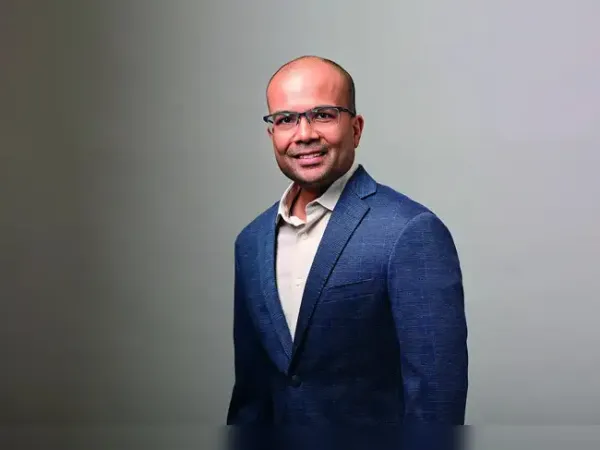
New Delhi [India], May 26 (ANI): Anthropic co-founder Chris Olah has called for broader global oversight of artificial intelligence (AI), warning that the technology raises questions that extend far beyond computer science and into ethics, philosophy, governance and human dignity.
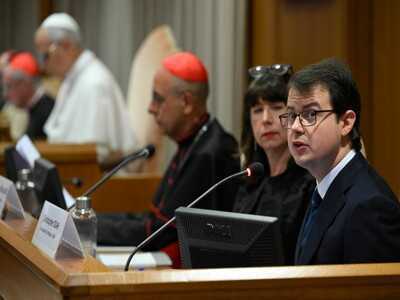
Speaking during the presentation of Pope Leo XIV's first AI-focused encyclical, Magnifica Humanitas: On Safeguarding the Human Person in the Time of Artificial Intelligence, at the Vatican, Olah said AI development cannot remain solely in the hands of technology companies.
"The questions raised by AI are bigger than the AI research community," Olah said, adding that the technology's implications require engagement from "religion, philosophy, and society at large."
The Anthropic co-founder stressed that modern AI systems are fundamentally different from traditional engineered systems.
"AI systems are not engineered the way a bridge or an airplane is engineered," he said. "They are grown, on a structure roughly modeled after the brain, on an enormous inheritance of human thought and speech."
Highlighting the rapidly evolving nature of AI, Olah said researchers continue to discover "mysterious, even unsettling" behaviours inside advanced AI models.
"We find structures that mirror results from human neuroscience. We find evidence of introspection," he said.
Olah further noted that some AI systems appear to exhibit internal states resembling human emotions.
"We find internal states that functionally mirror joy, satisfaction, fear, grief, and unease," he said, while cautioning that researchers still do not fully understand what those discoveries mean.
The Anthropic executive warned that AI-driven disruption of global labour markets could emerge as one of the defining moral and economic challenges of the coming decades.
"There is a real possibility that AI will displace human labor at very large scale," he said.
Calling for collective responsibility, Olah urged governments, scholars, civil society groups and religious institutions to play a stronger role in shaping AI governance.
"We need informed critics who will tell the labs when we are failing," he said. "We need moral voices that the incentives cannot bend."
Pope Leo XIV's encyclical has emerged as one of the Catholic Church's strongest interventions on the ethical implications of AI, including concerns around labour displacement, concentration of technological power and the risks posed by autonomous systems.
The Vatican event marked a rare collaboration between a leading AI company and religious leadership, underscoring growing global concern over the social impact of rapidly advancing AI technologies.
According to Olah, the debate around AI must remain centred on humanity itself.
"If this technology is coming, it must go well -- for our common home, and for the children to come," he said. (ANI)