The government’s ambitious PM Surya Ghar Muft Bijli Yojana is rapidly becoming one of India’s most popular rooftop solar schemes. While most people know that the scheme helps households reduce or even eliminate electricity bills, many are still unaware that it can also become a long-term source of regular income.
Under this scheme, homeowners can generate solar electricity on their rooftops and sell surplus power directly to the government through the electricity grid. In simple terms, your roof can function like a small power plant for the next 25 years, helping you save money and earn additional income at the same time.
Here is a complete step-by-step explanation of how the system works, how payments are made, and how households can benefit financially from extra solar power generation.
The PM Surya Ghar Yojana was launched to encourage rooftop solar adoption across India by offering subsidies and free electricity benefits. According to the scheme guidelines, if a household solar system generates more electricity than the family consumes, the extra power is automatically transferred to the government electricity grid.
This excess electricity can then be purchased by the power distribution company (DISCOM), allowing homeowners to earn money from unused solar energy.
Experts say this system is especially beneficial for households with large rooftops and moderate electricity consumption, as they can consistently generate surplus units every month.
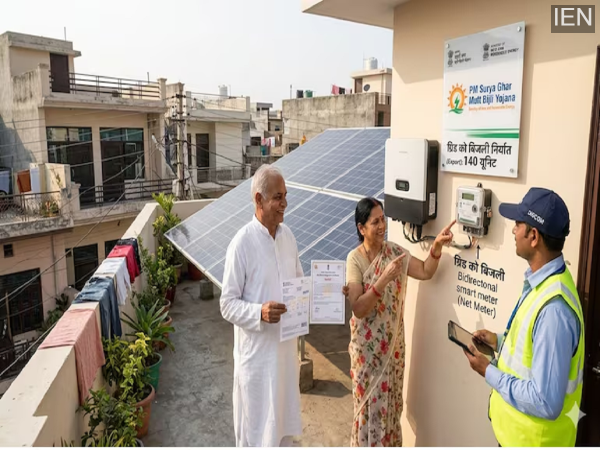
The backbone of this earning model is a system called “Net Metering.”
A normal electricity meter only measures how much electricity a household consumes from the grid. However, a net meter — also called a bidirectional meter — works in two directions:
For example:
This extra electricity is then adjusted or purchased by the electricity distribution company.
The Ministry of Power and state electricity regulators have established clear rules regarding payment settlement under the PM Surya Ghar scheme.
Every billing cycle, the units exported to the grid are adjusted against the units consumed from the grid. If exported electricity exceeds consumption, the surplus units are carried forward as credit into future bills.
At the end of the financial year — usually around March — the DISCOM calculates the total unused credit balance accumulated during the year.
After settlement, the amount is either:
This makes the system highly convenient for residential users.
The government purchases surplus electricity based on the Average Power Purchase Cost (APPC) determined by individual states.
Currently, the rate generally ranges between:
The exact rate depends on the state electricity regulatory commission.
Experts note that while electricity bills can become nearly zero, certain minimum fixed charges and taxes may still apply according to state regulations. However, these charges are often adjusted against the earnings generated through exported solar power.
Households interested in becoming “prosumers” — people who both produce and consume electricity — must follow the official process carefully.
Applicants must first visit the government’s official portal:
After selecting the state and DISCOM, users need to enter their electricity consumer number and complete registration.
Once the application is submitted, the local DISCOM checks whether:
This process is called technical feasibility approval.
After approval, homeowners must install rooftop solar systems using only government-approved and empanelled vendors listed on the portal.
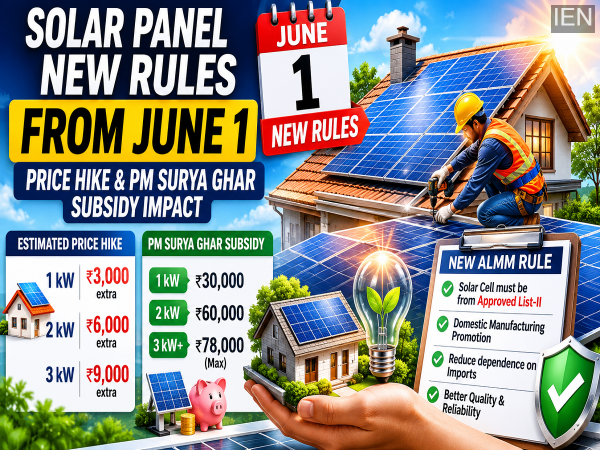
The scheme also requires the use of “Made in India” DCR-certified solar panels for subsidy eligibility and grid connectivity.
Once installation is completed, the homeowner or vendor must apply for:
through the official portal.
DISCOM officials then visit the property to:
After certification, the household officially begins receiving free electricity benefits and becomes eligible to earn from excess solar generation.
Before earning begins, households also receive substantial financial support for installing rooftop solar systems.
Current subsidy structure includes:
| Solar Capacity | Average Monthly Consumption | Government Subsidy |
|---|---|---|
| 1 kW | 0–150 units | ₹30,000 |
| 2 kW | 0–150 units | ₹60,000 |
| 3 kW or more | 150–300+ units | ₹78,000 (maximum) |
Some state governments additionally offer extra subsidies.
For example:
Energy experts say the PM Surya Ghar scheme is attractive because it combines:
With rising electricity costs and growing awareness about renewable energy, rooftop solar systems are increasingly being viewed not just as an expense-saving tool, but also as a stable long-term financial asset.
For many families, the scheme is transforming unused rooftops into reliable income-generating infrastructure for decades.