
Listen to this article in summarized format
Loading...
××
Subscribe to

Unlock AI Briefing and Premium Content
New Year Offer 24 Hours Left
Subscribe NowAlready a member? Sign In
What's Included
- Exclusive Stories
- Daily ePaper Access
- Smart Market Tools
- Curated Investment Ideas
- Ad-lite Experience
Subscription

Kulhads or earthen clay cups have been a part of Indian tradition for decades. And if you are a chai-lover, then you likely enjoy sipping on a cup of piping hot tea, served in these humble kulhads. Even with the rapid modernisation and umpteen technological advancements, kulhads have stood the test of time, deeply rooted in everyday life across the country. But a Haryana-based architect has woven innovation with tradition by using kulhads beyond tea stalls and railway platforms. He created a unique system ensuring his home stays naturally cool even in the scorching summer heat.
According to a report by The Better India, Gokul Goyal, an architect from Hisar, Haryana, came up with a creative solution to beat the rising summer temperatures, without relying on air conditioners and coolers, which leads to greater electricity consumption and a sharp surge in bill amount. All it required for him was 7000 kulhads. Yes, you read that right.
Science behind kulhad roof
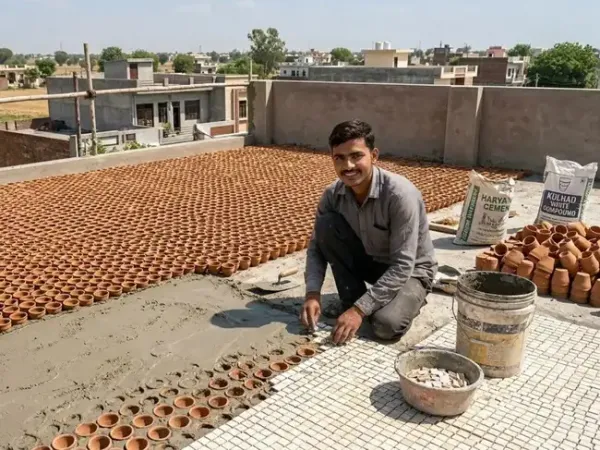
Gokul Goyal strategically arranged thousands of these earthen cups on the terrace floor of his home, forming a natural filler in the terrace slab, before they were covered with a layer of cement. The surface was then finished with mosaic tiles, while a specialised blend of white cement and waterproofing compounds sealed every joint and crevice. This ensured the terrace remained leak-proof, creating a robust structure capable of withstanding harsh weather conditions.
Once the construction was completed and properly cured, the rooftop began acting as a natural barrier against intense heat, significantly reducing indoor temperatures during the peak of summer. What truly sets the design apart is the science working beneath the surface. The glossy mosaic finish reflects a large portion of the sun’s rays instead of allowing them to penetrate the roof. At the same time, the hollow interiors of the earthen kulhads trap air, creating an insulating layer that slows the transfer of heat into the rooms below.
Eco-friendly cooling solution
The elements combined form a powerful cooling mechanism that helps maintain a more comfortable indoor environment without depending heavily on electricity-driven appliances. The result is a cost-effective, eco-friendly solution that tackles soaring temperatures using materials that have been part of Indian households for generations. But there’s more. Beyond its cooling benefits, the rooftop also enhances the overall look and functionality of the house.
The mosaic finish lends the terrace a neat and attractive appearance while providing a non-slippery surface that improves safety. Since the materials require minimal upkeep and are built to last for years, the design offers long-term value with little maintenance. By blending sustainability, practicality, and traditional craftsmanship, the architect’s ingenious rooftop concept demonstrates how age-old materials can be repurposed to solve modern-day challenges in a smart and visually appealing way.
According to a report by The Better India, Gokul Goyal, an architect from Hisar, Haryana, came up with a creative solution to beat the rising summer temperatures, without relying on air conditioners and coolers, which leads to greater electricity consumption and a sharp surge in bill amount. All it required for him was 7000 kulhads. Yes, you read that right.
Science behind kulhad roof
Gokul Goyal strategically arranged thousands of these earthen cups on the terrace floor of his home, forming a natural filler in the terrace slab, before they were covered with a layer of cement. The surface was then finished with mosaic tiles, while a specialised blend of white cement and waterproofing compounds sealed every joint and crevice. This ensured the terrace remained leak-proof, creating a robust structure capable of withstanding harsh weather conditions.
Once the construction was completed and properly cured, the rooftop began acting as a natural barrier against intense heat, significantly reducing indoor temperatures during the peak of summer. What truly sets the design apart is the science working beneath the surface. The glossy mosaic finish reflects a large portion of the sun’s rays instead of allowing them to penetrate the roof. At the same time, the hollow interiors of the earthen kulhads trap air, creating an insulating layer that slows the transfer of heat into the rooms below.
Eco-friendly cooling solution
The elements combined form a powerful cooling mechanism that helps maintain a more comfortable indoor environment without depending heavily on electricity-driven appliances. The result is a cost-effective, eco-friendly solution that tackles soaring temperatures using materials that have been part of Indian households for generations. But there’s more. Beyond its cooling benefits, the rooftop also enhances the overall look and functionality of the house.
The mosaic finish lends the terrace a neat and attractive appearance while providing a non-slippery surface that improves safety. Since the materials require minimal upkeep and are built to last for years, the design offers long-term value with little maintenance. By blending sustainability, practicality, and traditional craftsmanship, the architect’s ingenious rooftop concept demonstrates how age-old materials can be repurposed to solve modern-day challenges in a smart and visually appealing way.