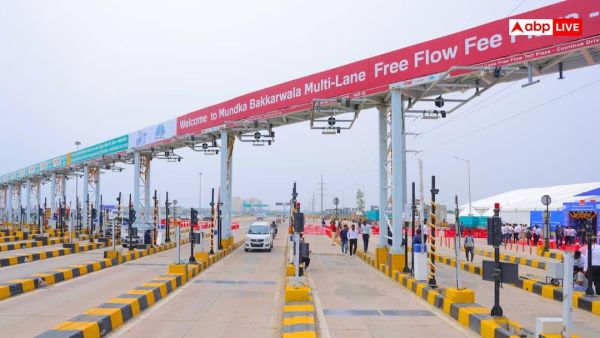
The conflict in West Asia may seem remote. But it has a direct connection to what you pay at the toll plaza every morning.
A Crisil study of 91 toll road assets spanning roughly 10,000 km of Indian highways revealed that the ripple effects of the conflict are already working their way into India's highway economy.
Toll rates on Indian highways are revised every year based on the Wholesale Price Index, or WPI. It is a measure of how much the prices of goods have changed over the previous year. Because WPI inflation was low last year, toll hikes this fiscal year have been small. For now, your commute costs remain relatively stable.
The problem is what comes next.
The economic disruption caused by the West Asia conflict is expected to push inflation higher during this fiscal year. Since toll revisions follow WPI with a one-year lag, a higher WPI in FY25-26 means steeper toll hikes in FY27-28, reported The Financial Express.
Crisil projected on Tuesday that toll collection growth will jump to 8-10 per cent in FY28. That is up from an estimated 5-7 per cent growth this fiscal.
"Next fiscal, toll rates may see a steeper increase due to higher WPI inflation expected this fiscal amid the West Asia conflict," said Manish Gupta, Deputy Chief Ratings Officer at Crisil Ratings.
There is another way the conflict is showing up on Indian roads. It is slowing freight movement. Trucks, tempos and goods carriers account for nearly three-fourths of total toll collections across Indian highways. And that segment is weakening.
Fastag data from the Indian Highways Management Company, which covers over 900 toll plazas, showed that collections from commercial vehicles fell in both March and April this year.
This is the primary reason Crisil expects overall toll collection growth to moderate by 150 to 200 basis points compared to last year. Passenger vehicle traffic, for its part, continues to grow steadily, driven by rising vehicle ownership and better expressway access.
If you drive a private vehicle and bought the annual highway pass introduced on August 15 last year, you contributed to a 5-7 per cent dip in toll revenues in the January-March quarter of FY26. The government is compensating road concessionaires for this revenue loss, so highway construction and maintenance are not at risk. But the data confirms the pass had a real and measurable impact on collections.
Here is something that might surprise you. One in four toll road assets in Crisil's sample actually saw traffic decline over the last two fiscal years. If a stretch you regularly use has started feeling emptier, a newer expressway nearby is the most likely explanation. That single factor affected around 12 per cent of the assets studied. Monsoons, sand mining bans and local disruptions accounted for the rest.
Despite the pressure on collections, Crisil does not expect credit profiles of toll road assets to weaken. The debt service coverage ratio, which measures how comfortably a borrower can repay its debt from income, is projected to stay at around 1.5 times both this fiscal and the next.
"Diversity of assets helps cushion the impact. Controlled leverage maintained under the InvIT structure, along with resilient operating performance, will keep the debt service coverage ratio of toll road assets strong at approximately 1.5 times this fiscal and the next. Consequently, credit profiles will remain stable," said Anand Kulkarni, Director at Crisil Ratings, in a statement to the media.
For commuters, the immediate takeaway is straightforward. This year's toll hikes are small. Next year's may not be.