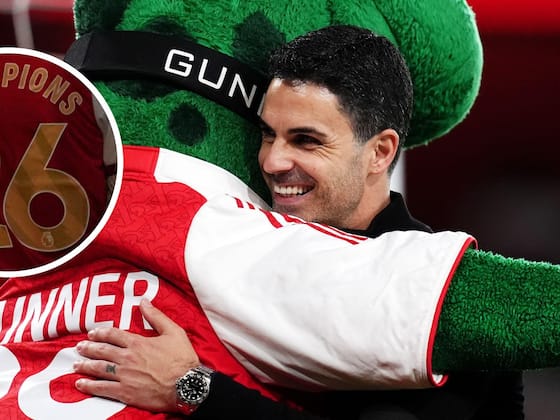
Since Mikel Arteta took over as Arsenal’s manager in December 2019, he has been the subject of countless jokes and criticisms — from pundits, rival fans, opposition players, and even sections of Arsenal’s own supporters.
It didn’t begin that way, of course. Within months of his appointment, Arteta guided Arsenal to another FA Cup triumph, followed by a Community Shield victory soon after. It was a promising start for the apprentice manager, carving out his own path. Winners, after all, rarely make for comic relief.
But as the trophies dried up, the mockery began — and it didn’t stop.
There was no shortage of material for critics to latch onto. The speakers blasting “You’ll Never Walk Alone” during training sessions to mimic Anfield’s atmosphere. The supposed hiring of pickpockets to steal from players at a team dinner as a quirky lesson in awareness. The arrival of a 150-year-old olive tree as a symbol of growth and resilience. Even the team’s pet dog, named Win — something even Liam Rosenior might have thought twice about.
Arteta himself took it in stride, laughing off Newcastle’s Jacob Murphy calling him “Lego Head” — a nickname that Arsenal fans themselves later adopted on AFTV. Liverpool’s Kop couldn’t resist joining the fun either, unveiling a massive banner mocking the former Everton midfielder’s lack of silverware: “Always the bridesmaid, never the bride.”
And who could forget his memorable team talk from the “All or Nothing” documentary, where he referenced Thomas Edison and the lightbulb — urging his players to shine and transmit energy and passion. The result? A 2-1 defeat, a fifth-place finish, and another season without Champions League football.
“Poor Lego Head,” many said, as the football world had a laugh. Here was a man seemingly lost in his own ideas — obsessed with odd metaphors, quirky motivation, and marginal gains — to the point of appearing delusional.
Yet Arteta stayed silent. He kept working. He kept turning the lights on — literally and figuratively.
Because the truth behind that lightbulb speech wasn’t about the immediate result. It wasn’t about outsiders finding it odd. It was about Arteta establishing something deeper — a culture, a belief system, a method, a standard, and a mindset that belonged entirely to him. As unshakable as his perfectly sculpted hair.
The pickpockets weren’t a gimmick — they were a lesson in focus and awareness. The blaring speakers weren’t eccentric — they were preparation, an attempt to break a nine-year hoodoo at Anfield. The team dog wasn’t madness — it was motivation made tangible.
Fast forward to this season, and the criticisms have returned — though this time, they’ve targeted Arsenal’s football more than their manager’s quirks. Despite spending 238 days at the top of the Premier League table, including 200 consecutive days, detractors have been relentless.
In January, Paul Scholes claimed that Arsenal would be the “worst team ever to win the Premier League.” By March, he doubled down, suggesting that no team deserved the title this year — that the trophy shouldn’t even be awarded.
Alan Pardew, taking a break from his commercial ventures, agreed — arguing that Arsenal’s title would come with an asterisk due to their reliance on pragmatism and time-wasting tactics.
Too defensive. Too pragmatic. Not aesthetically pleasing. Accused of using a low block, gamesmanship, physical tussles, and of being overly cautious. Critics called them bottlers, saying they lacked bravery. We’ve all heard it.
Arteta’s response? Win the league anyway — and do it with that trademark Lego smile.
The truth is that Arteta has never been cautious. Unless “cautious” means being meticulous about every small detail, even if it seems eccentric to others.
His team’s creative set-piece strategies, their exceptional organisation, and the willingness of players to throw their bodies in front of shots — even in the most awkward of positions — all reflect a side dedicated to the cause. Players taking blows to the face in sheer determination to defend the badge. Even if the results come as narrow “One-Nil to the Arsenal” victories, it’s all part of the design.
None of this happens by chance. It’s the result of a manager who makes every detail matter because he truly believes it does. And if that means using a lightbulb metaphor or giving the team dog a pat for good luck, so be it.
Arsenal are no longer the nearly men, no longer the bridesmaid. And with most domestic rivals in transition, this could be a long-lasting era of success.
But immortality? That’s still one game away.
Budapest. Saturday. The Champions League final. Ninety minutes from the biggest prize in European football. A stage Arsenal have never conquered before.
For Mikel Arteta, it will, as always, come down to the details.