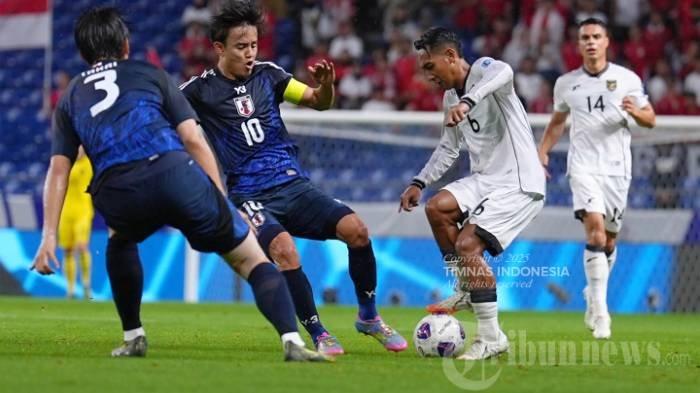
With the opening match of the World Cup against the Netherlands only weeks away, Japan will take on Iceland on Sunday, 31 May 2026 at 17:25 WIB at the newly built Japan National Stadium in Tokyo. This fixture serves as their final rehearsal before the global tournament begins, as part of the Kirin Challenge Cup 2026.
Hajime Moriyasu’s squad will enter the match in excellent form, while Iceland—who will not feature at this summer’s World Cup—will look to use this opportunity to rebuild confidence ahead of their friendly against Argentina next month.
Japan have been in outstanding form in the build-up to this summer’s World Cup, losing only once in 11 matches since the end of their qualification campaign.
The record includes eight wins and two draws, with victories in each of their last five friendly matches.
Moriyasu’s side cruised through their 10-match qualifying campaign, winning seven, drawing two, and losing just once, while conceding only three goals in total.
This defensive record underlines the organisation and discipline that have become the hallmarks of the Japanese team.
Among their recent friendly wins are impressive victories over Brazil and England—two of the world’s top six-ranked nations.
Two consecutive clean sheets against the Three Lions and Scotland earlier this spring further demonstrated that Japan are not just dominant in Asia but also capable of matching elite opponents.
Currently ranked 18th in the world and grouped with the Netherlands, Tunisia, and Sweden in Group F, Japan head into this clash full of belief.
Moriyasu is expected to use Sunday’s match to fine-tune combinations and tactical patterns that will be applied when they face the Netherlands on 14 June.
Iceland, on the other hand, will not be part of this summer’s World Cup after finishing third in their qualifying group behind France and Ukraine, winning only two of six matches.
Arnar Gunnlaugsson’s team also suffered relegation from the Nations League recently, and the Icelandic manager is well aware of the rebuilding task ahead if the Warriors are to turn things around in the long term.
The visitors come into Sunday’s encounter on the back of two draws and one defeat in their last three matches, having failed to win any of their last four across all competitions. Their most recent result was a 1-1 draw against Haiti in March.
With no major tournaments ahead until the Nations League, Iceland will at least have the motivation of an upcoming friendly against reigning world champions Argentina in Alabama next month. However, before that, they must face a tough trip to Tokyo against a high-flying Japanese side with strong momentum behind them.
Japan have named a 26-man squad for both the World Cup and the Kirin Challenge Cup 2026, with Moriyasu opting for a full-strength lineup for Sunday’s farewell match.
The most notable absentee is Brighton’s Kaoru Mitoma, whose injury is a significant blow given his importance in Japan’s attacking play, while Junya Ito will also miss out due to club commitments with Genk.
Captain Wataru Endo is expected to lead the team from midfield, with Takefusa Kubo and Takumi Minamino both set to feature as Japan look to replicate the effective combinations they have developed in recent months.
Gunnlaugsson has announced a 32-man squad for Iceland’s next two fixtures, which includes four goalkeepers—among them Brentford’s Hakon Valdimarsson, who has 21 international caps.
Sverrir Ingi Ingason has been called up but remains doubtful for Sunday, while 17-year-old Viktor Dagason and Stockport County striker Benony Breki Andresson are among the young faces included in the squad.
Veteran midfielder Aron Gunnarsson, who has 108 caps and is close to matching Birkir Bjarnason’s Icelandic record of 113 appearances, is also part of the team, alongside playmaker Gylfi Sigurdsson, who has earned 85 caps.
Japan: Suzuki; Seko, Watanabe, Ito; Sugawara, Kamada, Tanaka, Maeda; Suzuki, Sano; Goto
Iceland: Valdimarsson; Palsson, Hermannsson, Ingason, Tomasson; Haraldsson, Johannesson, Gudmundsson; Willumsson, Gudjonsen, Thorsteinsson
Japan have kept clean sheets in their last two matches against top-tier opposition and possess an intensity in pressing and wing play that will be difficult for Iceland’s compact defence to withstand over 90 minutes.
Iceland have not won in their last four matches and arrive in Tokyo without momentum or enough firepower to trouble a Japanese team hitting peak form at just the right time ahead of their World Cup opener against the Netherlands.
Predicted Score: Japan 3-0 Iceland
Japan are currently in a phase of remarkable stability and tactical maturity. Under Hajime Moriyasu, they have evolved into a team with both well-structured defence and quick, effective attacking transitions.
Japan’s main strength lies not only in individuals such as Kubo or Minamino but also in their collective organisation, which makes them difficult to break down. Their minimal goals conceded in qualification reflect their disciplined defensive structure.
Iceland, in contrast, are still in a rebuilding phase. Without a winning momentum in recent matches, they have struggled for consistency, particularly against teams that press with high intensity.
Although they boast experienced figures like Gylfi Sigurdsson and Aron Gunnarsson, Iceland’s collective quality doesn’t seem sufficient to match Japan’s fast-paced style. Moreover, their frontline has lacked sharpness in their recent outings.
Playing at home in Tokyo also gives Japan a significant advantage. They usually dominate matches in front of their home fans, controlling possession and dictating the tempo from the start.
As this is a preparatory match, Japan are unlikely to push for an excessively large scoreline but should still comfortably assert their dominance and maintain positive momentum ahead of their clash with the Netherlands in the 2026 World Cup.
Predicted Score: Japan 2-0 Iceland