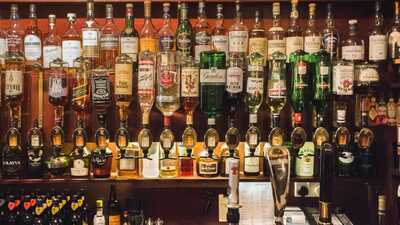
New Delhi: The new excise policy in Ladakh will allow the sale of both foreign liquor and Indian-Made Foreign Liquor (IMFL), as well as, for the first time, liquor sales from guesthouses or homestays. This policy allows the establishment of liquor outlets in these locations, and it allows the establishment of liquor outlets in guesthouses or homestays
This decision has been made to improve the tourism industry in Ladakh, including improving regulations in the liquor industry and enhancing excise revenues, addressing social issues like increasing drug addiction, and regulating the use of alcohol.
With the government of Ladakh having changed its liquor business model by using electronic auctioning, the government has agreed to conduct 20 liquor vends, rather than two vends, using electronic bidding for the first time. Additionally, the possibility of extending liquor sales to areas other than Leh will become available for the first time, such as areas including Nubra, Changthang, Sham, and Zanskar.
Alcohol in guest rooms, beer parlours, and microbreweriesHotels will be allowed to have liquor consumption in their guest rooms or beer parlours, and microbreweries will be offered for sale for the first time. Some of the significant changes are such that there is reduced documentation needed to obtain a licence, district administration’s approvals will no longer be required for a licence to be issued, and to clearly outline standards for safe practices within our industry, licences will also be issued to individuals who are at least 18 years old.
The new regulations also establish a framework for effective regulation of the industry; create stiff penalties for anyone who overprices; introduce a security hologram for all alcoholic beverages that will improve traceability and security, reduce tax evasion and improve accountability in the industry; restrict the sale of alcoholic beverages to glass, PET, and tin containers, and prohibit the sale of alcoholic beverages in plastic containers; and create a liquor
A policy was developed to address the artificial scarcity created by past restrictive policies that have forced tourists to bring in alcohol from outside and allowed us to increase our revenues from these sales. The policy was developed after considerable consultation with civic groups, religious groups, citizens of the region, and provincial and municipal government representatives, all of whom expressed concerns about increasing abuse of drugs, narcotics, and illegally imported alcohol.