During Thomas Tuchel’s early talks about becoming England’s manager, he imagined a dynamic style of play inspired by the Premier League’s high tempo. However, one trip to the United States last summer forced him to rethink those ideals.
The intense heat experienced during the 2025 Club World Cup made Tuchel and his coaching staff realise that creating a “heat-proof game model” was vital, even influencing squad selection. This concern grew stronger as most of his players completed two of the most demanding European club seasons in history. As assistant coach Anthony Barry put it, “you’re not going to see the best team playing the best football.”
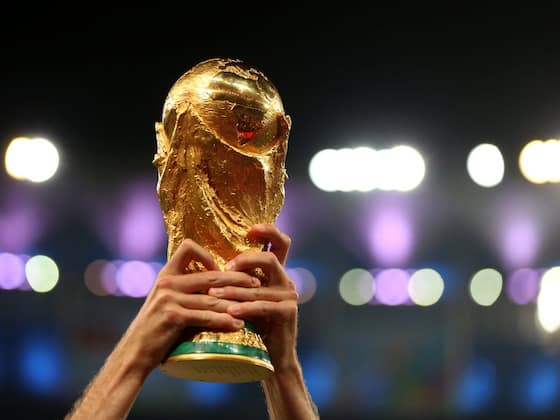
That raises the central question: what does it actually take to win the 2026 World Cup?
Throughout the 21st century, modern football’s evolution has produced two dominant approaches to winning major tournaments.
The first is a grand tactical philosophy, exemplified by Spain and later adopted by Germany. Rooted in Pep Guardiola’s positional play, this model underpins Western Europe’s football development system. It enhances the abilities of technically gifted players but demands near-perfect harmony — any small gap can become a major weakness.
The other school of thought is the pragmatic “tournament ball” approach, represented by Didier Deschamps’s France and Portugal’s 2016 triumph. This method relies on compact defensive structures, often a mid-to-low block, and adapts to opponents. It is easier to implement but rarely reaches the same technical heights, as matches are decided by fine margins.
Lionel Scaloni’s 2022 Argentina team disrupted this pattern, blending both ideologies with a style deeply rooted in Argentine football identity. That hybrid model could inspire even more diversity in strategies at the 2026 World Cup.
This shift won’t just happen because teams copy the reigning champions — it’s also about the unique nature of the upcoming tournament.
Even though World Cup winners are celebrated as deserving champions, luck plays a huge part — including the form and physical condition in which teams begin the competition.
Every side must peak at the right time in a four-year cycle, managing numerous variables. Injuries, fatigue, and timing can make or break a campaign.
The 2026 edition adds even more complications.
One of the biggest factors will be player fatigue.
Clips from USA 1994 already offered warnings. John Aldridge’s furious reaction in the scorching Orlando heat and Steve Staunton’s need for a cap under the sun showed how punishing conditions could be. Arrigo Sacchi described Italy’s struggle in “an impossible climate” that worked against his high-tempo football.
Going further back, some argue that Brazil’s brilliance in 1970 was aided by the Mexican heat draining their opponents, giving Pele and his teammates more space. Four years later, the Netherlands’ pressing game thrived in West Germany’s cooler, rainy conditions.
Weather has always influenced the course of football history.
This time, it could be even more decisive. According to a World Weather Attribution report, roughly 25% of matches will be played in conditions exceeding a 26-degree Wet Bulb Globe Temperature — a key measure of how efficiently the human body can cool itself.
Adding to that, players will face an expanded European season and an extra knockout round in the World Cup itself — eight matches instead of seven to lift the trophy. Key players such as Declan Rice will surpass 4,000 minutes in a season, with their most fatigued moments arriving in the harshest heat.
These small margins could prove vital. Paris Saint-Germain’s attackers, who often enjoy lighter domestic workloads, may grant France an advantage. Spain, the reigning European champions, face the opposite scenario — many from their 2024 squad have moved to bigger clubs with more demanding calendars.
Take Martin Zubimendi, for example, who has endured a full campaign at Real Sociedad. Every tactical model is constrained by player endurance.
Unlike in previous eras, where managers such as Alf Ramsey in 1966 or Carlos Bilardo in 1986 could perfect and conceal systems for years, modern football’s transparency makes that impossible. The extended World Cup format may therefore reward coaches who can unveil new tactical wrinkles mid-tournament.
This is where game style itself could become a survival tool.
Teams using a low or mid-block will conserve more energy, while those focusing on possession can manage exertion better. Spain, steeped in that philosophy, might again have a major edge. Their fluency in maintaining control gives them a rhythm few others can match.
As Barry noted, “it’s going to be a tournament of moments.” Many matches could be stop-start affairs, illuminated only by bursts of brilliance.
This could mirror USA 1994, when flashes of genius — like those from Gheorghe Hagi or Roberto Baggio — defined entire matches.
In 2026, individual talent could matter more than ever. The players capable of producing magic in draining conditions may decide the outcome.
It’s easy to state that world-class players are essential to win a World Cup, yet history shows that smaller nations can triumph in the Euros — Greece and Denmark being prime examples. The World Cup, however, demands a higher standard, and 2026 is expected to raise that bar even more.
While many eyes will be on young stars like Lamine Yamal, Jamal Musiala, and France’s formidable attack, Carlo Ancelotti’s Brazil might quietly hold the edge. Ancelotti’s gift for empowering individual brilliance could unleash Brazil’s deep pool of talent. The question remains whether they possess the clinical No. 9 needed to finish chances. Few teams do — England are among those that do.
The statistics are compelling: since the tournament expanded in 1998, six of the last seven golden boot winners have reached at least the semi-finals. Elite goal scorers take their teams deep.
There is another route to producing those decisive “moments” — set-pieces. They’ve been a major theme this season, particularly in England. Tuchel has discussed the importance of maximising such opportunities, seeing them as a potential weapon. However, refereeing standards in the World Cup will likely differ, with FIFA expected to clamp down on the kind of physical grappling often seen in the Premier League.
That’s yet another variable in a World Cup full of unknowns, where no single formula guarantees victory.