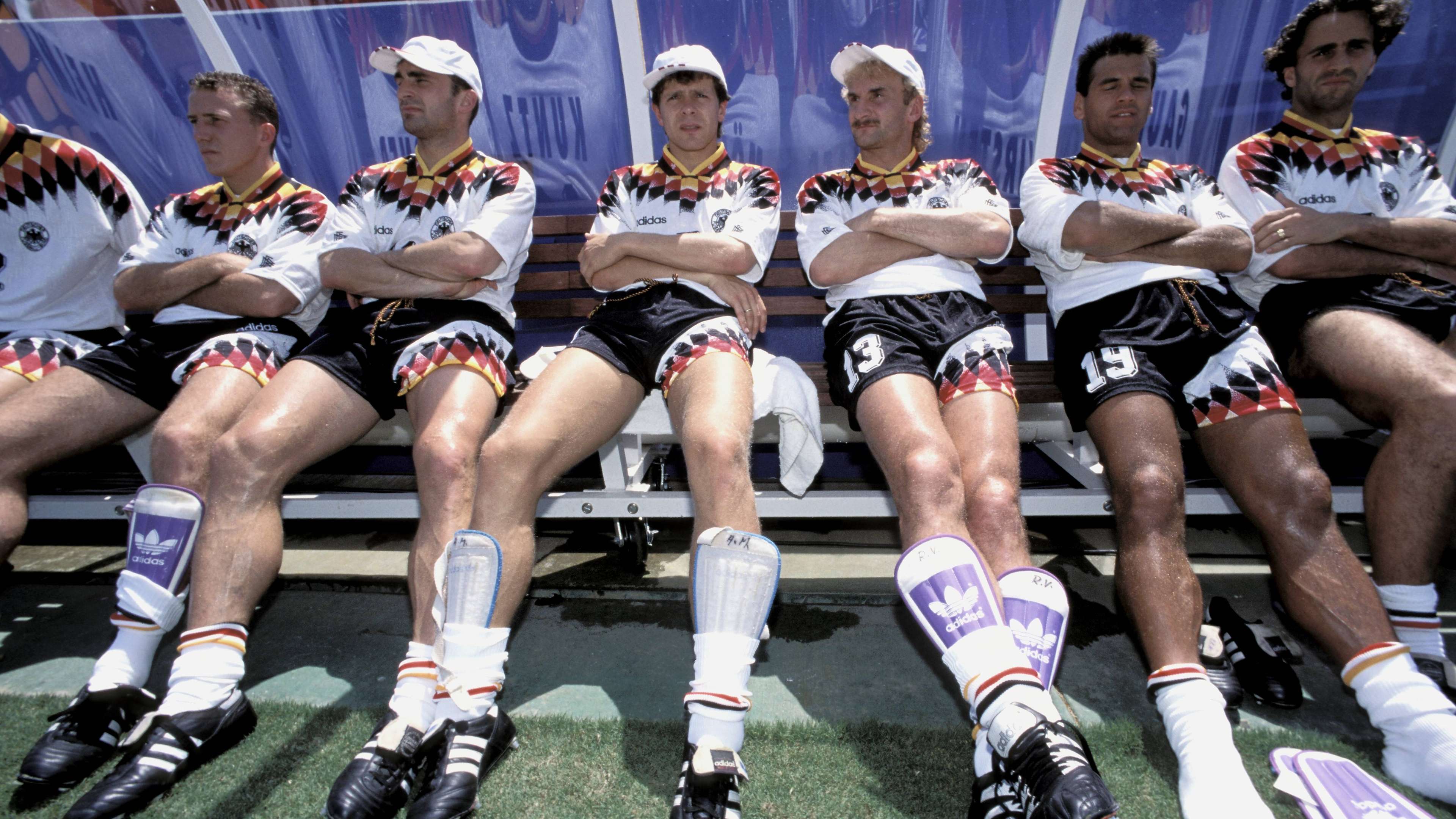
As the upcoming World Cup draws closer, memories of the last tournament held in the United States resurface — and for Germany, those memories are far from pleasant.
Throughout history, the base camps of the German national team have often mirrored their success or failure at major tournaments. The “Spirit of Spiez” became legendary in 1954, as it carried the DFB team to its first World Cup title. The relaxed atmosphere of Campo Bahia in 2014 helped them lift their fourth trophy in Brazil. In contrast, the remote Soviet-era sanatorium in Watutinki, Russia, during the 2018 World Cup, and the secluded Zulal Wellness Resort in Qatar in 2022, seemed to have the opposite effect, with both tournaments ending in disappointment.
This time, the DFB squad is staying at The Graylyn Estate in Winston-Salem, North Carolina—roughly halfway between New York and Miami, or as some might describe it, “in the middle of nowhere.” Architecturally, however, the hotel is striking, designed to resemble a medieval castle.
Television presenter Laura Wontorra visited the location in advance for a documentary series but was far from impressed. “I’d put a question mark behind it. It’s an interesting choice of accommodation,” she said later during a Magenta media event. “I think you can prepare well and stay focused there, but there’s absolutely nothing happening around it.”
During the 1994 World Cup, the German team set up their camp just outside Chicago.
This setup stands in stark contrast to the DFB’s base for the 1994 World Cup—the only edition of the tournament to be hosted in the United States. That campaign remains one of the darkest chapters in German football history, marked by Stefan Effenberg’s infamous gesture and a shocking quarter-final exit against Bulgaria. The team had been staying at the Golfhotel Oak Brook, near Chicago.
Head coach Berti Vogts was already facing considerable pressure before the tournament even began, much of it stemming from comments made by his predecessor Franz Beckenbauer. Following the 1990 World Cup victory and the integration of East German talent, Beckenbauer boldly declared that Germany would be “unbeatable for years to come.” The runner-up finish at Euro 1992, where the DFB side lost to Denmark in the final, only intensified expectations for a successful title defence in 1994.
Germany began their 1994 campaign at Soldier Field in Chicago, conveniently located near their hotel. Although the stadium won’t host matches in this year’s tournament, it remains part of the national team’s nostalgic itinerary. Earlier this week, the squad flew to Chicago for a training camp and will face the United States in a final warm-up match at Soldier Field on Saturday. Back in 1994, Germany kicked off their campaign at the same venue with a 1–0 win against Bolivia.
Lothar Matthäus: “I don’t care what a player’s wife says.”
Aside from that initial victory, there was little reason for celebration at the Oak Brook Golf Hotel. The oppressive summer heat and internal conflicts made life difficult, as Vogts struggled to keep his restless squad under control. At the centre of the discord were the players’ wives — or, more precisely, their level of involvement and perks.
Under the headline “It was always about the players’ wives,” Andreas Möller later wrote in a column for Die Zeit: “There were many conflicts within the team. The atmosphere was poor. No comparison to the 1990 World Cup. Back then, everything just clicked.” He added, “In 1994, some players wanted their wives to be included in everything. We wasted so much time on trivial issues.”
The tension began even before the tournament started. Stefan Effenberg wanted to bring his family to the team’s welcoming party — an idea that other players swiftly rejected. Soon after, Bodo Illgner’s wife Bianca publicly demanded complimentary food and accommodation at the team hotel, prompting Thomas Helmer to respond sharply: “Bodo is number one, not his wife. She needs to accept that once and for all.” Captain Lothar Matthäus was equally blunt: “I don’t care what a player’s wife says.”
Ultimately, the players’ families were housed separately at the nearby Drake Hotel, though reports suggested that Lolita Matthäus occasionally disregarded that rule. Nowadays, the question of whether players’ partners should stay at team hotels is considered settled. However, current national coach Julian Nagelsmann intends to allow family visits on the days following matches during the upcoming World Cup.
After Effenberg’s exit, a golf tournament added to the chaos.
In 1994, Germany followed their opening win with a 1–1 draw against Spain and a 3–2 victory over South Korea, topping their group. The match against South Korea, played in Dallas under scorching 40-degree heat, was described by players as exhausting both physically and mentally. It was also overshadowed by Stefan Effenberg’s notorious act of indiscipline.
After a subpar performance, Vogts substituted Effenberg in the second half. As he left the pitch, jeers from German fans appeared to trigger him — and according to some witnesses, he responded by raising his middle finger. No concrete photo or video evidence of the gesture ever surfaced. Although senior players like Rudi Völler, Jürgen Klinsmann, Matthäus, and Illgner supported Effenberg, Vogts and DFB President Egidius Braun decided to send him home.
Effenberg used the opportunity to extend his stay in the U.S. with his family, but peace at the Oak Brook hotel remained elusive. On the eve of Germany’s round of 16 clash with Belgium, a massive golf tournament brought nearly a thousand participants and their entourages to the same venue. Despite these distractions, Germany managed to beat Belgium in the last 16, only to fall dramatically to Bulgaria in the quarter-finals — abruptly ending their turbulent journey through the United States.