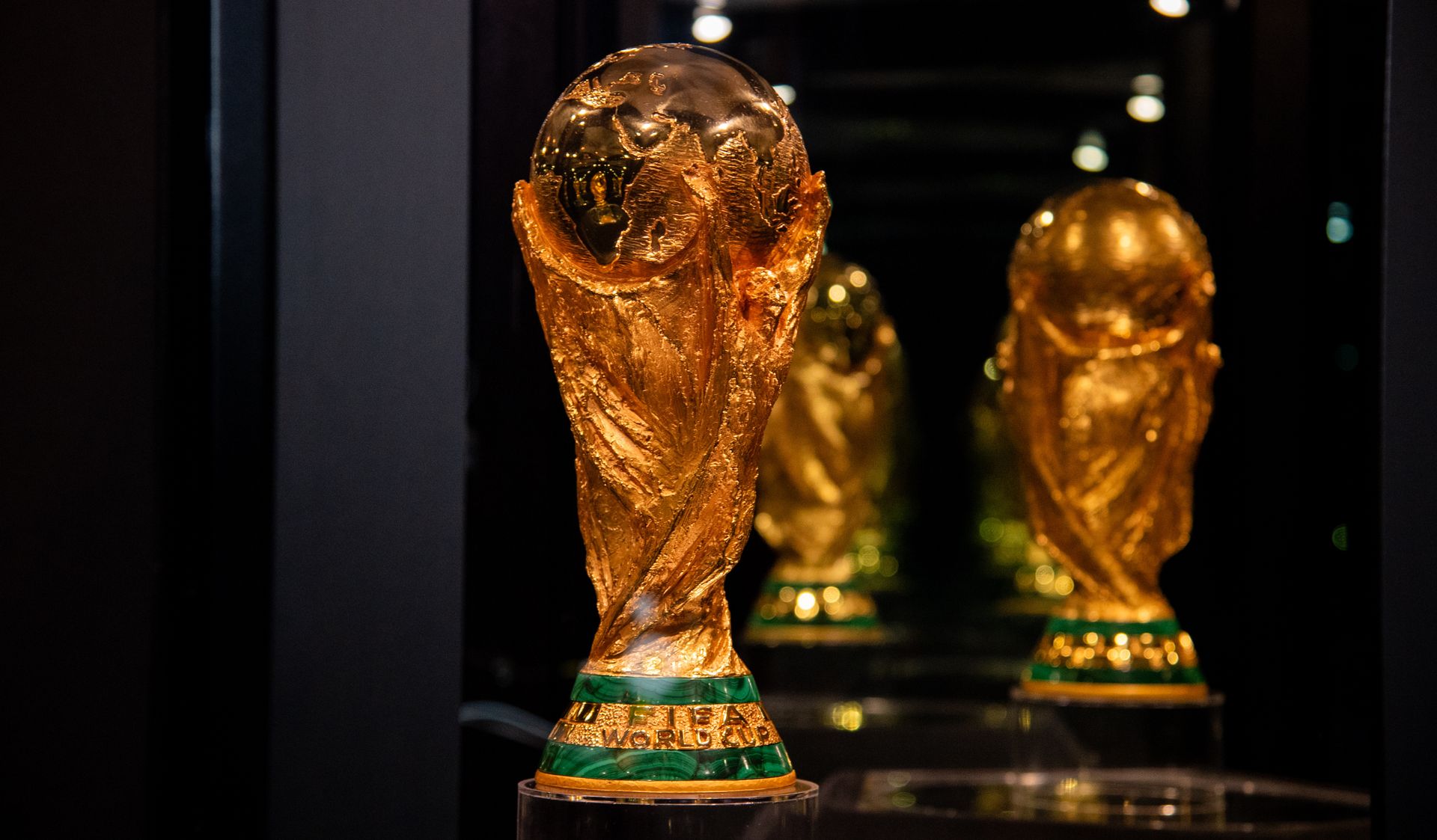
The 2026 FIFA World Cup, jointly hosted by the United States, Mexico, and Canada, is set to begin on June 11. As international football takes over, it’s time to take a moment of pride for the clubs contributing the most players to this global event.
A recent study by the Brazilian newspaper O Globo analysed the origins of the 1,248 players selected for the tournament, revealing representation from 453 different clubs across the world.
Leading the rankings is Manchester City, which has sent an impressive 19 players to represent 12 different national teams. This allows the Premier League champions to reclaim the all-time record they had lost to Bayern Munich during the Qatar 2022 World Cup, where the German club had 17 call-ups. Back in Russia 2018, City had also held the top spot with 16 players.
For England, City have James Trafford (goalkeeper), John Stones (centre-back), Marc Guéhi (centre-back), and Nico O'Reilly (full-back). Representing Portugal are Matheus Nunes (full-back), Rúben Dias (centre-back), and Bernardo Silva (midfielder). Croatia will feature Josko Gvardiol (centre-back) and Mateo Kovacic (midfielder), while Nathan Aké (centre-back) and Tijjani Reijnders (midfielder) will feature for the Netherlands.
Other City representatives include Rayan Ait-Nouri (Algeria), Jérémy Doku (Belgium), Omar Marmoush (Egypt), Rodri (Spain), Rayan Cherki (France), Antoine Semenyo (Ghana), Erling Haaland (Norway), and Abdukodir Khusanov (Uzbekistan).
Bayern Munich follow closely behind with 18 players, while Arsenal and Paris Saint-Germain share third place with 16 call-ups each. Barcelona rank fifth with 15 players included.
Outside Europe, Saudi Arabian giants Al-Hilal lead the way with 12 players selected, placing them sixth overall.
Here’s how the top clubs stack up in terms of World Cup representation:
1st - Manchester City (England): 19
2nd - Bayern Munich (Germany): 18
3rd - Arsenal (England): 16
3rd - Paris Saint-Germain (France): 16
5th - Barcelona (Spain): 15
6th - Al-Hilal (Saudi Arabia): 12
6th - Atlético de Madrid (Spain): 12
6th - Crystal Palace (England): 12
6th - Manchester United (England): 12
10th - Borussia Dortmund (Germany): 11
10th - Galatasaray (Turkey): 11
10th - Liverpool (England): 11
Further down, Fenerbahçe (Turkey), Milan (Italy), PSV Eindhoven (Netherlands), Real Madrid (Spain), and Slavia Prague (Czech Republic) each have 10 representatives. Clubs with 9 players include Al Ahly (Egypt), Al-Ahli (Saudi Arabia), Al-Nassr (Saudi Arabia), Flamengo (Brazil), and Sunderland (England).
Among those with 8 players are Aston Villa (England), Benfica (Portugal), Brighton & Hove Albion (England), Celtic (Scotland), Chelsea (England), Eintracht Frankfurt (Germany), Hoffenheim (Germany), Lille (France), Mamelodi Sundowns (South Africa), Newcastle United (England), Nice (France), Olympique de Marseille (France), Orlando Pirates (South Africa), Stuttgart (Germany), Tottenham Hotspur (England), and Villarreal (Spain).
Teams with 7 selected players include Al Duhail (Qatar), Atalanta (Italy), Bayer Leverkusen (Germany), Inter Milan (Italy), Palmeiras (Brazil), Real Betis (Spain), Sporting CP (Portugal), Strasbourg (France), and Viktoria Plzeň (Czech Republic).
Finally, clubs with 6 players each are Al-Hussein (Jordan), Al-Qadsiah (Saudi Arabia), Esteghlal Tehran (Iran), Fulham (England), Juventus (Italy), Mainz 05 (Germany), Monaco (France), Persepolis (Iran), Roma (Italy), and Young Boys (Switzerland).
As the world gears up for the 2026 World Cup, Manchester City’s dominance on the global stage is once again reflected in the number of their players earning international recognition.