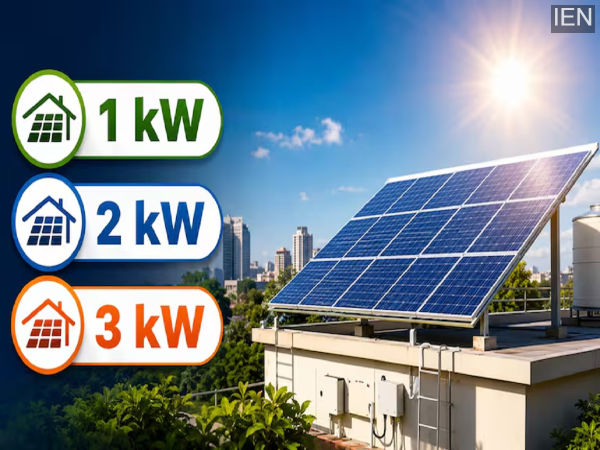
With electricity bills rising and temperatures soaring across India, rooftop solar systems are becoming an increasingly popular solution for homeowners looking to reduce energy costs. The government's PM Surya Ghar Muft Bijli Yojana has further boosted interest by offering substantial subsidies for residential solar installations.
However, many homeowners face a common question before investing: Should they choose a 1kW, 2kW, or 3kW solar system?
The answer depends on several factors, including monthly electricity consumption, household appliances, available rooftop space, and budget. Understanding the differences between these systems can help families make a smarter investment and maximize long-term savings.
Before selecting the system size, it is important to understand the available solar options.
An on-grid solar setup is connected directly to the electricity grid. It does not require battery storage because excess electricity generated during the day is exported to the grid through net metering. During nighttime or low-generation periods, electricity can be drawn from the grid.
One major advantage is that government subsidies under the PM Surya Ghar Scheme are available only for on-grid systems.
Off-grid systems operate independently and include battery backup for energy storage. These systems are ideal for regions that experience frequent power cuts.
Although they offer greater energy independence, off-grid installations are generally more expensive and are not eligible for government subsidies.
A 1kW rooftop solar system is suitable for small households with limited electricity requirements.
If your monthly electricity bill usually ranges between ₹1,000 and ₹1,500, this capacity may be sufficient.
A 1kW system can comfortably support:
LED lighting
Ceiling fans
Television
Laptop or desktop computer
Small refrigerator
However, heavy-load appliances such as air conditioners, water heaters, washing machines, and water pumps are generally beyond its capacity.
Daily generation: 4–5 units
Monthly generation: 120–150 units
Eligible homeowners can receive a subsidy of up to ₹30,000 under the PM Surya Ghar Scheme.
For most middle-class Indian families, a 2kW solar installation strikes the perfect balance between cost and electricity generation.
This system is ideal for households with monthly electricity bills ranging from ₹1,500 to ₹3,000.
Along with all the appliances supported by a 1kW setup, a 2kW system can also handle:
Water pumps
Washing machines
Air coolers
Mixer grinders
Additional household electronics
During daytime hours, it may also support a 1-ton inverter air conditioner, depending on the simultaneous load of other appliances.
Daily generation: 8–10 units
Monthly generation: 240–300 units
A 2kW rooftop solar system qualifies for a subsidy of up to ₹60,000.
For families seeking significant savings without a large upfront investment, this is often the most cost-effective option.
Homeowners with higher electricity consumption and multiple appliances may find a 3kW system more suitable.
This capacity is designed for larger families and homes that rely heavily on electrical equipment.
A 3kW system can typically support:
1.5-ton inverter air conditioner
Large refrigerator
Washing machine
Water pump
Geyser
Lighting and fans throughout the house
Daily generation: 12–15 units
Monthly generation: 360–450 units
The maximum subsidy available under the PM Surya Ghar Scheme is ₹78,000 for systems with capacities of 3kW and above (up to 10kW).
This makes 3kW one of the most attractive options for homeowners looking to maximize subsidy benefits.
The application process is fully online and relatively simple.
Visit the official PM Surya Ghar portal and register using:
State details
Electricity distribution company (DISCOM)
Consumer number
Mobile number
Email ID
After logging in, apply for a rooftop solar installation and provide information about your roof area and desired system capacity.
Your local electricity distribution company will evaluate technical feasibility and approve the application.
Once approved, select an authorized vendor registered with your DISCOM to install the solar panels.
After installation, the electricity department will inspect the system and install a net meter to track power generation and grid export.
Upload your bank account details and canceled cheque on the portal. After verification and commissioning approval, the subsidy amount is credited directly to your bank account, typically within 30 days.
Solar panels require adequate shadow-free space for optimal performance.
Approximate space requirements:
1kW system: Around 100 sq. ft.
2kW system: Around 200 sq. ft.
3kW system: Around 300 sq. ft.
The roof should receive direct sunlight for most of the day.
Always purchase and install solar systems through government-approved vendors. This ensures eligibility for subsidies, proper installation standards, and manufacturer warranties that often extend up to 25 years.
Choosing the right solar capacity depends on your household's electricity usage and future energy needs. A 1kW system suits small families with limited consumption, while a 2kW setup offers the best value for most middle-class households. Those looking for greater energy independence and maximum savings can consider a 3kW system, which also unlocks the highest subsidy benefits.
With rising electricity costs and attractive government incentives, rooftop solar remains one of the smartest long-term investments for Indian homeowners in 2026.