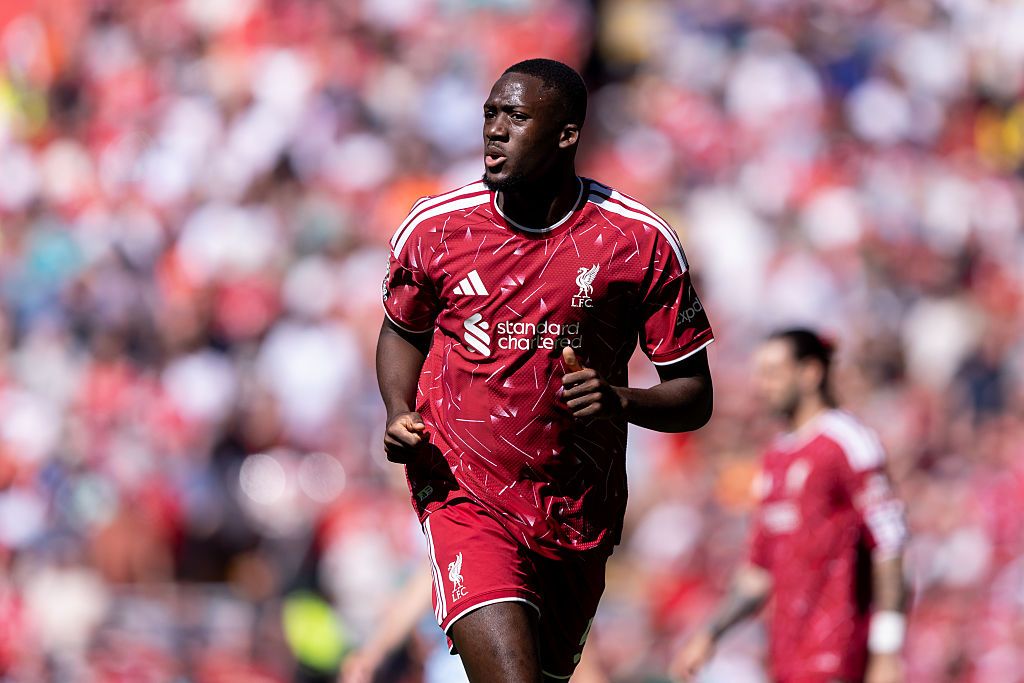
Liverpool’s attempt to defend their Premier League crown fell significantly short, and manager Arne Slot ultimately lost his job as a result. His dismissal underscored how far the team’s performances had slipped from expectations, though a deeper, more personal tragedy has quietly shaped the club’s recent struggles.
The Reds have been mourning the loss of teammate Diogo Jota, who died alongside his brother Andre Silva in a car accident in Spain last July. While the footballing world and Liverpool supporters paid their respects, the emotional toll on the players themselves has been immeasurable.
Former Liverpool left-back Andy Robertson has spoken on several occasions about Jota as his own time at Anfield drew to a close. Now, with his future away from Merseyside appearing imminent, Ibrahima Konate has shared a deeply personal account of the emotional challenges he faced.
At 27, Konate is approaching the end of his Liverpool contract and is reportedly close to sealing a move to Real Madrid, where he would reunite with former teammate Trent Alexander-Arnold.
The French defender, who lived near Jota, revealed that losing both a close friend and his father within a few months plunged him into a season-long battle with depression.
“There are low points, there’s depression,” Konate told France Inter radio. “You can experience depression in football too; there’s no shame in saying that.”
He continued, “I’ve often heard players admit to suffering from depression, and fans or outsiders didn’t understand because they earn a lot of money.”
“But no, that’s nonsense — you can’t say that. Depression is personal; it’s something deep inside you. When you’re depressed, it starts in your heart, travels to your mind, and takes over your entire body. That’s the hardest part, and it’s something we need to talk about.”
For nearly a year, Liverpool as a team and club have quietly grappled with this tragedy. They have never used it as an excuse for their inconsistent form, yet its emotional impact cannot be quantified.
“It devastated me. I didn’t have any interest in anything else at that point,” the French centre-back admitted.
“You go back to football because you have no choice. We’re employees of a club that pays us every month, so we have responsibilities.”
“We had to return to the pitch and play — for him, for his family, and for ourselves. You never really get over it, but you learn to live with it.”
Konate also endured personal loss when his father, Hamady, passed away in January after a long illness. The defender admitted that he kept his grief hidden, something he now regrets, acknowledging that his depression deepened as the season went on.
Konate deserves admiration for his courage in discussing his mental health struggles publicly and encouraging others to open up in similar circumstances.
“This is the advice I’d give to everyone: when you’re feeling low or something’s wrong, talk to people around you,” he said. “It can help and make a real difference. I didn’t talk about it — I kept it all to myself.”