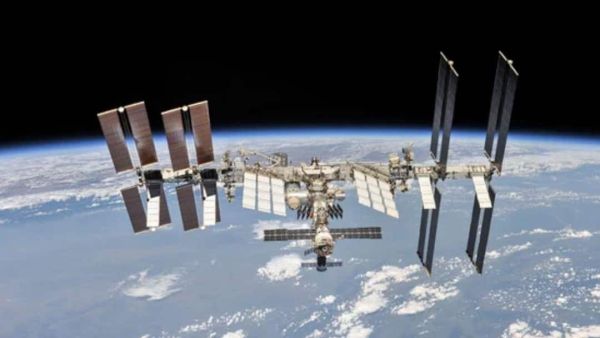
The National Aeronautics and Space Administration (NASA) on Friday instructed five of the seven astronauts currently aboard the International Space Station (ISS) to seek shelter inside the docked SpaceX Crew Dragon “Freedom” spacecraft after concerns emerged over an air leak in a Russian module of the station.
The move was described as a precautionary measure while the Russian crew continues efforts to repair cracks in the transfer tunnel.
The Zvezda service module transfer tunnel, known as PrK, has suffered from cracks and leaks for some time, and has been mitigated by Roscosmos as much as possible to date. The cracks have always been a concern that NASA watches very closely. NASA and Roscosmos have been working…
— Bethany Stevens (@NASASpox) June 5, 2026
NASA also asked astronauts to remain prepared for a possible evacuation if the situation deteriorates further. According to reports, mission control issued instructions at 9:04 AM ET on Monday directing crew members to enter the docked spacecraft and wear spacesuits in case an emergency evacuation became necessary.
“The Zvezda service module transfer tunnel, known as PrK, has suffered from cracks and leaks for some time, and has been mitigated by Roscosmos as much as possible to date," NASA spokesperson Bethany Stevens said in a social media post.
"The cracks have always been a concern that NASA watches very closely. NASA and Roscosmos have been working to determine the root cause of the cracks, and Roscosmos manages the issue through operational mitigation measures and periodic partial-repair efforts,” she added.
The instructions were received by four members of NASA’s 12-crew mission aboard the ISS, including two American astronauts, one French astronaut and one Russian cosmonaut.
Later, mission control informed the crew that they were comfortable withdrawing from the safe-haven configuration once Russian teams completed measurements on Friday, according to CBS News.
The air leaks in the Russian module are part of a long-running safety concern involving persistent cracks in the orbital laboratory.
“The cracks have always been a concern that NASA watches very closely,” the agency said in a statement on Friday, adding that the issue remains one of the station’s top safety concerns.
NASA and Russia’s space agency Roscosmos have been engaged in discussions for months over how to address the small but persistent air leaks in the Zvezda service module, a critical component of the ISS.
Roscosmos reported a slow pressure drop in the transfer tunnel after the arrival of a Russian cargo spacecraft last month. Since then, both agencies have continued efforts through “operational mitigation measures and periodic partial-repair efforts.”
According to Reuters, citing an anonymous senior NASA official, the amount of leaking air had increased from roughly one pound per day to around two pounds per day in recent months.
“We continue to work with our Russian counterparts, along with the rest of the international community that supports the space station, to arrive at a more permanent resolution,” NASA said.
Roscosmos said its inspection identified two separate leaks, one of which has already been sealed. The Russian agency also stated that there was currently no immediate threat to the crew aboard the ISS.