It would not be wrong to call cholesterol an invisible enemy of health. We often do not take the issue of cholesterol seriously until it begins to cause severe damage to the heart and brain. The most dangerous aspect is that high cholesterol can build up in the body for years without showing clear symptoms, gradually leading to blocked arteries.

Studies indicate that, in addition to poor lifestyle and dietary habits, factors like a lack of physical activity and high stress levels have exacerbated this problem. The risk is now being observed even in younger people. According to doctors, there are two types of cholesterol: good and bad.
While good cholesterol is essential for health, elevated levels of bad cholesterol can adhere to the walls of the heart's arteries, narrowing them. This impairs blood circulation and significantly increases the risk of a heart attack.
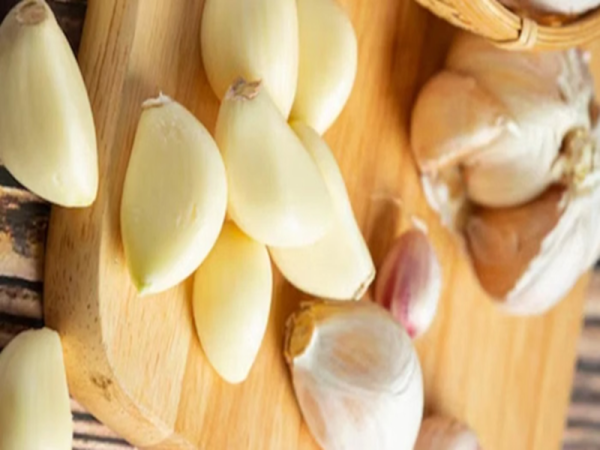
Many reports claim that consuming garlic can help alleviate cholesterol issues.
Is eating garlic truly beneficial?
First, let us understand why cholesterol levels rise.
There are several reasons behind high cholesterol.
Dietary habits—such as the excessive consumption of foods high in trans fats and saturated fats—pose a risk. Fried foods, fast food, and processed snacks can be particularly harmful to your health.
Additionally, a lack of physical activity and a sedentary lifestyle (not exercising) have been linked to increased levels of bad cholesterol.
Cholesterol problems are also frequently observed in individuals struggling with obesity.
Smoking and alcohol consumption further aggravate cholesterol issues and increase the risk of heart-related complications.
Does eating garlic provide benefits?
Doctors state that improving one's diet is crucial for optimizing cholesterol levels. Garlic contains several compounds that can help lower cholesterol.
Studies have found that a compound called allicin, present in garlic, can assist in reducing bad cholesterol. Regular consumption of raw garlic can improve total cholesterol levels. Raw garlic contains a substance called alliin. When exposed to air, alliin converts into a sulfur-containing compound known as allicin. Allicin is responsible for garlic's distinctive odor.
Numerous studies have highlighted the significant benefits of allicin:
It lowers 'bad' cholesterol.
It helps boost immunity.
It lowers blood pressure.
What do studies reveal?
A 2020 review cited reports indicating that black garlic extract (aged black garlic) can be highly effective in lowering 'bad' cholesterol while increasing 'good' cholesterol.
A study published in the *International Journal of Preventive Medicine* in 2016 found that individuals with high cholesterol levels experienced a significant reduction in 'bad' cholesterol after consuming 20 grams of raw garlic (approximately four cloves) and a tablespoon of lemon juice daily for eight weeks.
Ways to lower cholesterol
Lifestyle changes are crucial for controlling cholesterol levels.
One should reduce the intake of saturated and trans fats while incorporating fiber-rich foods such as fruits, vegetables, and whole grains into the diet.

Regular exercise—including a daily 30-minute walk and yoga—also helps reduce 'bad' cholesterol.
Weight management is essential, as obesity exacerbates cholesterol-related issues.
Quitting smoking and alcohol is vital for controlling cholesterol levels.
PC Social Media