India's flagship BrahMos supersonic cruise missile is rapidly becoming a pivotal asset in enhancing security and stability across the Indo-Pacific region. Countries within the influential economic grouping, the Association of Southeast Asian Nations (ASEAN), are increasingly interested in acquiring this advanced missile system. This interest is particularly pronounced among nations such as Philippine, Vietnam and Indonesia, which are facing a growing military threat from China in the South China Sea. The aggressive posture of the Chinese military has prompted these ASEAN members to seek deterrent capabilities, especially in light of the challenges faced by the Philippines, which has been contending with assertive military manoeuvres near its island territories.
The significance of the formidable BrahMos cruise missile was underscored during Operation Sindoor in May 2025, a brief yet intense conflict between India and Pakistan that showcased the missile's impressive capabilities. Even prior to this demonstration, the Philippines had recognised the strategic value of BrahMos and placed an order worth US$ 375 million for its acquisition in 2022, aiming to bolster its naval defences against potential Chinese aggression. The missile's influence is set to expand further in the South China Sea, with Vietnam and Indonesia already having signed contracts for its procurement. Additionally, other ASEAN nations, including Singapore, Thailand, Brunei, and Malaysia, have expressed serious interest in deploying BrahMos missiles on their shores and naval vessels, indicating a collective move towards enhanced regional defence.
As ASEAN member states engage in diplomatic disputes and confront China's maritime assertiveness—evident through the controversial nine-dash line that claims extensive territorial waters and islands in the South China Sea—the urgency for military preparedness has intensified. In this context, Malaysia has shown a particular inclination to acquire the air-launched variant of BrahMos for integration with its Sukhoi-30 fleet, further exemplifying the region's commitment to countering any unilateral military actions by China. The growing interest in BrahMos among ASEAN nations reflects a strategic shift towards collective security measures, as these countries aim to fortify their defences and ensure stability in the face of external threats.
Vietnam has long expressed interest in acquiring advanced missile technology, yet it was only last month that the Chinese neighbour formalised an agreement with India to supply the BrahMos missile, recognised as the fastest cruise missile in the world. While no ASEAN member can rival China's military strength, there is a consensus that the introduction of BrahMos will significantly mitigate the existing military imbalance in the region.
In addition to military support, India has aligned itself diplomatically with ASEAN by endorsing the 2016 code of conduct proposed by the UN Convention on the Law of the Sea (UNCLOS), which emphasises adherence to international maritime law—a stance that China has rejected. This disagreement has become a central issue in the ongoing tensions between ASEAN and China, contributing to the South China Sea's status as a contested area.
Although ASEAN maintains a close relationship with the United States in strategic matters, its preference for Indian weapon systems to counter Chinese expansionism highlights the effectiveness of BrahMos, known for its precision targeting and unmatched supersonic speed. This missile, operational with the Indian armed forces since the early 2000s, has evolved through a joint venture with Russia into various versions with extended ranges. With rising domestic and international demand, India has expanded its manufacturing capabilities, establishing a second production line in Lucknow.
The BrahMos missile system has gained significant attention within international strategic circles due to its increasing lethality and the speculation surrounding its potential to carry nuclear warheads in its air-to-ground variant. This development aims to counterbalance China's advancements in anti-missile systems, thereby denying them a strategic advantage. The missile's appeal has extended beyond ASEAN nations, attracting interest from countries in Latin America and Africa. Notably, Brazil and Chile are reportedly exploring the capabilities of BrahMos, potentially discussing the transfer of these advanced missiles to enhance their own defence capabilities.
By supplying such a sophisticated weapon system to the littoral states of the South China Sea, India is strategically pressuring China, mirroring China's own tactics of arming nations like Pakistan, Bangladesh, and Myanmar. The BrahMos missile serves as a crucial element in India's strategic posture towards China, significantly influencing the regional security dynamics. During Operation Sindoor, the missile demonstrated its precision by successfully targeting and destroying 11 major airfields of the Pakistani Air Force, which was unable to effectively respond to the assault due to the inadequacy of its defensive systems, sourced from China.
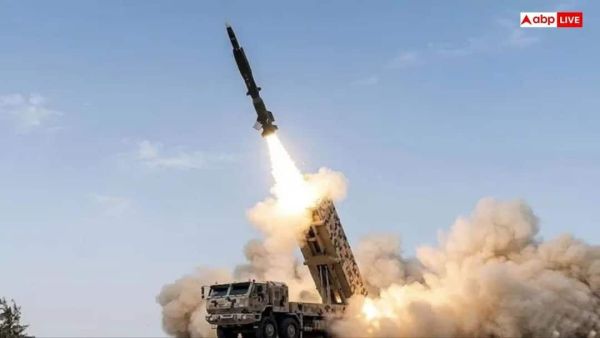
To further enhance its effectiveness, Indian missile scientists have upgraded the BrahMos' strike range from 290 kms to an impressive 800-1000 kms, along with the capability to carry heavier payloads. This advancement poses a growing concern for Chinese military strategists. The missile can be launched from ground, air, and sea platforms, with its air-launched variant already integrated into the Sukhoi-30MKI aircraft. This integration introduces a level of uncertainty for adversaries regarding whether the missile is equipped with a nuclear warhead, capable of striking major Chinese cities from both maritime and land-based positions.
The strategic significance of the BrahMos missile for India transcends its role as a mere exportable defence product. By transferring BrahMos missiles to the littoral states of the South China Sea, India is engaging in a strategic manoeuvre that mirrors China's longstanding practice of supplying advanced military capabilities, such as long-range missiles, fighter jets, and submarines, to Pakistan. This development indicates that India is now participating in a similar geopolitical game that China has been playing against it for decades, where both nations are arming their regional adversaries to bolster their own security interests.
The increasing popularity and deployment of BrahMos in the South China Sea not only enhances India's strategic stature in this critical region but also serves as a clear message to China, signalling a tit-for-tat response to its military posturing. This move is emblematic of a broader trend where India is not merely reacting to Chinese actions but is actively shaping the regional security landscape. The deployment of BrahMos is likely to be the first of many arms transfers to ASEAN nations, as India seeks to establish itself as a key player in the defence export market.
As India continues to expand its military cooperation with countries in the ASEAN region, the implications of such arms transfers extend beyond immediate strategic gains. This initiative is poised to create a significant arms export hub for India, which is striving to enhance its status as a major global defence exporter. The proliferation of advanced weaponry like BrahMos will not only fortify India's alliances in Southeast Asia but also contribute to a more balanced power dynamic in the region, ultimately reshaping the security architecture in response to China's assertive military and territorial expansion.
(Ranjit Kumar is a senior journalist and strategic affairs analyst)