The FIFA World Cup stands as the ultimate celebration of football and the crown jewel of the organisation’s global influence. For almost a century, this grand spectacle has served as both a flawed yet positive force in global culture and an unmatched reason for fans worldwide to turn football into a festival.
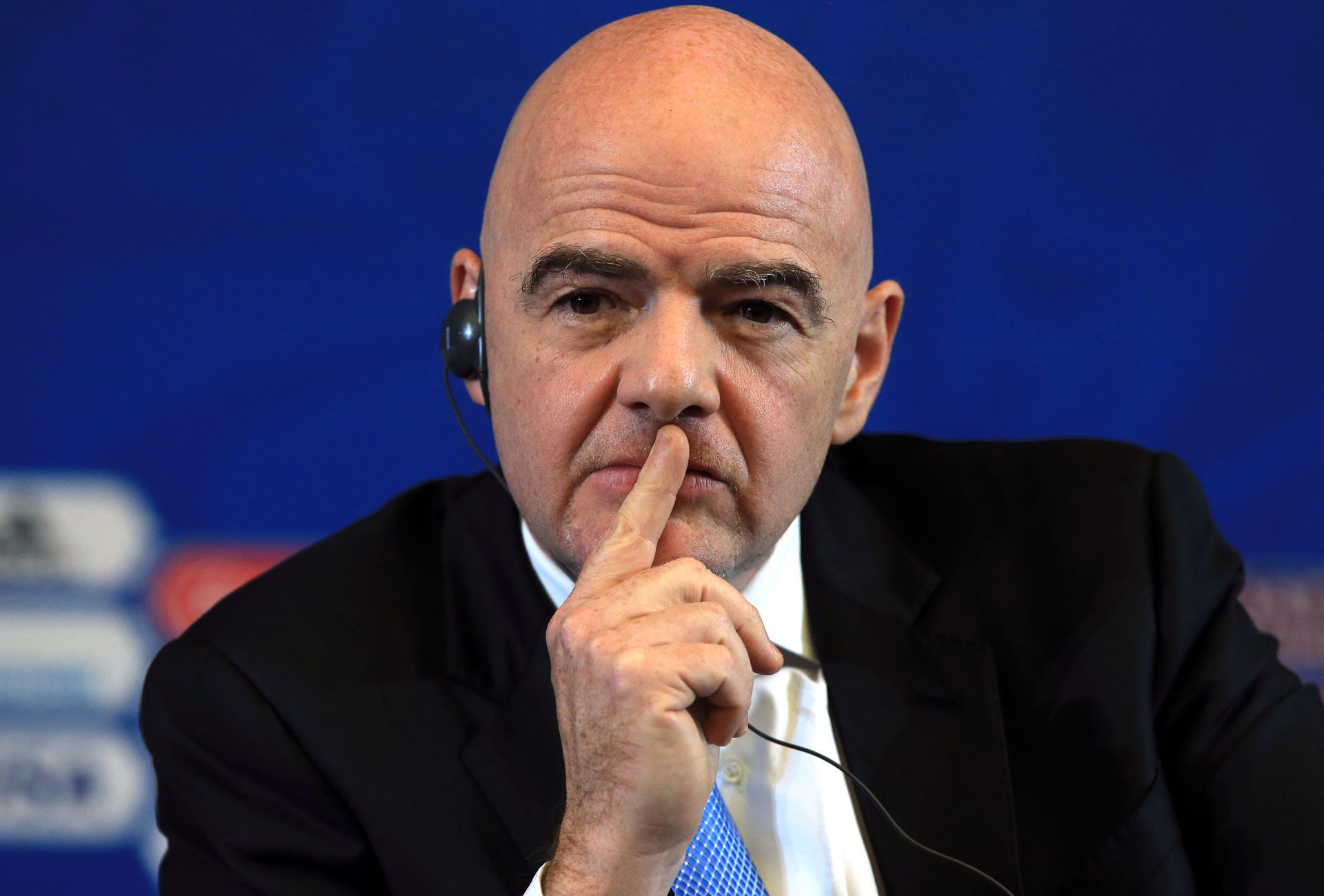
The 2026 FIFA World Cup, marking the tournament’s 23rd edition, highlights an increasingly uneasy balance between sporting celebration and geopolitical influence. At the centre of this debate stands Gianni Infantino, the current president of FIFA, who faces growing scrutiny.
Although FIFA was founded on the principle of political neutrality, Infantino’s approach has elevated the role of the president to that of a global political figure. His close ties with Qatar and his personal rapport with former U.S. President Donald Trump have drawn widespread criticism, once again bringing FIFA’s credibility into question.
Infantino succeeded the disgraced former FIFA president Sepp Blatter and transitioned effortlessly into the top position, using political manoeuvring to establish a near-autocratic leadership style within the organisation.
Born in Switzerland, the 56-year-old rose to FIFA’s top post from UEFA, where he had already displayed a strong inclination toward expanding major tournaments. This same philosophy drives the upcoming 48-team World Cup format for 2026.
As the ninth president of FIFA, Infantino has become a lightning rod for mistrust, largely due to the perceived gap between his carefully crafted image as a neutral globalist and the reality that World Cups under his leadership have been hosted in or awarded to nations such as Russia, Qatar, the United States, and Saudi Arabia.
Each of these host countries presents its own controversies when measured against FIFA’s stated goals of neutrality and unity. Yet, given that the World Cup is an event of global scale, the question of eligibility is inherently complex—no nation is completely without flaws.
Nonetheless, FIFA’s oversight of host nations should remain impartial. That objectivity appears compromised when the organisation’s top figure forms close associations with political leaders whose actions contradict football’s spirit of inclusivity and unity.
From another perspective, Infantino’s strong position becomes clearer. The first 48-team World Cup will welcome four debutant nations and several returning teams long absent from the tournament. Many more could have joined under the expanded structure.
This expansion opens opportunities for regions outside Europe, demonstrating Infantino’s commitment to inclusivity in football. However, his willingness to align himself with powerful political figures often raises concerns that go beyond simple pragmatism.
Infantino, formerly UEFA’s general secretary, was elected FIFA president in early 2016 following Blatter’s suspension the previous year. His tenure has been marked by a focus on commercial growth, including his role in the pan-European UEFA Euro 2020 tournament, which eventually took place in 2021.
His appeal within FIFA’s executive ranks is easy to understand. Infantino has an undeniable talent for expanding football’s global reach and financial success, though often in ways that reflect his vision more than the sport’s broader well-being. Increased revenue streams have, however, benefited national football associations worldwide.
Despite his rhetoric about equality and openness in the sport, Infantino often acts in ways that contradict his stated principles. His speeches emphasise inclusivity and transcendence beyond politics and borders—yet recent World Cup decisions under his leadership tell a different story.