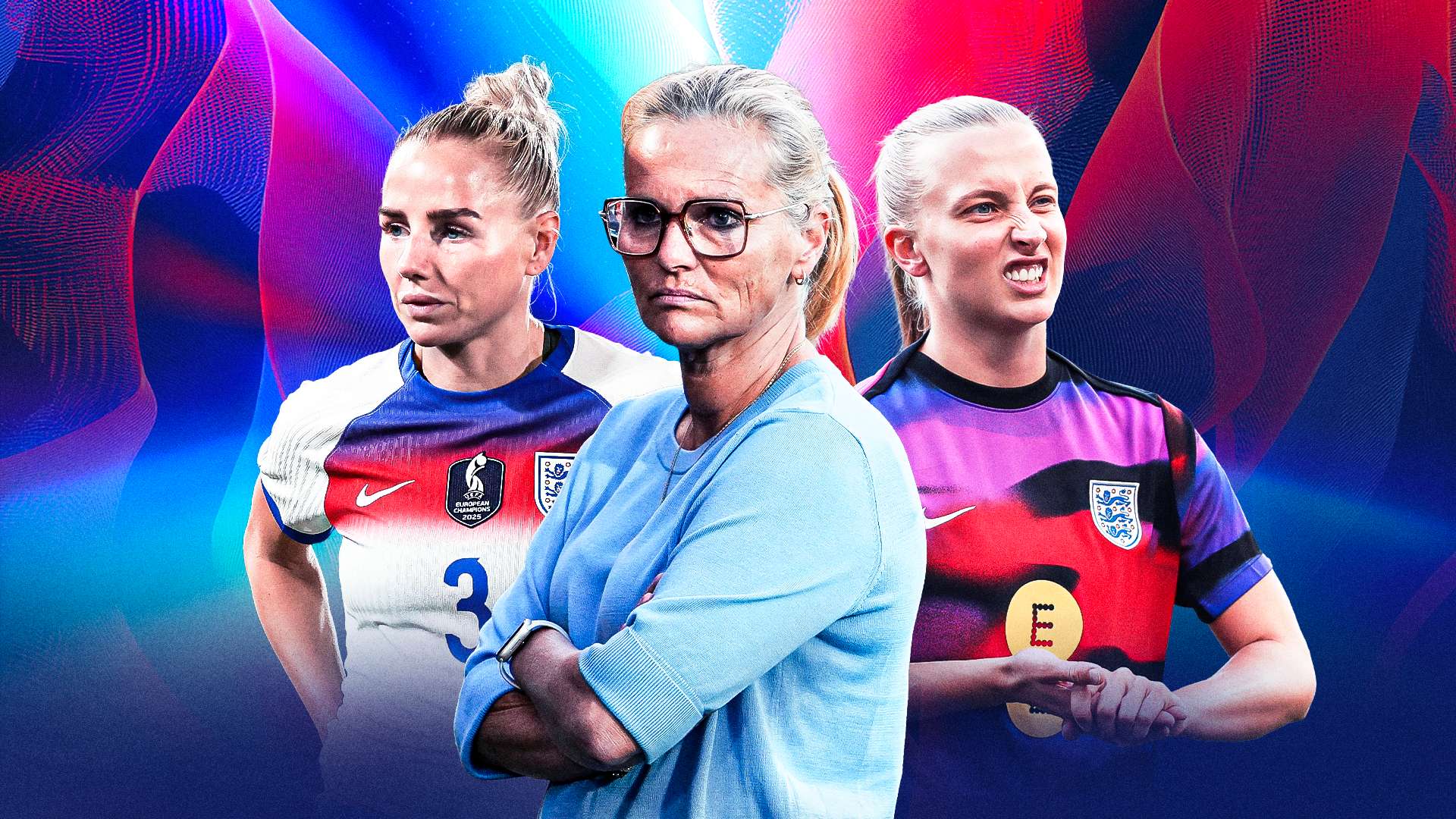
Sarina Wiegman’s preparations for the 2027 Women's World Cup have taken an unexpected hit as England failed to secure automatic qualification. The Lionesses now face a tougher route through the play-offs, prompting reflection on what went wrong and who stood out during this qualifying stage.
It’s always difficult for any team that falls short to criticise the qualification process, yet few could deny the frustration visible among the England squad on Tuesday. Despite strong performances, the Lionesses missed out on the sole automatic qualifying spot available for the 2027 Women's World Cup.
England ended their group campaign with 15 points from six matches, winning five and losing one – that loss coming at the hands of current world champions Spain. Both sides finished level on points, but Spain’s superior head-to-head record, thanks to a 4-0 victory over England last Friday compared to their 1-0 defeat at Wembley in April, saw Sonia Bermudez’s team clinch a direct ticket to Brazil.
England’s faint hopes of overtaking Spain depended on a favour from Iceland in the final round, but that never materialised. Spain brushed aside Iceland 6-1 in Reykjavik, rendering England’s 3-0 triumph over Ukraine meaningless in the race for automatic qualification.
Germany were the only side in League A to collect more than 15 points, while France and Denmark sealed their World Cup berths with 13 and 14 points, respectively. Many within the England camp felt this outcome was harsh, particularly given UEFA’s system that grants just four automatic spots while seven more must be fought for in the play-offs.
“It is frustrating. There aren’t many teams missing out with 15 points,” Beth Mead told ITV, a sentiment echoed by Georgia Stanway. Mead called it “the nature of the competition,” while Stanway highlighted it as evidence of England’s “level” and “consistency.” Wiegman, asked if UEFA should reconsider the qualifying structure, admitted, “There’s something to have a look at, at least,” though she also praised the growing competitiveness across Europe since the Nations League’s introduction.
Despite their disappointment, Wiegman and her players must now focus on the future – the World Cup play-offs. England will soon learn their first opponents for the two-legged ties, and Wiegman remains confident her squad can handle the challenge ahead.
So, what lessons can the Lionesses take from this international break as they prepare for the next phase? Here’s a look at the key winners and losers from England’s June fixtures.
WINNER: Spain
Spain’s 4-0 demolition of England last Friday was a statement performance. It not only reaffirmed their dominance but also reminded the world why they are reigning champions. After losing to England on penalties in the European Championship final last summer, La Roja responded emphatically, handing the Lionesses their heaviest defeat in 17 years.
The result also allowed Spain to reclaim top spot in the group and ultimately secure direct qualification with a subsequent 6-1 win over Iceland. While Spain can now focus on fine-tuning their preparations with friendlies, England must navigate the high-pressure play-offs. For Bermudez and her team, it was a near-perfect international window.
LOSER: Sarina Wiegman
England had been on course to seal automatic qualification but faltered when it mattered most. In Mallorca, they needed only to avoid defeat, yet once Patri Guijarro found the net, the Lionesses crumbled in a manner rarely seen under Wiegman. The 4-0 loss was a major setback.
Now, Wiegman must not only assess what went wrong but also grapple with limited preparation time. The play-offs will replace the friendly fixtures she would have preferred, leaving little room for experimentation before the World Cup. The Nations League will return early next year, further narrowing England’s window for pre-tournament tuning.
LOSER: Freya Godfrey
After the heavy defeat in Mallorca, Wiegman hinted that changes would be made for the Ukraine match. Many expected Freya Godfrey, the London City Lionesses’ Player of the Year, to make her senior debut. However, the 21-year-old was left out of the matchday squad entirely, a surprise given her consistent presence in the national setup.
Wiegman retained the same front trio of Lauren James, Lauren Hemp, and Alessia Russo, opting instead to pack the bench with defenders. “It’s always hard to leave out players you want in your squad, but you can only pick 23,” Wiegman explained. It was a missed opportunity for Godfrey, whose wait for a debut continues.
WINNER: Laura Blindkilde Brown
One player who did benefit from rotation was Laura Blindkilde Brown. The Manchester City midfielder, handed a start against Ukraine, delivered her finest performance yet in an England shirt. Wiegman praised her as “one of the best players on the pitch” after the 3-0 win.
“We played against a low block and she had to be really sharp, read the game well, and anticipate everything – and she did that brilliantly,” Wiegman said. With the No.10 spot still up for grabs, Blindkilde Brown’s assured showing has strengthened her case for more opportunities in that role.
LOSER: Alex Greenwood
England’s ongoing left-back dilemma resurfaced during the 4-0 defeat to Spain. Alex Greenwood, who has been used in that position for Manchester City recently, endured a difficult evening, highlighting the lack of natural options in that role. Though Greenwood’s adaptability is an asset, she remains most effective as a centre-back.
With City searching for a new left-back following Leila Ouahabi’s departure, Niamh Charles has been linked with a move that could help fill this void. If Charles performs well in that position, it would be a major boost for both City and England.
LOSER: Aggie Beever-Jones
Another player who might have expected more minutes was Aggie Beever-Jones. Despite England’s dominance, the 22-year-old forward did not feature in either match. Against Spain, she wasn’t even in the matchday squad, and though she returned to the bench versus Ukraine, she remained unused.
Wiegman defended her selection approach, saying, “Sometimes it’s time to experiment, sometimes it’s time to just show up and put the best in. All players are competing for these positions.” Still, Beever-Jones’ absence was disappointing, especially after a season at Chelsea disrupted by minor injuries. She’ll hope for better luck in 2026-27.
England now turn their attention to the crucial play-offs, where qualification for Brazil remains firmly within reach. But after missing out on automatic qualification, Wiegman and her Lionesses know there’s no room for error.