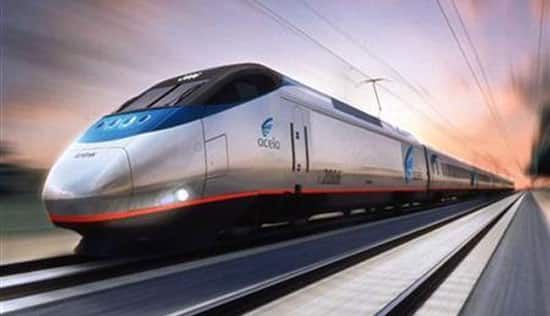
The Ministry of Railways has unveiled plans for a high-speed bullet train corridor connecting Delhi and Siliguri, a project that could transform travel across northern and eastern India. Once completed, the proposed route is expected to cut journey time between the two cities from nearly 20 hours to around six hours. The ambitious project will pass through Uttar Pradesh, Bihar and West Bengal, improving regional connectivity and potentially boosting economic activity, tourism, trade and real estate development along the route.
The proposed Delhi-Siliguri corridor will span more than 1,000 kilometres and be built as a dedicated high-speed rail network rather than an upgrade of existing railway lines.
Bullet trains on the route are expected to operate at speeds of 300-320 kmph. The service will connect major cities including New Delhi, Lucknow, Varanasi, Patna and Siliguri, significantly reducing travel times between northern and eastern India.
The trains are expected to feature modern aerodynamic designs, advanced collision-prevention systems, spacious seating and enhanced passenger comfort.
Fed Up With CAPTCHAs? New IRCTC Website Coming By July 15, Says Ashwini Vaishnaw
Railway Minister Ashwini Vaishnaw has announced the project, which is currently in the planning and feasibility study stage. The National High Speed Rail Corporation Limited (NHSRCL) is expected to prepare the Detailed Project Report (DPR).
The DPR process will include drone surveys, route alignment studies, land assessments and environmental impact evaluations. While the Centre has reportedly given initial approval, clearances from the concerned state governments will also be required before construction begins.
Given the scale of the elevated high-speed rail network, the project is expected to require an investment of more than Rs 1.5 lakh crore. The final cost will be determined after detailed surveys and technical assessments are completed.
Construction is likely to be carried out in phases, beginning with land acquisition and surveys, followed by the construction of elevated structures, installation of high-speed tracks and electrical systems, and extensive safety testing.
Experts believe the project could spur investment and real estate growth around major stations, particularly in Delhi, Lucknow, Varanasi, Patna and Siliguri. If completed on schedule, services could begin by the mid-2030s, marking a major leap in India's high-speed rail ambitions.
Rajya Sabha Results Declared For MP, Rajasthan, Gujarat, Andhra And Karnataka