ENJOY EVERY MOMENT OF THE WORLD CUP
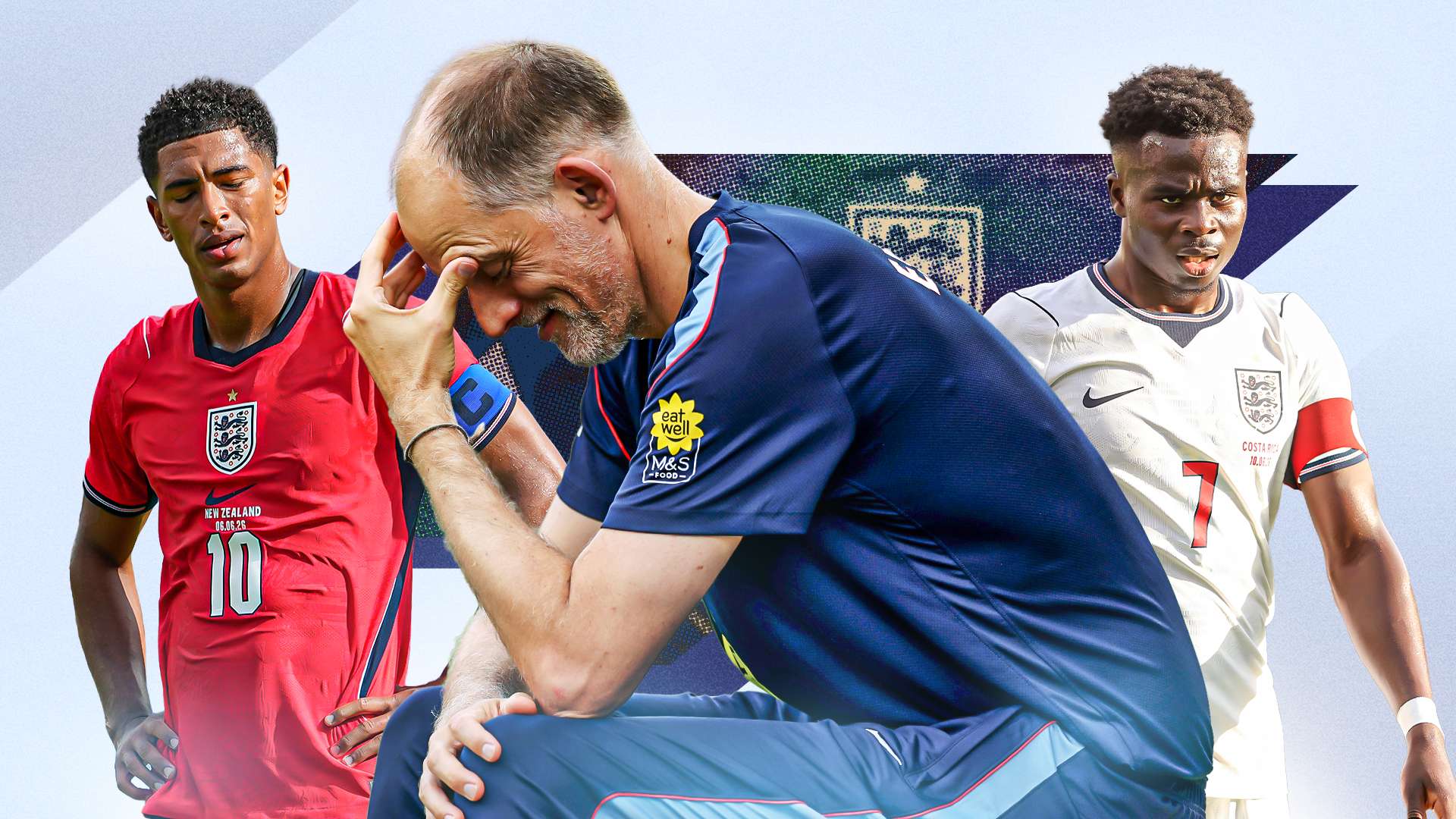
From Bukayo Saka’s fitness troubles to Jude Bellingham’s growing pressure: Six reasons why England might not lift the World Cup trophy.
After decades of heartbreak for the England national football team, the dream of football 'coming home' in 1996 never materialised. Nearly 30 years later, the Three Lions are still chasing their first major trophy since the 1966 World Cup. Could the longest title drought in international football finally end? England booked their place at this summer’s World Cup in dominant fashion, winning every qualifying match without conceding a single goal, sparking genuine optimism around Thomas Tuchel’s squad.
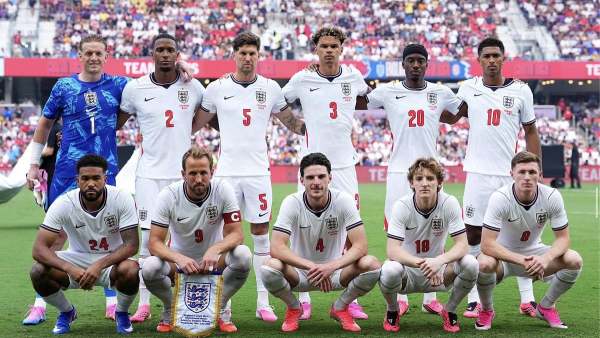
Currently ranked fourth in FIFA’s world rankings, England have finished runners-up in the last two European Championships. The Three Lions boast an enviable roster featuring Arsenal’s midfield general Declan Rice, Real Madrid’s rising superstar Jude Bellingham, and Bayern Munich striker Harry Kane, who is among the frontrunners for this year’s Ballon d’Or.
Under Tuchel, a manager who has lifted trophies in four different countries—including a Champions League triumph with Chelsea within six months of taking charge—England have reason to believe. Yet, despite their strengths, the team is far from perfect. Here are six key reasons why England’s latest attempt to end nearly six decades of frustration may once again fall short.
Uncertain Defence
It may seem odd to question a side that kept clean sheets throughout all eight World Cup qualifiers, but England’s defensive line remains a major concern.
Nico O’Reilly enjoyed a breakthrough season at Manchester City but remains an inexperienced left-back who tends to drift into midfield—a trait that suits Pep Guardiola’s system but could prove risky for Tuchel’s England. The coach’s decision to exclude a natural left-back is particularly baffling considering England’s centre-backs lack pace.
Relying on the injury-prone John Stones to stay fit is a huge gamble. It’s easy to understand Harry Maguire’s frustration at being left out, though his reaction also highlighted why Tuchel may not see him as the right personality for the squad. Meanwhile, Reece James’ fitness remains another worry, as the Chelsea captain has struggled with repeated injuries in recent years.
Backup options like Ezri Konsa, Dan Burn, Jarell Quansah, Tino Livramento, and Djed Spence have limited international experience, offering little reassurance. Despite their strong defensive record in qualifying, England’s backline depth and reliability will be severely tested in the world’s toughest competition.
Challenging Climate
If last summer’s Club World Cup in the United States is any indication, extreme heat could heavily influence this tournament.
Former Chelsea boss Enzo Maresca described the conditions as so intense that “it was impossible” to conduct proper training sessions, while midfielder Enzo Fernandez admitted he felt “dizzy” during matches.
FIFA’s decision to introduce mid-half cooling breaks will assist players, but the scorching temperatures are still expected to take a toll—particularly on teams from cooler climates like England. Kane has stressed that the squad consists of elite athletes capable of adapting, and Marc Guehi praised the decision to arrive in America early to help with acclimatisation.
However, maintaining possession will be vital, and England’s midfielders—such as Rice—lack the same composure on the ball as Portugal’s Vitinha or Joao Neves, as seen in the Champions League final. By the later stages, fatigue could become England’s biggest enemy.
Historically, only two European nations—Spain in 2010 and Germany in 2014—have won a World Cup outside Europe, and both tournaments were held in cooler winter conditions in the southern hemisphere.
Bukayo Saka’s Struggles
Bukayo Saka was England’s brightest spark at Euro 2024, but his recent form and recurring injuries are a growing concern ahead of the World Cup.
The Arsenal winger missed several stretches of the Premier League title-winning season through injury, which partly explains his subdued performance in the Champions League final loss to Paris Saint-Germain—completing only four passes and failing to beat a defender once.
Tuchel revealed before the Costa Rica match that Saka is still recovering from an Achilles issue sustained in March. “Bukayo is still getting there,” the England coach said. “He played through discomfort at the end of the season and performed at a high level, but he’s still not at 100 per cent.”
Tuchel’s admission that Saka cannot yet train on consecutive days raises serious doubts. Even if declared fit, can Arsenal’s ‘Starboy’ truly deliver at his best?
Lack of Impact Substitutes
The only highlight of England’s 1-0 win over New Zealand last weekend was the dazzling display by Rio Ngumoha, who breathed life into a dull contest. Many fans questioned why the Liverpool youngster wasn’t even on the longlist for the World Cup.
While it may be risky to include a 17-year-old with limited Premier League experience, the bigger issue is England’s lack of creative options off the bench. Tuchel’s decision to omit Phil Foden and Cole Palmer—both below their usual standards last season—raised eyebrows, even though Morgan Rogers’ form has been exceptional and could see him start ahead of Bellingham.
It was also surprising to see Morgan Gibbs-White excluded after finishing as one of the Premier League’s top five scorers in 2025–26, despite playing for relegation-threatened Nottingham Forest. Such an in-form player could have been a more dangerous substitute than Eberechi Eze, who struggled to make an impact in the Champions League final for Arsenal.
Eze’s club teammate, Noni Madueke, was equally ineffective against PSG in Budapest, as his main skill seems to be drawing fouls. With Saka’s fitness in doubt, Madueke’s inconsistency becomes a real concern. On the opposite flank, Marcus Rashford’s resurgence at Barcelona is encouraging, but Anthony Gordon’s underwhelming season at Newcastle before his move to Camp Nou remains a talking point.
Despite flashes of promise, England’s substitutes lack genuine game-changing ability—a factor that could prove decisive in tight knockout matches.
Over-Reliance on Kane
Following England’s 1-0 defeat to Japan in March, Tuchel was asked whether the team was overly dependent on Harry Kane, who missed the game due to injury. “Why would Argentina not rely on Messi or Portugal on Ronaldo?” Tuchel responded. “In Harry’s absence, we lose a major threat—just as Bayern Munich do without him. No team in the world is the same without its best striker.”
Tuchel’s point is fair, but England’s dependence on Kane is greater than most teams’ reliance on their stars. The captain accounts for more than half of the squad’s international goals, and his backups—Ollie Watkins and Ivan Toney—are far less proven.
Watkins ended the season strongly for Aston Villa, scoring a late winner in the Euro 2024 semi-final versus the Netherlands and netting against Costa Rica, but his overall tally for England remains modest at seven goals. Toney, meanwhile, comes off his best club season—albeit in Saudi Arabia—and hasn’t scored for England since March 2024. His selection itself underscores how vital Kane’s fitness is to England’s hopes.
Simply put, if Kane gets injured, England’s campaign could collapse. While Argentina or Portugal might cope without their legends, England cannot.
The Weight of Expectation
Tuchel has downplayed England’s status as World Cup favourites. “We can’t be,” he said this week. “We haven’t won it in so many years. We see ourselves as challengers. We want to go all the way, but there are proven winners in this tournament.”
He’s right. England have a history of falling short despite high expectations. Even under Gareth Southgate—the most statistically successful England manager since Alf Ramsey—the team lost two major finals. At Euro 2024, they were outclassed by Spain, and in Euro 2020, they squandered an early lead to lose to Italy at Wembley.
When pressure peaks, England often crumble—whether through missed penalties or emotional meltdowns. Tuchel’s no-nonsense selection policy has already sparked debate, and should England start poorly, tensions could escalate quickly.
England may enjoy a favourable group draw, but tougher tests await. Would they truly be expected to overcome Mexico at the Azteca, or beat Brazil, France, Argentina, or Spain in the knockout rounds?
England have the talent and the coach, but the burden of 60 years without a major title remains. Once again, that weight might prove too heavy to carry.
How far will England progress at the World Cup?