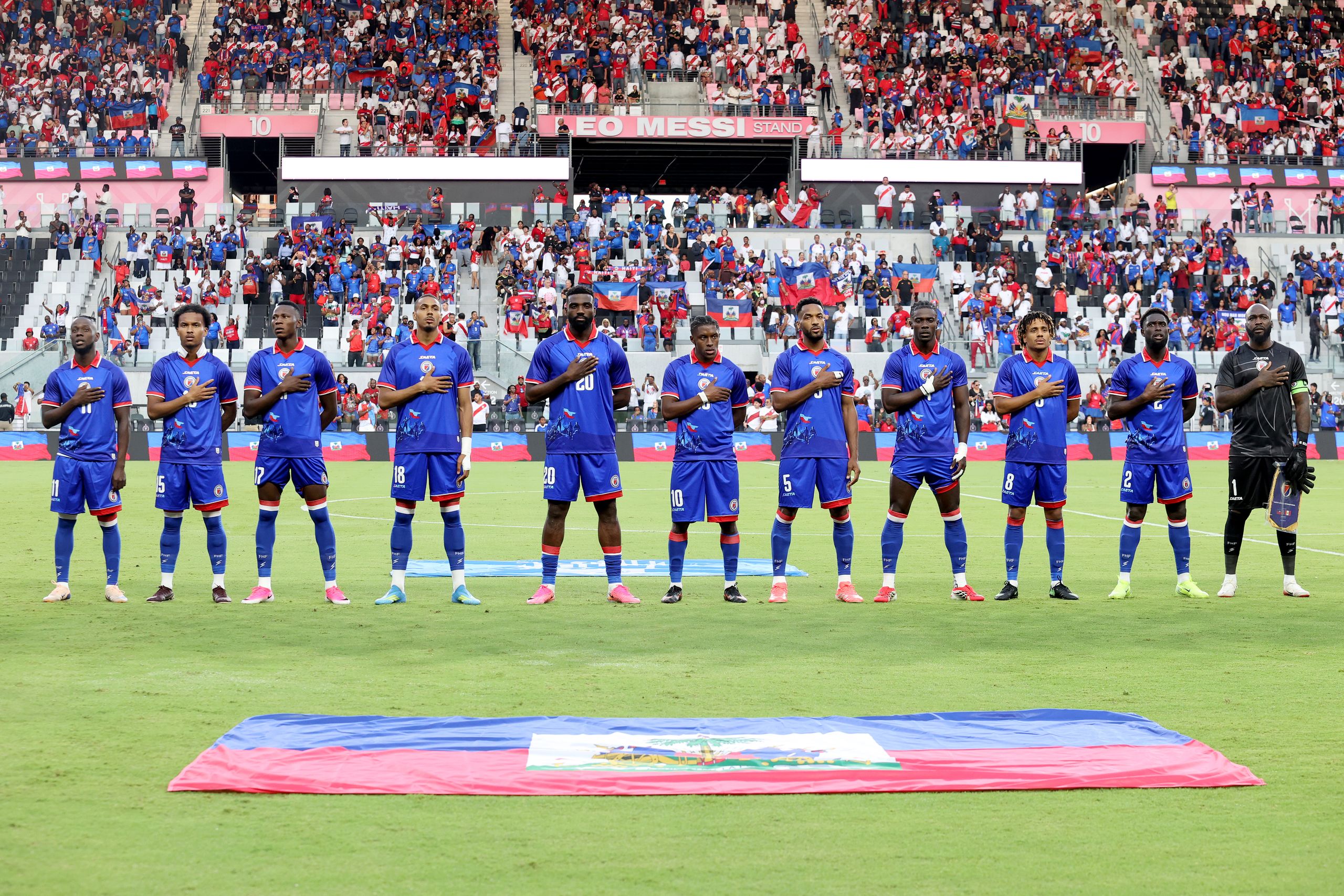
Curacao has served as a temporary home ground for several of Haiti’s World Cup qualifiers, as Scotland’s group-stage rivals have been unable to host matches in their own country since 2021.
When Haiti began their World Cup qualifying campaign against St Lucia two summers ago, only 88 fans were in attendance.
Although the match was originally meant to be played in Haiti, it took place nearly 1,000 miles away at a sports complex in Barbados. Haiti came from behind to win 2-1 that day, showing little sign of the extraordinary journey that was to follow.
This summer, Haiti will make history by becoming the first Caribbean nation to qualify for a second World Cup appearance – despite the fact that their manager and several players have never set foot in Haiti.
Home to 11.4 million people, the former French colony is the most populous country in the Caribbean. Haiti’s first World Cup appearance came in 1974, when they famously ended Dino Zoff’s record of 1,142 minutes without conceding an international goal by taking the lead against Italy. However, they went on to lose 3-1 to Italy, then 7-0 to Poland and 4-1 to Argentina. At that time, Haiti was under a dictatorship. Since then, the nation – long burdened by poverty – has endured seven coup attempts (four of them successful) and a devastating earthquake in 2010 that killed up to 300,000 people and left more than 1.5 million homeless. The Stade Sylvio Cator, once Haiti’s main stadium, became a humanitarian relief centre, with hundreds of people living in tents on the pitch. Lionel Messi even visited in his capacity as a UNICEF ambassador to offer support. Haiti reached the penultimate round of qualifiers for the 2022 World Cup, but Canada’s win in Port-au-Prince in June 2021 marked the last time Haiti played a home match. Just weeks later, the assassination of President Jovenel Moise plunged the nation into deeper turmoil.
Since then, Haiti has had no permanent head of state, while violent gangs have seized control of about 85 per cent of the capital, including the Stade Sylvio Cator. Amid the chaos, at least 1.3 million people have been displaced, and the United States has suspended all flights to the country after several planes were struck by gunfire. The Haitian national team initially played their home fixtures in the Dominican Republic, but after concerns over undocumented migrants, the Dominican government barred all Haitian visitors. The United States also suspended visas for Haitian citizens, forcing the football federation to request special exemptions so that the team could participate in the Gold Cup.
As a result, Haiti began their 2026 World Cup qualifying campaign in Barbados, suffered a 5-1 loss to Curacao in a ‘home’ match staged in Aruba, and later completed the final qualifying round in Willemstad, the capital of Curacao. Drawn in a group featuring Costa Rica and Honduras – both regular World Cup participants – the underdog Grenadiers defied the odds, securing qualification with back-to-back victories over Costa Rica and Nicaragua before sparse crowds of just 1,500 spectators in Curacao.
French manager Sebastien Migne, who once had youth spells at Boreham Wood and Leyton Orient, has led the team since 2024. However, he admits he has never been to Haiti. “It’s impossible – it’s too dangerous,” he explained. Instead, he relies heavily on updates from the Haitian Football Federation about the country’s domestic players. Roughly half of the squad grew up in Haiti but now play abroad, while others were born in France, the United States, and Canada. Don Deedson Louicius, who scored the crucial goal against Nicaragua that sealed their qualification, lived through the 2010 Port-au-Prince earthquake at the age of eight – though internet rumours that he once met Messi have since been debunked.
From starting their campaign in front of just 88 spectators to potentially playing before 65,000 fans when they face Scotland in their World Cup opener, Haiti’s journey has been extraordinary. Their people have endured immense hardship, but their footballers have never stopped believing.