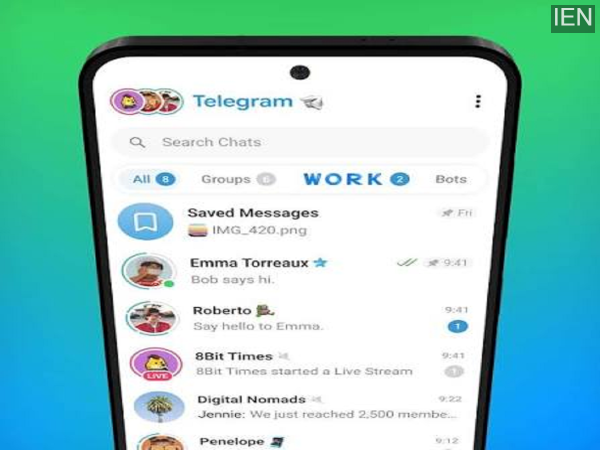
Telegram App Banned in India: The government has imposed a temporary ban on the Telegram app in view of the NEET (UG) 2026 re-exam. Additionally, the message-editing feature will remain disabled.
Telegram App Banned in India: Taking a major step ahead of the NEET (UG) 2026 re-exam, the Government of India has imposed a temporary ban on the Telegram app. The platform will remain completely banned until June 22, during which time the app cannot be accessed. Subsequently, the message-editing feature on Telegram will remain disabled until June 30. This decision follows instances where apps like Telegram were used in paper leak incidents. Let’s understand how encrypted messaging apps like Telegram are utilized for activities such as paper leaks.
Why is Telegram used?
Individuals involved in paper leak incidents sell leaked or fake exam papers on apps like Telegram. Scammers and operators of cheating networks prefer Telegram due to the privacy it offers and its capacity for large group sizes. There is no strict limit on the number of members that can be added to Telegram groups; a basic group can accommodate 200 members, and once this limit is exceeded, the group automatically converts into a 'supergroup.'
Privacy plays a role too
Cybercriminals also exploit the privacy features offered by Telegram. Secret channels can be created on the platform. Once such a channel is set up, the link is shared with students preparing for the exam; parents are also added to these channels. Often, those involved in paper leaks obtain the question paper before the exam takes place. They photograph the paper and share it within private groups. Once the photo is uploaded to a group, it can be instantly disseminated to thousands of people. Earlier this month, the Uttar Pradesh Special Task Force arrested the mastermind of an online fraud racket who used to leak question papers via Telegram channels. He would create various channels a day before the exam and leak the question papers for a price ranging from ₹2,000 to ₹3,000.
Attempts at Fraud
Fraudulent activities also occur under the guise of paper leaks on Telegram channels. Scammers dupe students by editing the timestamps of old messages or creating fake question papers. They demand sums ranging from thousands to lakhs of rupees for these papers. Payments are typically requested via QR codes and, in many instances, through cryptocurrency.