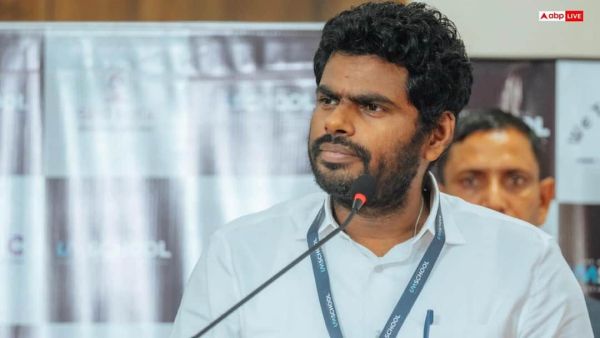
Annamalai, former Tamil Nadu BJP president and ex-IPS officer, has launched a sharp critique of the Centre's handling of the upcoming NEET retest, arguing that the extensive security arrangements put in place to prevent paper leaks may inadvertently increase anxiety among students.
In one of his strongest remarks since parting ways with the Bharatiya Janata Party (BJP), Annamalai questioned whether the measures adopted for the June 21 retest align with the objectives of the National Education Policy (NEP) 2020, which seeks to reduce examination-related stress among students.
His comments come amid heightened scrutiny of entrance examinations following repeated concerns over paper leaks and irregularities.
In a post on social media, Annamalai drew attention to the elaborate security framework planned for the retest.
Annamalai said: “Two-tier CRPF+CISF escort with IAF airlift. 4-layer CCTV with AI surveillance. Biometric & facial recognition before entry. Multiple layers of frisking. Multi-level oversight with direct monitoring from the Prime Minister’s office. Yes, you read it right. But these are not arrangements to buy high-level, classified, military-grade software. These are the arrangements made by the Ministry of Education for the NEET retest scheduled for 21st June 2026.”
Two-tier CRPF+CISF escort with IAF airlift.
— K.Annamalai (@annamalai_k) June 16, 2026
4-layer CCTV with AI surveillance.
Biometric & facial recognition before entry.
Multiple layers of frisking.
Multi-level oversight with direct monitoring from the Prime Minister’s office.
Yes, you read it right. But these are…
The former BJP leader suggested that while strict monitoring may help prevent malpractice, the scale of the arrangements raises concerns about the experience of students appearing for the examination.
Annamalai acknowledged the government's efforts to curb paper leaks and strengthen the integrity of the examination process. However, he argued that the additional checks and procedures could place an unnecessary burden on candidates.
“Every student would appreciate the government's efforts to prevent paper leaks by implementing additional security measures and enhanced monitoring. But an increase in scrutiny before entry, extended frisking, and an increase in the overall exam time from 180 minutes to 195 minutes will only add to their already ballooning exam pressure,” he said.
According to Annamalai, policymakers have focused heavily on security without adequately considering the psychological impact such measures may have on students who have spent months preparing for one of the country's most competitive examinations.
The former IPS officer further argued that the current approach appears to conflict with the broader goals outlined in the National Education Policy 2020.
While efforts to prevent irregularities are necessary, he said authorities may have overlooked the additional burden placed on students before they even enter the examination hall.
Annamalai contended that excessive scrutiny and procedural hurdles risk undermining the objective of creating a less stressful assessment environment for young aspirants.
Apart from the security arrangements, Annamalai also pointed to reports of difficulties faced by students attempting to access their admit cards.
“Despite all these arrangements for the examination, there are issues with downloading the admit cards, and NTA has assured students that it will resolve them at the earliest. Yes, there are challenges that demand meaningful solutions. However, I am concerned that the approach devised for the NEET retest may not resolve the issue; instead, it risks creating a new set of problems,” he said.