The 2026 FIFA World Cup once again delivered rare and fascinating stories as matches played from the early hours of Tuesday (16 June 2026) produced astonishing results.
Amid the surprise of Cape Verde holding Spain to a draw, two other nations also carved out historic moments of their own.
Egypt and New Zealand both ended their long waits to score again on football’s biggest stage. Remarkably, their droughts had stretched across thousands of days.
This phenomenon further illustrates that the new 48-team World Cup format is already generating more stories and surprises from nations that previously had limited chances to compete at the highest level.
Adrian, a football analyst from Spieltag Indonesia, earlier remarked that the World Cup’s new structure would indeed open greater opportunities for underdog nations to make their mark.
“This is essentially just delaying the climax, but it makes the tournament much more exciting since more countries get to participate,” Adrian said during the Super Taktik Podcast at the Tribunnews Solo office in Karanganyar, Central Java.
His statement began to come true on matchday five, when several lower-ranked teams managed to put up fierce resistance against traditional powerhouses.
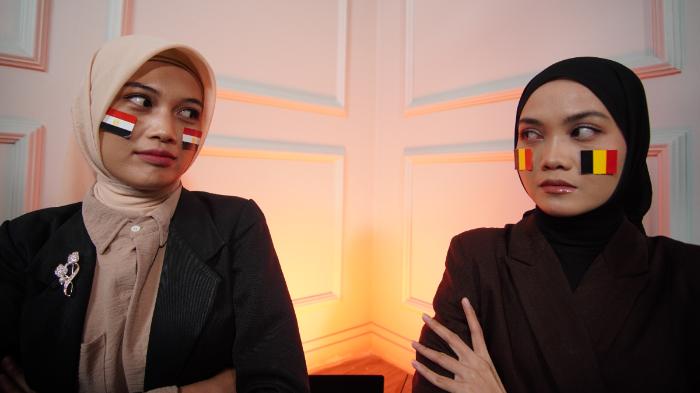
One of the most compelling stories came from Seattle, where Egypt held Belgium to a 1-1 draw in their Group G opener.
The Pharaohs even came close to securing their first-ever World Cup victory.
Egypt took the lead in the 19th minute through Emam Ashour, who plays for Al Ahly.
The goal was the result of fine teamwork initiated by Mohamed Salah, before the Al Ahly midfielder finished with a low strike past Thibaut Courtois.
This goal carried special significance—it was Egypt’s first World Cup goal since Salah’s strike against Saudi Arabia during the 2018 tournament in Russia.
In other words, Egypt had to wait 2,912 days—nearly eight years—to find the net again at the World Cup finals.
As many recall, Egypt missed out on qualification for the 2022 World Cup.
Now, with their return to the grand stage, Egypt have finally ended their World Cup goal drought.
Although Belgium equalised through a Mohamed Hany own goal following pressure from Romelu Lukaku, the draw still felt historic for Egypt.
Beyond ending their scoring drought, it was also their first World Cup point in 36 years.
A similar story unfolded at Los Angeles Stadium, where New Zealand faced Iran.
The All Whites twice took the lead but were eventually held to a 2-2 draw.
Elijah Just was the standout performer, scoring both goals in the 7th and 54th minutes.
His first goal carried great historical weight.
It was New Zealand’s first World Cup goal since Shane Smeltz’s strike against Italy in a 1-1 draw at the 2010 World Cup in South Africa.
That means New Zealand had waited 5,839 days—almost 16 years—to score again on the World Cup stage, according to FIFA’s official website.
Although they failed to hold onto their lead, the draw against Iran extended their remarkable record.
After losing all three group matches in 1982, conceding 12 goals, New Zealand have now gone unbeaten in four consecutive World Cup matches—all ending in draws: 1-1 with Slovakia and Italy, 0-0 with Paraguay in 2010, and now 2-2 with Iran in 2026.
Day five of the 2026 World Cup also witnessed several other unexpected results.
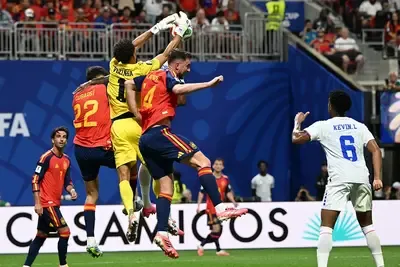
Debutants Cape Verde stunned everyone by holding tournament favourites Spain to a goalless draw.
The 40-year-old veteran goalkeeper Vozinha emerged as the hero, denying several golden opportunities from La Roja.
The result was surprising, especially since Adrian had earlier listed Spain as one of the strongest contenders for the 2026 World Cup title.
“Spain are seen as one of the top contenders to compete for the championship this time,” said Adrian.
He added that young talents like Lamine Yamal and Nico Williams were Spain’s main strengths. However, even Yamal’s introduction from the bench couldn’t help La Roja break through Cape Verde’s disciplined defence.
In another match, Saudi Arabia frustrated Uruguay by forcing a 1-1 draw.
Four draws in a single day marked a rare occurrence in World Cup history—the last time it happened was in 1958, some 68 years ago.
Even more intriguing, most of these results involved underdog teams.
Egypt held Belgium, New Zealand matched Iran, Saudi Arabia took a point from Uruguay, and Cape Verde denied Spain a victory.
All these outcomes underscore one message: the 2026 World Cup is not just for the traditional giants.
The expanded 48-team format is allowing more nations to create their own history and deliver surprises on the global stage.
(Tribunnews.com/Tio)