One of the most unforgettable days of the 2026 World Cup unfolded on Monday, featuring a wealth of talking points across four dramatic fixtures.
Four consecutive draws might not sound thrilling on paper, yet Monday’s games once again delivered remarkable entertainment and tension.
Across the day, fans witnessed one of the biggest shocks of the tournament, four spirited comebacks, and plenty of captivating football.
Here are all the major highlights from the fifth day of the 2026 World Cup.
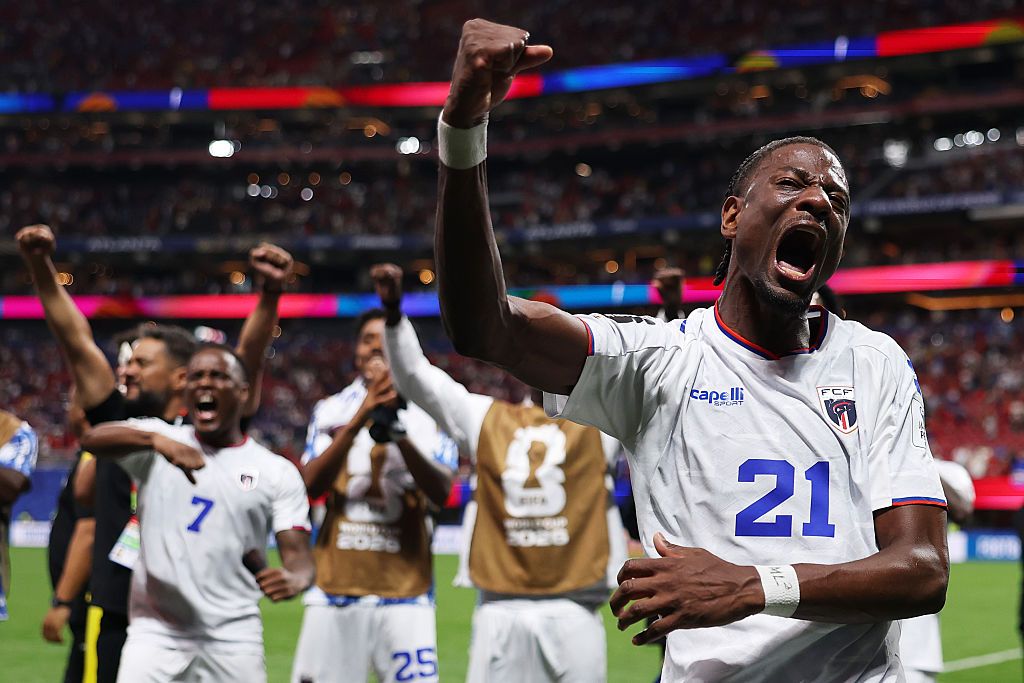
We must begin with Cape Verde, the debutants who entered as one of the lowest-ranked teams in the competition but produced a stunning result by holding European champions Spain to a goalless draw.
The performance was fully deserved for the small island nation of fewer than half a million people. A team composed largely of players from lower leagues and less celebrated clubs around the world produced a defensive display that would make even elite teams envious.
Curacao had demonstrated a day earlier how tough such defensive resilience can be, but Cape Verde earned every bit of credit for achieving the greatest result in their footballing history. The image of 40-year-old goalkeeper Vozinha in tears of joy at the final whistle captured the moment perfectly.
From Spain’s perspective, however, it was a worrying sight. Luis de la Fuente’s world number one side began the match looking overconfident, grew frustrated well before half-time, and appeared increasingly desperate as time wore on. It was reminiscent of Roy Hodgson’s most uninspired England performances.
Spain know from experience that early setbacks can be overcome — they famously lost their opening match 1-0 to Switzerland in 2010 before winning every subsequent game to lift their first-ever World Cup. But they will be acutely aware that an improvement is urgently needed.
Their only consolation was the absence of their two most dangerous attackers from the starting eleven, both recovering from hamstring injuries: Lamine Yamal featured only for the final 20 minutes, while Nico Williams came on in the 87th minute. Getting both players fit enough to start soon will be crucial for Spain’s campaign.
Belgium’s 1-1 draw with Egypt was perhaps the most predictable match of the tournament so far — so much so that the biggest talking point ended up being the timing of the second-half water break.
While some BBC pundits argued that water breaks should be decided on a game-by-game basis, it’s important to note that conditions in Seattle were extremely hot. A heat advisory was active in the area, with temperatures reaching 32 degrees Celsius during the match. So, in this case, the stoppages were indeed justified.
That said, the timing of such breaks remains contentious. The pause came less than two minutes after Mohamed Hany’s own goal levelled the score for Belgium following Emam Ashour’s first-half strike. Theo Walcott, Olivier Giroud, and Micah Richards all agreed that a three-minute enforced stoppage immediately after an equaliser can completely kill a game’s momentum.
It would be naïve to think FIFA will remove these breaks, even when temperatures are moderate, as Graham Potter, Virgil van Dijk, and others have pointed out. The three-minute interruptions offer broadcasters abroad a chance to run lucrative advertisements — though thankfully, this has not yet affected UK viewers.
Still, some sensible adjustments could be made. Rather than setting the break at the exact halfway point of each half, it could instead be scheduled at a maximum of 25 minutes in, coinciding with any natural stoppage — such as a goal, injury, or substitution — occurring between the 20th and 25th minute (or 65th and 70th in the second half).
In this instance, the goal itself would have been the ideal moment for such a pause.
Tactical enthusiasts and Leeds United supporters had high hopes for Marcelo Bielsa’s Uruguay, one of the most anticipated teams of the summer.
The renowned coach’s reputation for intensity, innovation, and unorthodox tactics is well established — and can yield brilliant results when executed with precision and energy.
However, none of those qualities were evident in Uruguay’s first-half display against Saudi Arabia. ITV pundit Karen Carney summed it up bluntly at half-time: “They were rubbish.”
Abdulelah Al-Amri’s goal four minutes before the break had been coming for some time, and for Bielsa, it was an all-too-familiar story.
The manager had already been under pressure ahead of the tournament due to his side’s persistent scoring problems. Uruguay had failed to score in nine of their 15 matches since reaching the semi-finals of the 2024 Copa America — a statistic that understandably frustrated supporters.
Although the second-half performance showed more urgency, Uruguay may have squandered the chance to take advantage of Spain’s slip-up and secure a stronger position for the knockout stages — if they even reach that far.
Saudi Arabia, meanwhile, will take encouragement from the fact that Group H remains wide open as they chase their first knockout stage appearance since 1994.
Among fans’ group chats over the opening days of the tournament, opinions were divided on whether this World Cup had been brilliant, poor, or somewhere in between. Every viewpoint had its supporters.
Now, however, most would likely agree that the tournament has firmly moved into the “good” category — and the momentum suggests it could get even better.
The Iran vs New Zealand clash in Los Angeles was a fine example. Both teams delivered goals and entertainment, ensuring that, for 90 minutes at least, attention stayed firmly on football.
New Zealand twice took the lead, but Iran fought back both times to earn a 2-2 draw.
That result leaves Group G completely balanced after the first round of matches, making predictions about which teams will advance to the knockouts nearly impossible across several groups.
The only group following a clear trajectory is Group E, where Germany and Ivory Coast have left Ecuador and Curacao facing an uphill battle to prevent them from cruising into the next round.
In every other group, intrigue abounds. The Czech Republic could still mount a comeback in Group A, while Turkey remain in contention in Group D despite trailing by three points. Scotland currently top a group featuring Morocco and Brazil, while Sweden hold the upper hand over Japan and the Netherlands.
With the stakes rising and the tournament taking shape, football fans have plenty to look forward to in the coming days.