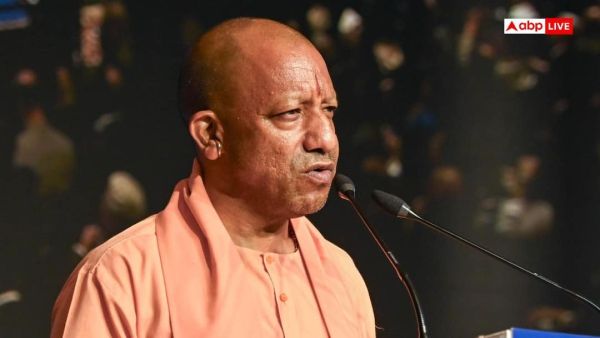
The Uttar Pradesh government is set to launch a statewide “Catch-Up Teaching Campaign” aimed at eliminating learning gaps among schoolchildren and ensuring that no student falls behind academically.
Under the leadership of Chief Minister Yogi Adityanath, a 15-day revision learning programme will be conducted for all students in July 2026. This will be followed by special catch-up teaching sessions of 20 to 30 minutes every day in schools from August 2026 to January 2027.
The initiative comes after the government's efforts to strengthen foundational literacy and numeracy through the NIPUN Bharat Mission and is focused on supporting students who have not yet reached expected learning levels.
Prepared in line with the objectives of the National Education Policy (NEP) 2020 and the National Curriculum Framework for School Education 2023, the programme seeks to provide academic support based on the individual learning needs of every student.
The state government believes that learning gaps, if left unaddressed, can adversely affect students’ future academic progress. To tackle this challenge, schools will implement a structured, systematic and outcome-oriented strategy.
Education reforms in Uttar Pradesh have increasingly moved beyond enrolment and infrastructure improvements to focus on actual learning outcomes.
Through initiatives such as the NIPUN Bharat Mission, teacher training programmes, digital monitoring systems and now the Catch-Up Teaching Campaign, the government aims to ensure that every child receives meaningful learning support.
Officials expect the initiative to become a significant step towards building a quality-driven, inclusive and outcome-oriented education system.
The campaign will extend beyond textbook-based instruction and incorporate learning linked to local environments, everyday experiences and activity-based methods.
Schools will make extensive use of Teaching-Learning Materials (TLMs), mathematics kits, library books, charts, posters and locally available resources.
Students’ interest in learning will be encouraged through game-based activities, storytelling, illustrations, writing exercises, group work and participatory classroom practices.
A key component of the programme will be identifying and addressing students’ learning challenges.
Through error analysis, teachers will assess where and why students are struggling and develop targeted interventions. Teaching approaches such as ‘I Do-We Do-You Do’, peer learning, pair learning and cooperative learning will be used to improve confidence, collaboration and problem-solving skills.
The programme also aims to ensure that no student feels weak, isolated or neglected during the learning process.
To make the initiative outcome-oriented, students will undergo both baseline and endline assessments, with their progress documented regularly.
Academic Resource Persons (ARPs), State Resource Group (SRG) members, DIET mentors and Block Education Officers will periodically review implementation and outcomes.
School Management Committees and parents will also play an active role to ensure children receive a supportive learning environment both in school and at home.