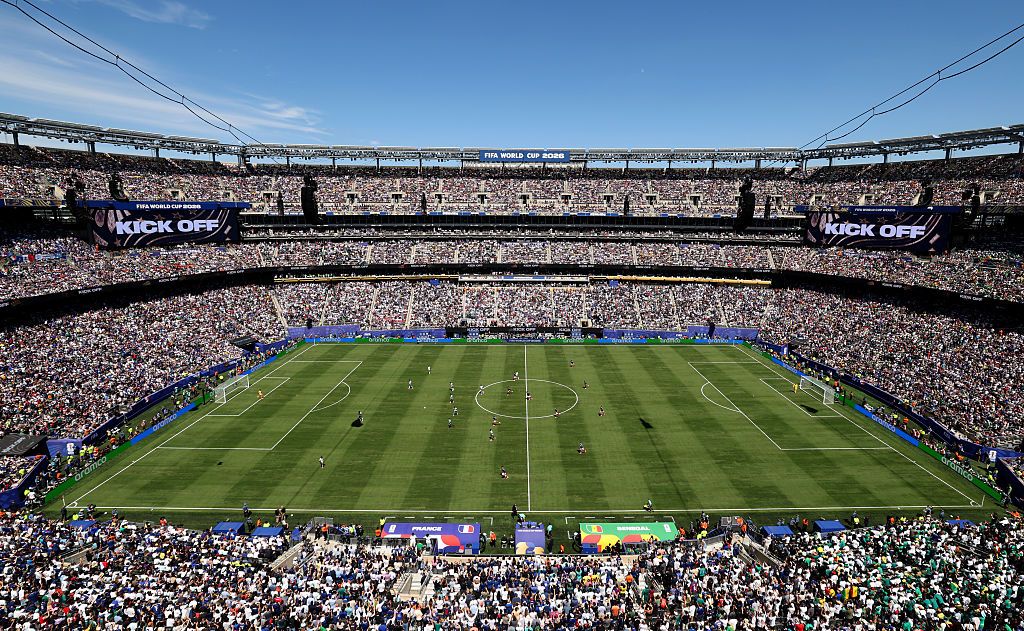
Many teams have turned to this surprising move during the World Cup — but what exactly is the reasoning behind it?
An unusual tactical approach has become increasingly common during the opening week of the 2026 World Cup.
Instead of passing the ball backwards and retaining possession after kick-off, several sides have started booting the ball out of play for a throw-in deep inside their opponents’ half.
Even France, among the favourites to lift the World Cup and a team more than capable of building play from the back, began their Group I opener against Senegal by deliberately kicking the ball out for a throw, conceding possession almost instantly.
Casual viewers could be forgiven for thinking they were watching a rugby union match, where kicking the ball out of play to gain territory is a standard tactic.
However, this strategy has now found its way into elite football — and it’s not as illogical as it might seem at first glance.
Much like in rugby, the idea behind launching the ball out for a throw deep in the opposition half is to pressure the opponent into playing from a risky area, applying immediate pressure from the very first whistle.
The opposition might respond by clearing the ball upfield to avoid being trapped near their goal, but that often results in the team that took the kick-off quickly regaining possession.
Similarly, if the defending team opts for a safer throw up the line, they could easily find themselves boxed in, with the ball returning to the attacking side in no time.
Fans in North America might recognise this approach, having seen Paris Saint-Germain — the reigning Champions League holders — regularly kick the ball out of play from kick-off during their run to the Club World Cup final in the United States last summer.
This technique then spread further in the Premier League, in a season when managers increasingly preferred low-risk football compared to previous years.
Several English top-flight teams — including eventual champions Arsenal, along with Brentford and Bournemouth — developed their own version of the move. The player taking the kick-off would pass the ball slightly backwards to a teammate, who would then chip it up and volley it high into the air.
This setup created an aerial contest between the defending side and the pressing attackers, who hoped to capitalise on any defensive mistakes or poor clearances.
With teams ranging from France to Qatar now adopting this method at the World Cup, it seems that this curious kick-off trend is here to stay.