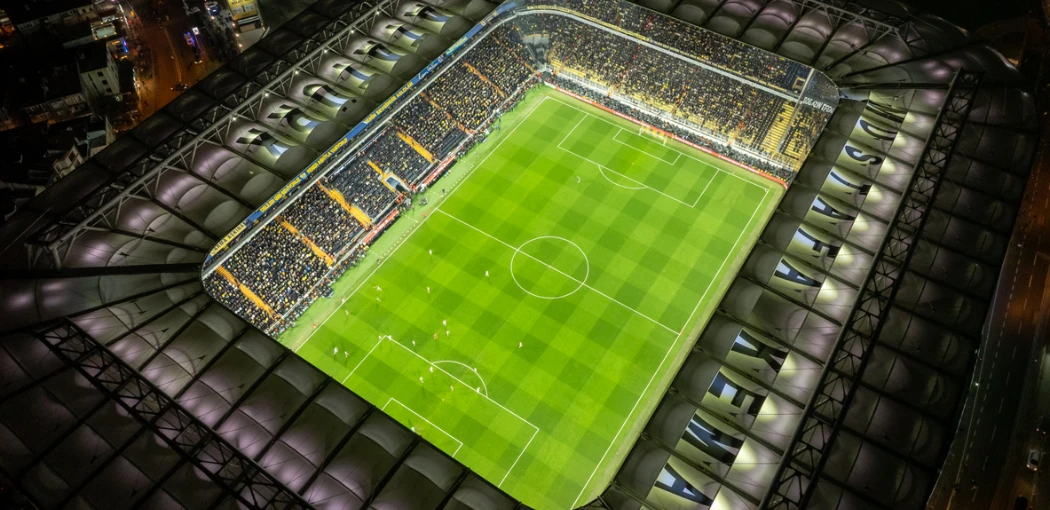
The 2026 FIFA World Cup is set to be the largest in history, with 16 stadiums across Canada, Mexico, and the United States forming a key part of the event’s narrative alongside the football itself.
Featuring everything from retractable roofs and advanced air‑conditioning systems to vast open‑air arenas, the venue lineup reflects a blend of climate adaptation, spectacle, and immense financial investment.
The tournament will unfold across 16 stadiums: 11 situated in the United States, three in Mexico, and two in Canada.
These venues include historic icons such as Estadio Azteca in Mexico City and modern NFL‑inspired arenas in Dallas, Atlanta, and Los Angeles.
In total, 104 matches will be played, marking an unprecedented logistical scale for a single World Cup network of venues.
Functionally, the stadiums are divided between those that are fully climate‑controlled and those that remain primarily open‑air. Three venues—Mercedes‑Benz Stadium in Atlanta, AT&T Stadium in Dallas, and NRG Stadium in Houston—can seal their retractable roofs and activate powerful air‑conditioning systems, creating a completely enclosed environment for both players and spectators.
The other 13 stadiums are open‑air, though some, like SoFi Stadium in Los Angeles and BC Place in Vancouver, feature partial roofs or canopies that provide shade rather than full enclosure or cooling.
Four World Cup stadiums have retractable roofs: Mercedes‑Benz Stadium, AT&T Stadium, NRG Stadium, and BC Place.
In Atlanta, the Mercedes‑Benz Stadium’s eight‑panel roof operates like a camera shutter, allowing it to transition between open‑sky football and a sealed, air‑conditioned interior.
AT&T Stadium features twin sliding roof panels and massive operable end‑zone doors, enabling flexibility between an air‑conditioned indoor setting and a more traditional outdoor experience depending on Texas weather conditions.
Experts analysing the 2026 venues note that only Atlanta, Dallas, and Houston can truly offer a fully climate‑controlled match environment when the roofs are closed, thanks to systems that regulate both temperature and humidity across the seating areas and pitch.
Such technology, paired with roof shading, helps maintain playing temperatures far below the intense summer heat outside—similar to the approach used in Qatar 2022, where cooled stadiums kept on‑pitch conditions in the low 20s Celsius despite external temperatures exceeding 35°C.
FIFA has taken proactive steps to reduce heat stress for this expanded summer tournament. For 2026, every match will include mandatory three‑minute hydration breaks midway through each half, with referees halting play around the 22nd minute—regardless of weather, location, or roof status.
This new rule replaces the previous system, which only required cooling breaks when the wet‑bulb globe temperature surpassed roughly 32°C. The updated approach simplifies application and places a stronger emphasis on player safety.
In closed, air‑conditioned venues, these measures complement already cooler conditions, effectively removing the risk of extreme heat impacting performance or safety.
At open‑air stadiums, hydration pauses, shaded seating, and evening kick‑offs will serve as the primary tools for managing heat, creating a more consistent and protective environment than in many previous World Cups.
The financial scale of these venues underscores their global stature. MetLife Stadium, which opened in 2010 and will host the final, cost approximately 1.6 billion US dollars to construct.
According to FIFA‑aligned projections, the New York–New Jersey region alone could see an economic boost of around 3.3 billion dollars from its eight World Cup matches.
In Canada, Vancouver’s BC Place underwent a 563‑million‑dollar renovation in 2011, adding a massive cable‑supported retractable roof—demonstrating how major tournaments like the World Cup can accelerate stadium modernisation.
Qatar’s stadium cooling systems, implemented in seven of eight venues for the 2022 World Cup and intentionally left unpatented for global adaptation, serve as the technological foundation for the 2026 climate‑controlled arenas.
By focusing on “spot cooling”—targeting the pitch and spectator areas rather than the entire air volume—these systems proved that football can be played sustainably in warmer climates year‑round. That innovation is now influencing both retrofits and new stadium designs worldwide.
The 2026 World Cup final will take place on 19 July at MetLife Stadium in East Rutherford, New Jersey. This 82,500‑seat open‑air arena, located just west of New York City, has previously hosted major events such as Super Bowl XLVIII and the Copa América Centenario final, underlining FIFA’s preference for vast, globally recognised venues.
Together, these stadiums represent a bridge between eras: colossal NFL‑style arenas offering premium hospitality and cutting‑edge technology alongside classic football temples like Azteca, unified by advanced climate control and updated heat‑management regulations.
The combination of three fully air‑conditioned, roofed arenas and thirteen open‑air grounds points to a future in which stadium design increasingly integrates retractable roofs, targeted cooling, and fan‑focused amenities—not only for World Cups, but also for domestic leagues and multipurpose sports complexes worldwide.
Here is the full list of 16 stadiums hosting FIFA World Cup 2026 matches, as per FIFA venue data:
BMO Field – Toronto, Canada
BC Place – Vancouver, Canada
Estadio Akron – Guadalajara, Mexico
Estadio Azteca – Mexico City, Mexico
Estadio BBVA – Monterrey, Mexico
Mercedes‑Benz Stadium – Atlanta, USA
Gillette Stadium – Foxborough/Boston, USA
AT&T Stadium – Arlington/Dallas, USA
NRG Stadium – Houston, USA
Arrowhead Stadium – Kansas City, USA
SoFi Stadium – Inglewood/Los Angeles, USA
Hard Rock Stadium – Miami Gardens, USA
MetLife Stadium – East Rutherford (New York/New Jersey), USA
Lincoln Financial Field – Philadelphia, USA
Levi’s Stadium – Santa Clara/San Francisco Bay Area, USA
Lumen Field – Seattle, USA