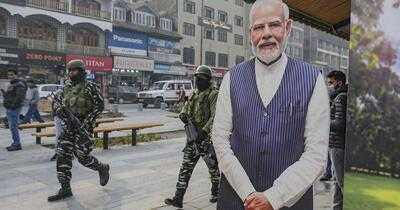
The more overt phase of centralisation in India unfolded with dramatic speed soon after the Bharatiya Janata Party returned to power in May 2019. On August 5 of that year, the Modi government stunned the nation and the world by revoking Article 370, stripping Jammu and Kashmir of its special constitutional status. Not only was this done without the consent of the State’s elected assembly (which was conveniently under President’s Rule), but the State was also split into two Union Territories – Jammu and Kashmir, and Ladakh – directly administered from Delhi. Though the move was hailed by some as the end of an outdated arrangement, scholars had long argued that the true federal autonomy promised by Article 370 had already been hollowed out over the decades, with successive governments – and at times the Supreme Court – systematically reducing it to a symbolic provision. The Modi government merely delivered the final blow.
But the centralising push didn’t end there. In December 2019, Parliament passed the Citizenship (Amendment) Act (CAA), which for the first time made religion a criterion for Indian citizenship – openly excluding Muslims from the list of persecuted minorities eligible for fast-tracked citizenship from select neighbouring countries. This marked...
Read more