Indian equity markets opened in red on Thursday, though market analysts noted that the medium-term market setup remains supportive as long as global crude oil prices continue to tumble.
The BSE Sensex opened flat down by 23.96 points, or 0.03 per cent, at 77,131.66 points, while the NSE Nifty 50 stood at 24,073.80 points, down 11.90 points or 0.05 per cent.
Ajay Bagga, Banking and Market expert, stated that the contraction of global risks acts as a structural tailwind for the equity landscape.
"Near term, markets may consolidate after a strong rally. But the medium-term setup remains supportive as long as oil stays contained, the Iran deal progresses and global central banks avoid further tightening surprises," Bagga stated.
He mentioned that domestic economic indicators place the local market in a favourable position relative to global peers.
"The biggest positive for markets is the collapse in the geopolitical risk premium. Lower oil, easing shipping risks and improving trade momentum support equities globally," Bagga added. "India remains relatively well positioned. Falling crude prices, improving external balances, stronger trade linkages and resilient domestic demand create a constructive backdrop."
Bagga also noted that India's trade integration story received another boost with confirmation that the India-UK Free Trade Agreement (FTA) will come into effect on July 15. Tariff reductions across multiple sectors are expected to strengthen exports, improve competitiveness, and support medium-term growth.
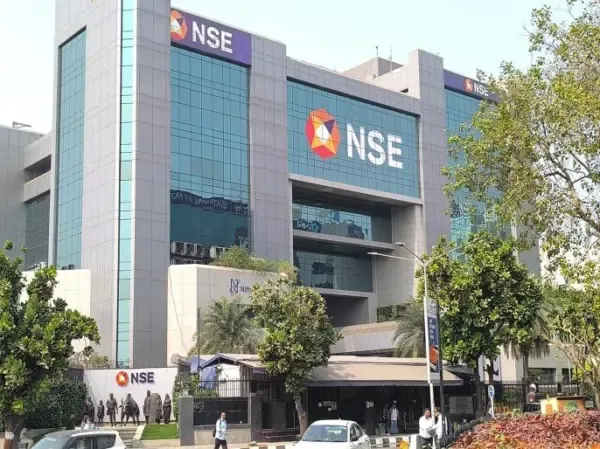
Market expectations are also building around a potentially record-setting listing of the National Stock Exchange (NSE). "Current discussions point to a valuation that could make it one of India's largest IPOs. Timing appears increasingly linked to regulatory clearances and market conditions, with investors closely watching developments after fresh disclosures in the filing process," he noted.
This cautious domestic opening followed a sharp overnight decline in US markets, where the Dow Jones dropped 0.98 per cent to 51,492.55 points, the S&P 500 fell 1.21 per cent to 7,420.10 points, and the Nasdaq slid 1.34 per cent to 26,021.66 points.
The drop in equity indices came amidst a hawkish stance from the US Federal Reserve and a steep decline in international oil prices. In the commodities market, Brent crude fell 1.63 per cent to USD 78.26 per barrel, while US crude oil declined 1.98 per cent to USD 75.27 per barrel. On the other hand, gold prices gained 1.40 per cent to reach USD 4,319.46.
"The Federal Reserve delivered a hold, but the message was more hawkish than markets expected. Policymakers retained concerns on inflation and some projections now point to the possibility of tighter policy in 2026," Bagga warned. "The Fed is clearly signalling that inflation risks have not disappeared despite easing energy prices."
President Trump has now signed the US-Iran Memorandum of Understanding at the G7. Bagga mentioned that the immediate impact is the reopening of the Strait of Hormuz, easing oil supply fears and reducing the geopolitical risk premium embedded in crude.
"The next step is a 60-day negotiation process covering Iran's nuclear programme, sanctions relief and broader regional security arrangements. Markets are treating this as a major de-escalation event. Oil has fallen sharply and risk assets have responded positively," he added.
In Asian markets, trends were mixed. While the GIFT Nifty edged up 0.57 per cent to 24,094.00 points and Japan's Nikkei 225 surged 1.68 per cent, Hong Kong's Hang Seng index declined 1.80 per cent.
From a technical standpoint, market analysts highlighted key support levels that index traders need to watch closely during the session.
Shrikant Chouhan, Head of Equity Research at Kotak Securities, said, "We are of the view that the short-term market outlook remains positive, and for trend-following traders, 24,000/77,000 would act as a key support level. Above this, the market could rally to 24,200-24,300/77,500-77,800."
Chouhan also outlined the potential risks if these thresholds are breached. He mentioned that if the market falls below 24,000/77,000, "we could see an intraday correction. Below this level, the market might retest the levels of 23,900-23,800/76700-76400."