A very important and relief news has come to light for lakhs of teachers teaching in council schools of Uttar Pradesh. About 1.86 lakh teachers working in primary and upper primary schools of the state have not yet been able to pass the Teacher Eligibility Test (TET). Out of these, there were about 50 thousand teachers who could not appear in this examination due to not completing their minimum educational qualification.
Now, giving a big relief to all such teachers, the Uttar Pradesh government has given some relaxation in the rules of minimum educational qualification. Along with this, the government has started making full preparations to conduct a special TET examination for these teachers. The government has adopted a very strict approach towards this and has asked for the complete list of teachers who have passed TET and those who have not passed TET from all the districts within just a week.
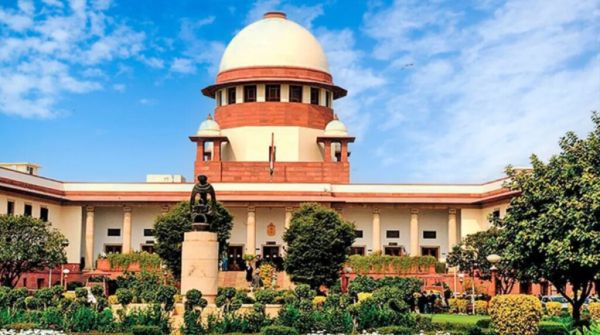
This entire decision has been taken after a new order of the country’s biggest court i.e. the Supreme Court. The Supreme Court has made a major amendment in its old order dated 29 May 2026 on the review petition of ‘State of UP vs. Anjuman Ishaat-e-Taleem Trust’. Issuing a new order, the court has extended the last date for passing the examination for teachers teaching in council schools without passing TET to 31 August 2028. Let us tell you that earlier this extension given by the court was fixed till 31 August 2027 only.
After this new instruction of the Supreme Court, the government has completely come into action mode. Special Secretary Avadhesh Kumar Tiwari has issued an official letter to the Director of Basic Education on June 16. Through this letter he has asked for detailed information on 3 main points. Under this, the department will first have to tell the total number of regular teachers working in primary and upper primary schools district wise.
After this, data of such teachers will have to be given who have already passed TET or CTET. Lastly, the list of those teachers who have not yet passed this examination will have to be submitted. The government has directed to make this complete report available within a week, which will include teachers from council, recognized and government schools.
The Supreme Court has said some very important things in its new decision, which is very important to know:
Uttar Pradesh Education Service Selection Commission (UPESSC) has made three very big and historic changes in the UPTET notification released in March 2026, which are as follows:
In the month of March, applications were invited on a large scale for the TET exam. In this, along with the common candidates, 1.86 lakh teachers of the state who are teaching without TET have also applied in large numbers. This examination is scheduled to be held on 2nd, 3rd and 4th July 2026. However, these days, due to the teachers being busy with the national census, they are not getting any time to prepare for the examination.
The root of this entire controversy is the ‘Right of Children to Free and Compulsory Education Act’ (RTE-2009) passed by the Parliament on 4 August 2009, which was implemented across the country from 1 April 2010. The main objective of this law is to provide free education from class 1 to 8 to every child of 6 to 14 years of age. Under this law, TET was made mandatory as the minimum qualification for teachers. In Uttar Pradesh, an order was issued on 27 July 2011 making it a mandatory service condition for primary and secondary level recruitments.
After this, on September 1, 2025, the Supreme Court bench of Justice Dipankar Dutta and Justice Manmohan ruled that teachers who have more than 5 years of service left will have to pass TET within 2 years (by August 31, 2027). Teachers who had less than 5 years left in the job were exempted from the examination, but the condition of passing TET for any kind of promotion in future was imposed on them also.
Teachers’ organizations of UP argue that under the RTE Act, the mandatory requirement of TET came into effect from July 2011, hence implementing it on teachers who were appointed before that is completely unconstitutional. There are many teachers who have been serving continuously for the last 20 to 25 years, they say that after such a long service, it is not justified to take the examination again at this age.
Dinesh Sharma, President of Uttar Pradesh Primary Teachers Association, says that this rule of RTE Act-2009 is completely applicable to classes 6 to 8 conducted in inter colleges. In such a situation, it will be mandatory for the teachers teaching there to pass TET. The number of such teachers in the state is more than 20 thousand who will come under the purview of this order. Apart from this, there are a large number of recognized and private colleges in the state, for whose teachers this rule will also be applicable. In such a situation, it will be very important to see what steps the government will take in the case of Shiksha Mitras because they are also teaching children from class 1 to 8.
General Secretary of the National Educational Federation, Shivshankar Singh, while placing the practical problems before the government, said that recently, along with the academic work, the teachers were also given the work of SIR and now they have been thrown into the national census campaign. In such a situation, how should they prepare for the UPTET exam to be held in July?
He demanded that Uttar Pradesh government should also give special relaxation to teachers in TET on the lines of Tamil Nadu government. Tamil Nadu government has issued a special ordinance to reduce the qualifying marks of TET exam keeping in mind the future of about 4 lakh government and private teachers, and ‘TNTET’ exam is being conducted there 6 times within two years.
Uttar Pradesh Chief Minister Yogi Adityanath has given a very strict and direct message to the government officials and employees who make reels on social media. The CM has termed the habit of making on-duty reels as gross indiscipline.
The Chief Minister said in a high level meeting, “It is often seen that some officers and employees are busy in making reels during the precious time of their duty, this is completely a part of indiscipline. While on duty, every public servant should be alert and serious towards his duties only and only. Any such work will not be tolerated at all in the government system, due to which a particular person or the entire government department becomes an object of ridicule and laughing in the society.” CM has clearly warned that strict legal and departmental action will now be taken against such indiscipline.