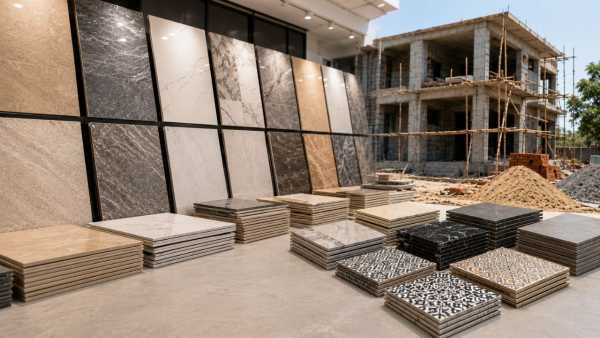
Indian real estate and home builders have heaved a sigh of relief after the announcement of ceasefire between Iran and America in West Asia. Due to this tension, a huge jump of up to 40 percent was seen in the prices of essential construction materials like tiles, rebar, bricks and paint in the country in the recent past. India's largest ceramic hub, Morbi in Gujarat, was almost brought to its knees due to the gas crisis. Now that the war has stopped, the biggest question in the minds of common consumers who are building their homes is whether the prices of tiles will come down immediately or will it be beneficial to wait for a while. Let us understand what is the current ground reality of the market.
Due to increasing tensions in West Asia, international waterways and gas supplies were severely disrupted. This had a direct impact on Morbi in Gujarat, which produces about 80 to 90 percent of the country's tiles and sanitary ware. Morbi's entire ceramic industry is dependent on propane and natural gas as fuel, which is imported from Gulf countries.
From mid-March 2026, more than 400 factories out of about 600 units in Morbi were voluntarily shut down for weeks by the owners due to gas shortage and skyrocketing prices. While this recession affected the livelihood of 4 lakh workers and led to their migration, 35-40% of the exports to Arab countries also came to a standstill. Due to supply stoppage, the prices of tiles in the domestic market suddenly increased by 40%.
Five days ago, a big statement by Abhishek Somany, Managing Director and CEO of Somany Ceramics, had come out regarding this market crisis. He had warned in an interview that due to the ongoing crisis in the Middle East and expensive gas, about 20% of India's inefficient tile plants, or 1 in every 5, could be on the verge of closing forever.
However, now after the ceasefire there is hope that the situation will improve. Preparations have started to call back the workers in the closed factories of Morbi. Entrepreneurs associated with plastic and ceramic industry are resuming production, but they will also take any major decision only after closely observing the market and global trend for the next 15 days.
Despite the lifting of the blockade from the Strait of Hormuz, experts believe that it will take at least two to three months for the fuel supply to return to pre-war levels. It will take time to bring oil and gas production to normal levels in countries like Qatar, Saudi Arabia, Iran and Iraq.
Experts say that it will take months to safely rescue hundreds of oil tankers stuck in the Persian Gulf, complete the refining process and deliver it to the consumer. Additionally, it may take a few years to recoup the damage done to LNG production facilities in countries like Qatar and rebuild depleted global inventories.
It is a matter of relief that the Petroleum Ministry of the Government of India has found an alternative way to import gas from 13 other countries while reducing dependence on the Gulf countries, thereby creating adequate backup of gas in the domestic market.
If you are thinking of buying tiles for your home, you will have to adopt a somewhat practical approach. The ceasefire has stopped further price increases, but prices will not return to their previous levels overnight.
It will take at least 2 months for the supply chain to fully restore and recover from the slow refining process. Only when the new stock reaches the market in sufficient quantity will the prices soften at the dealer level. According to financial experts, if you have time, then waiting for 2 to 3 months for bulk purchase of tiles can be a wise decision.