Football Muse
·19 June 2026
Football fans are accustomed to grand promises from club owners. So when Tottenham Hotspur chairman Peter Charrington unveiled an ambitious vision for progress in May, few in North London would have taken it at face value.
Tottenham entered the final weekend of the 2025/26 Premier League season with their top-flight survival still uncertain. A crucial final-day victory over Everton ensured they avoided a first relegation since 1977, but it was nonetheless their second consecutive season finishing 17th. For a club of Tottenham’s heritage, it marked yet another disappointing campaign.
Since achieving Champions League qualification for the first time in 2009/10, Spurs have established themselves among the Premier League’s so-called ‘Big Six’.
Although major trophies have largely eluded them, Tottenham have grown into one of the wealthiest clubs in global football.
The construction of a state-of-the-art stadium and training complex has underpinned that success, helping them rank ninth in the 2026 Deloitte Football Money League—above Chelsea, Inter Milan, Atletico Madrid, AC Milan, and Juventus. Spurs were also among the 12 clubs behind the much-criticised European Super League proposal, a commercial project aimed at safeguarding the continent’s elite.
Yet, despite their financial muscle, Tottenham have seldom behaved like one of football’s true powerhouses. Charrington’s remarks last May admitted that ‘something seismic had to change’ and that ‘football success had not been driving our decisions’—a rare moment of honesty from the boardroom.
Daniel Levy, long regarded as one of football’s most astute negotiators, often prioritised financial prudence over on-field results. Winning transfer battles in the boardroom did not always translate into victories on the pitch. True sporting success often requires decisiveness, even if it means overpaying to get deals done. The perceived market value of a player does not always align with their actual worth to both buyer and seller.
This summer, however, Tottenham appear ready to rewrite that narrative. The club has already executed some of the savviest moves in the early Premier League transfer window. Andy Robertson and Marcos Senesi, both experienced top-flight campaigners, have joined as free agents to bring leadership and composure to a youthful squad.
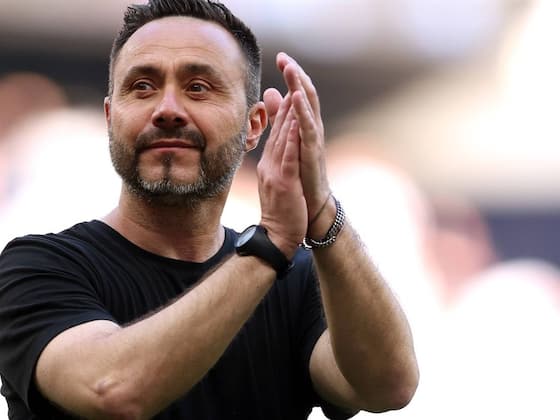
On Thursday evening, Tottenham finalised the £52 million signing of Jan Paul van Hecke from Brighton, reuniting the Dutch centre-back with Roberto De Zerbi. Although the fee is steep for a player whose contract was due to expire next summer, the move signals Spurs’ intent to accelerate their rebuild. Only five centre-backs have commanded higher transfer fees in the last five seasons—making this a statement acquisition.
Yet, it is Tottenham’s activity in midfield that truly exemplifies Charrington’s vision of a ‘seismic’ change.
The club has positioned itself as a serious contender for Sandro Tonali, expressing optimism that a deal could be reached. Newcastle United are demanding around £100 million for the Italian midfielder, who has also drawn interest from Arsenal and Manchester City. Completing such a move would smash Tottenham’s existing transfer record.
Not stopping there, journalist David Ornstein of The Athletic reported that Spurs are also pursuing Mateus Fernandes. The 21-year-old West Ham midfielder carries an £80 million valuation and is among Manchester United’s top summer targets. While a move to Old Trafford remains possible, Tottenham’s readiness to invest close to £200 million in two elite midfielders reflects a dramatic rise in ambition.
In previous years, missing out on Champions League football would have led to cautious spending. This time, Tottenham are embracing a more assertive approach. For supporters who had to watch arch-rivals Arsenal lift the Premier League trophy last season, this newfound ambition feels like a long-overdue response.