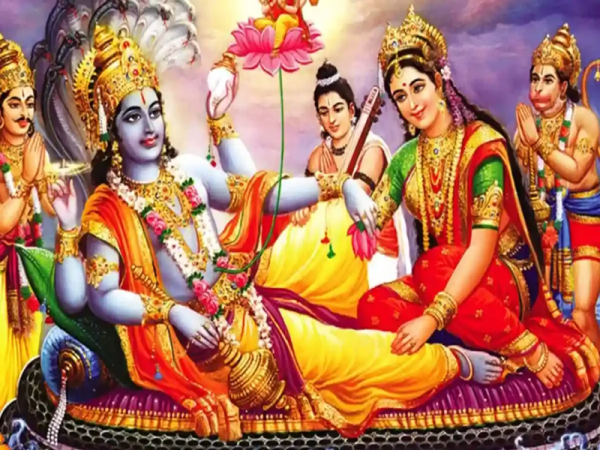
The Ekadashi fast is observed twice every month. The Ekadashi falling during the waxing phase (Shukla Paksha) of the Jyeshtha month is celebrated as Nirjala Ekadashi. Among the twenty-four Ekadashis, this fast is considered both the most rigorous and the most rewarding. This year, the fast will be observed on June 25.

According to religious belief, observing the Nirjala Ekadashi fast grants the devotee the spiritual benefits of observing all Ekadashi fasts and invokes the grace of Lord Vishnu. During this fast, one must abstain from both food and water. Strict rules must be followed while fasting; failure to do so can invalidate the fast. If you are planning to observe the Nirjala Ekadashi fast for the first time, this article details the strict rules that every devotee should follow:
1. Abstaining from food and water: One must abstain from consuming food and water during the Nirjala Ekadashi fast; this is the most challenging rule of the observance. Do not consume anything once the Ekadashi *tithi* (lunar day) begins.
2. Consuming *Sattvic* food: The fast is broken (*Paran*) on the following day, known as *Dwadashi*. Therefore, consume *Sattvic* food (pure, wholesome, and vegetarian food) on *Dwadashi*. On this day, one must strictly avoid consuming garlic, onions, red lentils (*masoor dal*), meat, or alcohol.
3. Observing *Brahmacharya* (celibacy): The rules of *Brahmacharya* must be strictly observed during the Nirjala Ekadashi fast. Failure to do so can break the fast and displease Lord Vishnu. Additionally, one should avoid arguments or harboring negative thoughts about others during the fast, as doing so can negate the spiritual benefits. Therefore, it is advised to fully understand the rules before undertaking the Nirjala Ekadashi fast.
4. Breaking the fast (*Paran*) and charity at the auspicious time: The full spiritual benefit of the fast is attained only by breaking it correctly. Therefore, ensure you break the Nirjala Ekadashi fast during the auspicious time (*Shubh Muhurat*) on *Dwadashi*. Additionally, donate items such as food and money to temples or the needy. According to religious belief, making such donations ensures the devotee reaps the full benefits of the fast and experiences no lack in life.

5. Worship of Lord Vishnu – On the day of Ekadashi, after bathing in the morning, worship Lord Vishnu and Goddess Lakshmi. During this time, recite the *Vrat Katha* (the sacred narrative associated with the fast). According to religious belief, performing this worship and reciting the *Vrat Katha* absolves the devotee of all sins.
PC Social Media