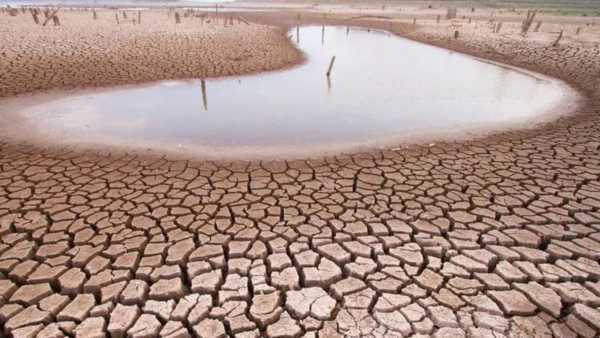
Global credit rating agency Moody's Ratings has issued a big warning regarding the water crisis in India. Moody's Ratings has described India's water management system as fragmented and less resilient. He also said that the slow process of distribution of water among different sectors in the country is rapidly inviting the crisis. Apart from this, subsidies given on water prices in selected areas are increasing the pressure on the government exchequer.
80 percent of the available fresh water in India is used in agriculture. In many states, the agriculture sector is given subsidy on the use of water and electricity. In such a situation, the fiscal pressure on the government is gradually increasing. The federal structure of India's water management system is further helping in this. In fact, irrigation, drinking water supply and management of local water resources mainly fall under the jurisdiction of the states. In such a situation, the water policy of all the states operates in different ways.
1.Situation of water crisis due to improper distribution of water between different areas.
2.With the expansion in the digital economy, water consumption in India has increased. But supply is limited.
3.Challenges like drought, floods, irregular monsoon and climate change will also increase the water crisis.
According to Moody's Ratings, in such a situation, different policies and priorities of different states will definitely affect the effective use of water resources. Its impact will be more visible in those areas where there is a huge gap between the demand and availability of water. Moreover, redistribution of water between agriculture, domestic use and industrial sectors is slower than it should be. In such a situation, water crisis can increase rapidly in those areas where demand is increasing rapidly.
With the expansion of digital economy, data center, cloud computing and AI based industries are also developing rapidly in India. Here, large quantities of water are required for server cooling and other technical processes. Due to increase in industrial demand, there is additional pressure on the already limited water resources. If we want to move forward in the digital economy, we must find a balanced and sustainable management of water resources.
At present, India is facing challenges like severe drought, floods, irregular monsoon and climate change. When such situations arise, it has a direct impact on water availability and water management. Apart from this, inefficiencies in the pipeline network and over-exploitation of groundwater are also major factors leading to water crisis. Reports of falling groundwater level are continuously emerging in many states, due to which concerns of water crisis in future have increased.
Moody's report says that effective management of water resources is not only important for the environment but also for the economic and financial stability of a country. India will have to come up with a long-term system for water management while striking the necessary balance between increasing population, climate change, industrial expansion and agricultural demand.
Mumbai, which is known as the financial capital of the country, is facing water crisis. Mumbai gets water from seven lakes Tansa, Vihar, Tulsi, Bhatsa, Upper Vaitarna, Modak Sagar and Middle Vaitarna. According to BMC, the combined water stock in these reservoirs is now 9.33 percent. At this time last year, the water stock in these reservoirs was 12.27 percent, whereas in 2024 it was 10.24 percent. There is only one month's water left for Mumbai in these reservoirs.
At the same time, questions are being raised continuously on the availability of water in Delhi. There are many areas here where water is not reaching for 15 to 20 days. At present, a total of 948 to 950 MGD of water is being produced in Delhi including all the plants, renewal wells and tube wells, which is about 50 MGD less than on normal days. This is the reason why there is water shortage in Delhi.
Chennai's major reservoirs currently have about 288 days' worth of drinking water (about 9-10 months), which is sufficient to meet the city's needs even in the absence of monsoon rains. But here too the groundwater level is falling rapidly. Besides, the digital economy is also developing rapidly here, which will increase water consumption. In such a situation, if the system of distribution of water in different areas is not maintained properly, then water crisis may arise in the future.