DON'T MISS A MOMENT OF THE WORLD CUP
Marcus Rashford, Morgan Rogers and how England’s ‘finishers’ could unlock World Cup glory
Mikel Arteta’s phrases, methods, and general approach to football have often split opinion. The Arsenal manager has reshaped the language of coaching, replacing traditional football jargon with his own concepts—one of his favourites being the term ‘finishers’ instead of ‘substitutes’.
Originally a term used in rugby union, Arteta brought it into football after Arsenal’s Champions League victory over Athletic Club in September, when Gabriel Martinelli came off the bench to score the winner. “Sometimes the finishers will be more important than the starters this season. And in the end, the finishers made the impact to win the game,” Arteta explained.
The remark caught attention not only for its corporate tone but also for what it revealed about Arsenal’s strength in depth. Arteta had a reserve of players just as capable as his starters, able to shift the momentum of matches in short bursts of play.
The same principle applies to England at the World Cup. Thomas Tuchel, too, has a wealth of attacking choices but cannot fit them all into one starting XI—or even the full squad. And like Arsenal during their Premier League title run, England will rely on their ‘finishers’ to help push them across the line this summer.
Gordon-Rashford dilemma
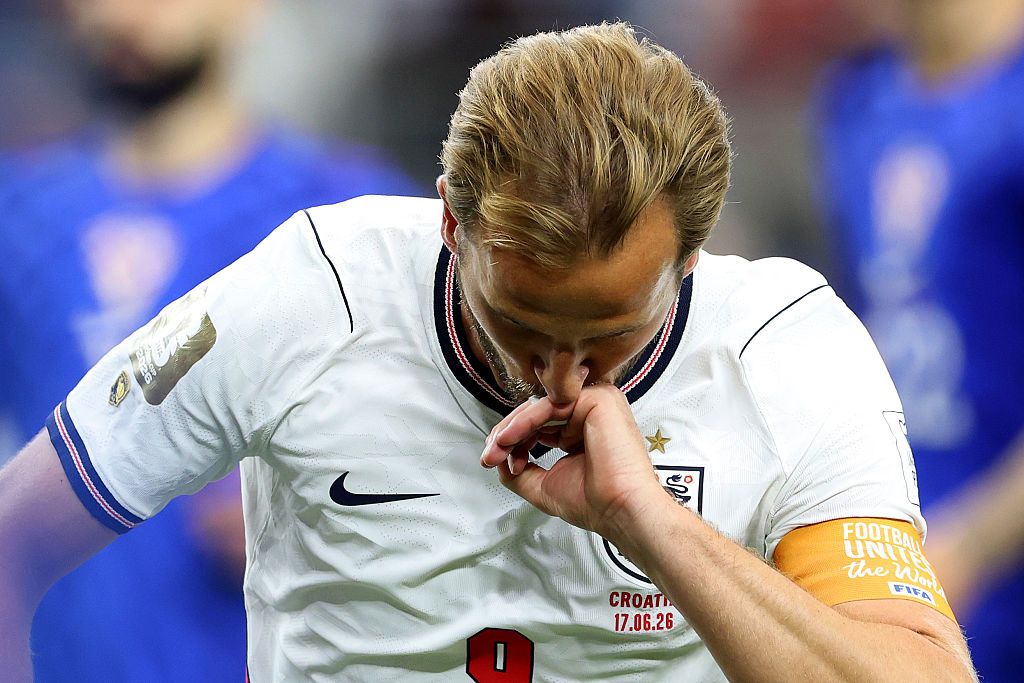
This strategy was evident in England’s victory over Croatia, particularly on the left flank. Tuchel opted for Anthony Gordon instead of Marcus Rashford, despite calls for the Manchester United forward to start ahead of the winger, who Barcelona have reportedly signed to replace him this summer.
Gordon played his part effectively—pressing aggressively, making intelligent runs, and providing constant threat. Though he only touched the ball 17 times, his contributions off the ball were vital. Gordon’s effectiveness isn’t defined by goals or assists alone; his off-ball work is equally crucial.
Rashford, too, excels at pressing, finding space, and running behind defences. While not identical to Gordon, his role serves a similar purpose. After 72 minutes, Tuchel introduced Rashford, and within thirteen minutes, he scored a fine goal to cap a flowing team move.
“Marcus is just pushing and pushing and pushing in training at the highest level,” Tuchel told reporters. “I am very, very happy for him that he got his [goal] and I hope he stays hungry for the next one and the next one because he was absolutely impressive over the last 17 days and he really deserved his goal.”
Rogers or Bellingham?
Tuchel has also spoken highly of Morgan Rogers. The Aston Villa star, who could soon move to a bigger club, is a remarkable talent. Even though Jude Bellingham remains the more complete footballer, Tuchel admitted Rogers made a strong case to start in Wednesday’s match.
“The tough, tough decision was to say to Morgan Rogers that he will not start, because he deserves 100 percent to start, and he has done so well for us,” Tuchel said after the game in Dallas.
Rogers, however, is a superb option off the bench, and some even argue that he and Bellingham could play together. Against Croatia, introduced around the 70th minute, Rogers added energy behind the attack and made a crucial decoy run in the build-up to England’s fourth goal.
There will surely be occasions when he’ll be called upon for a more prominent role—and he’s more than capable of delivering.
Plenty of options
Elsewhere in Dallas, Djed Spence impressed after replacing Reece James at right-back, adding attacking drive and nearly scoring if not for a top save. Similarly, Bukayo Saka remains one of England’s best players, though Tuchel has been cautious with him following an Achilles issue after an injury-plagued season with Arsenal. Noni Madueke started against Croatia before Saka came on to provide an assist for Rashford’s goal during his 20-minute cameo.
“Bukayo is ready and will get more and more ready,” Tuchel said. “I think once we go to the last game of this group, he will be ready. He was strong in training on Tuesday in small spaces. It was just a matter of if the game was open and was up and down.”
For the biggest games, Saka is an automatic starter. But in the group stages, particularly when England face weaker opposition, Tuchel can afford to ease him back to full sharpness.
Unprecedented depth
Then there are players yet to feature. Ollie Watkins, who ended his Aston Villa campaign in sensational form, remained unused. So did Arsenal’s creative spark Eberechi Eze and Manchester United’s rising star Kobbie Mainoo, each of whom would start for most other teams in this tournament.
England’s squad depth is unmatched in recent memory. Fans will recall the 2018 semi-final against Croatia when Gareth Southgate’s bench offered little beyond Danny Welbeck and Fabian Delph. That side had just two strong attacking substitutes—Rashford and Jamie Vardy. This time, Tuchel has a bench brimming with match-winners.
Getting the buy-in
Of course, managing such talent comes with challenges. These players are all top performers at club level and eager to play on the world’s biggest stage. Tuchel revealed that some, including Rashford, have already questioned their limited minutes.
“Just yesterday, we had a conversation where I told him [Rashford] that I’m very, very impressed with his last 16 days, with how he was in camp, how he pushes on the pitch,” Tuchel said after the Croatia victory. “He’s totally involved in every meeting. He’s very, very fast in translating a meeting onto the pitch.”
Of Tuchel’s 26-man squad, only three—John Stones, Madueke, and reserve goalkeeper James Trafford—were not regular starters for their clubs last season. Watching from the sidelines isn’t easy, but Tuchel has faith in his group’s mentality.
“It is now four more weeks and in four weeks you can swallow it and digest it and buy into it. We selected the group because we were sure that they could do it and they all can,” he said post-match.
Some players, like Jordan Henderson, have been picked more for their experience and leadership at 36 than for consistent playing time. Ivan Toney’s inclusion likely owes to his penalty-taking prowess for knockout matches. If Dan Burn or Jarrell Quansah are called upon, it would indicate deeper squad issues.
‘Fourteen or 15 starters’
When asked about his selection before facing Croatia, Tuchel remarked that he had “14 or 15 starters,” suggesting that almost anyone in his squad could step in and make an impact.
That assessment feels accurate. With the demanding conditions and long club seasons, rotation will be key. It would be a huge surprise to see Tuchel stick with the same starting XI across eight potential matches in four weeks.
The good news for England is that they can afford such flexibility. Need to rest Bellingham? Bring in Rogers. No Harry Kane for a dead-rubber match? Watkins is ready.
Whether it’s about making decisive contributions late on or managing the fitness of key players, England’s bench strength could be the difference between a strong run and lifting the trophy on July 19.