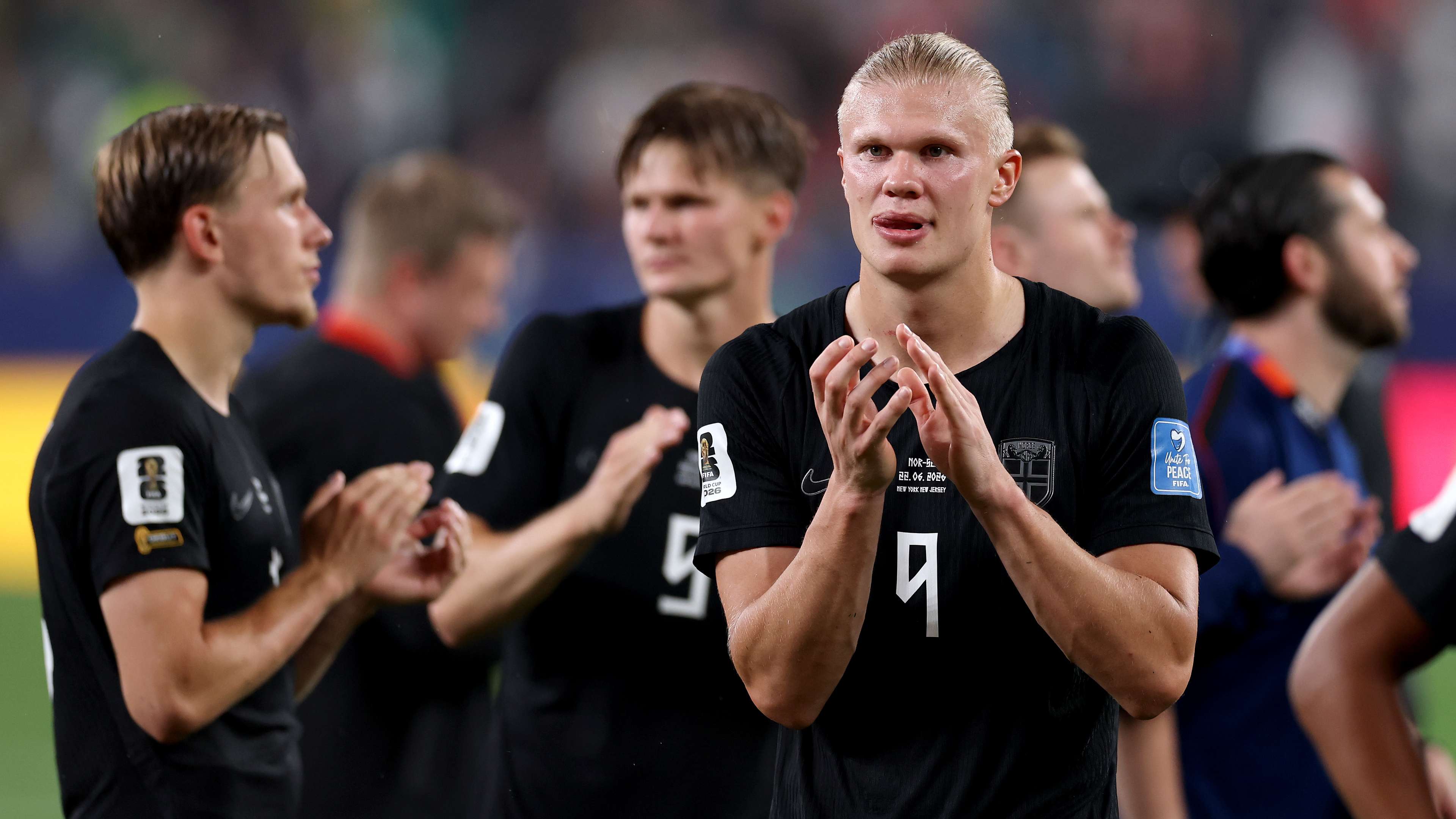
The successful joint bid by the United States, Canada, and Mexico to host the 2026 World Cup marked a historic first — football’s biggest event being staged across an entire continent instead of within one or two nations.
Under FIFA president Gianni Infantino’s leadership, the tournament has expanded to 48 teams. While this growth has been hailed as inclusive, it also risks diluting sustained interest due to the immense scale of 104 matches, and it fails to provide a balanced knockout bracket.
Although discussions about a 64-team centenary edition in 2030 were dismissed, FIFA’s ongoing ambition for expansion — and the logical symmetry of a 32- or 64-team format — makes it likely that the next step will indeed be a 64-team World Cup.
At present, however, 48 teams already represent a massive logistical undertaking. Hosting 104 matches requires multiple nations, and the 2026 edition will be the first with three co-hosts. This will be followed by another multi-nation event in 2030 — technically featuring six hosts.
The 24th World Cup finals are set to take place in Spain, Portugal, and Morocco. To commemorate the centenary of the first World Cup in 1930, single opening matches will also be held in Argentina, Uruguay, and Paraguay — the latter being the original host nation of the inaugural event.
The inclusion of three South American nations in the 2030 bid effectively eliminates all CONMEBOL countries from hosting the 2034 World Cup. With CONCACAF, CAF, and UEFA also ruled out under FIFA’s rotation policy, Saudi Arabia became the clear candidate for 2034.
So what comes next? With FIFA’s ambition to bring the tournament to Saudi Arabia fulfilled relatively smoothly, attention now turns to where the global competition could go next.
FIFA’s rotation system stipulates that at least two tournaments must separate hosts from the same confederation. With the AFC joining the ‘out’ list after 2034, the remaining options narrow down to Oceania or a return to CONCACAF.
Alternatively, if New Zealand puts forward and succeeds with an innovative proposal, both regions could be involved. Given the magnitude of staging the event, a shared approach might be the only feasible path to introducing a fresh host nation in 2038.
Reports from last year indicated that New Zealand is indeed interested in hosting the World Cup and has been exploring creative ways to make that vision a reality. However, Australia — a member of the AFC — would be ineligible to participate in the bid.
“It’s clearly not realistic we could ever host one on our own,” New Zealand Football chief executive Andrew Pragnell told The Athletic. “They’re getting bigger and the capacity requirements are well known. But we are certainly capable of hosting a group and a couple of knockout games, so the key for us is partnership.”
He added, “Given the limited stadium sizes in the rest of Oceania, we have to partner.”
According to The Athletic, a collaboration with the United States could be pivotal to a successful 2038 bid for New Zealand, with Hawaii potentially serving as the central hub for the American side of the tournament, while the rest could be hosted along the U.S. West Coast.
Meanwhile, Fiji is reportedly considering the development of a new stadium as part of a long-term strategy to position itself as a World Cup-ready venue. Hawaii’s own stadium redevelopment plans are also progressing steadily.
Regardless of how the final bid is structured, it appears that FIFA would need to demonstrate unusual flexibility regarding stadium capacities and travel logistics between venues to make a transpacific World Cup viable.
What are your thoughts? Could a transpacific World Cup be the elegant solution to football’s self-created hosting dilemma?