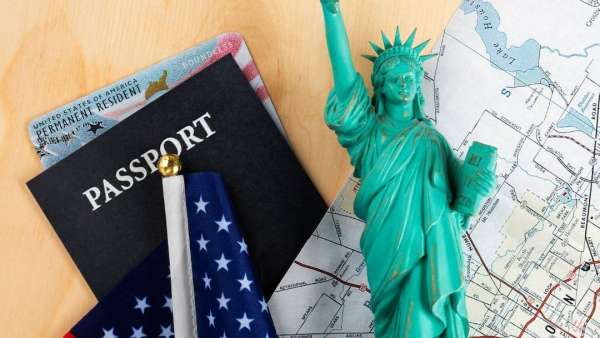
A landmark ruling by the US Supreme Court has widened the authority of border officials, potentially making international travel more complicated for green card holders with pending criminal matters. The decision is being viewed as a significant win for the Trump administration’s immigration enforcement agenda and could have far-reaching implications for millions of lawful permanent residents in the United States.
In a 6-3 ruling in Blanche v. Muk Choi Lau, the Supreme Court held that immigration authorities do not need to possess clear and convincing evidence of criminal conduct before treating a returning green card holder as someone seeking admission into the United States, reported Business Standard.
The judgment overturned a lower court decision that had required immigration officials to meet a higher evidentiary threshold when dealing with lawful permanent residents re-entering the country.
The ruling effectively gives border authorities greater discretion at ports of entry and could make it easier for certain green card holders to be placed into removal proceedings.
The dispute centred on Muk Choi Lau, a lawful permanent resident who was placed on immigration parole after returning from a brief trip to China in 2012 while facing counterfeiting-related criminal charges in New Jersey.
After Lau later pleaded guilty, the Department of Homeland Security initiated removal proceedings against him.
Lau argued that immigration authorities had improperly classified him as an applicant for admission before any criminal conviction had been secured.
The Supreme Court, however, sided with the government’s interpretation of immigration law.
Writing for the majority, Justice Clarence Thomas said the Immigration and Nationality Act allows authorities to regard a green card holder as seeking admission if that person has "committed" a crime involving moral turpitude.
The court concluded that border officials are not required to establish that fact through clear and convincing evidence at the point of entry.
The case will now return to lower courts, which must determine whether Lau’s offence qualifies as a crime involving moral turpitude under US immigration law.
The ruling drew strong opposition from the court’s liberal justices.
Justice Ketanji Brown Jackson, joined by Justices Sonia Sotomayor and Elena Kagan, warned that the decision could significantly weaken protections traditionally associated with permanent residency.
“I worry that the Court has now handed the Government a massive blank check,” Jackson wrote in her dissent.
She argued that authorities could now classify returning green card holders as applicants for admission first and justify that decision later during removal proceedings.
According to the dissent, the ruling risks creating uncertainty for lawful immigrants travelling abroad and may erode the security typically associated with green card status.
Even before the judgment, immigration lawyers and advocacy groups had flagged the case as one with potentially significant consequences for the nearly 13 million lawful permanent residents living in the United States.
Several legal experts warned that a government victory could broaden the circumstances under which green card holders are treated as applicants for admission when returning from overseas travel.
Law firm Tarter Krinsky & Drogin LLP had cautioned before the hearing that the case could make it easier for border authorities to classify returning permanent residents as seeking admission, potentially exposing them to detention and removal proceedings.
The firm noted that such an interpretation could shift the burden from the government to the green card holder and potentially allow even relatively minor criminal allegations to trigger additional scrutiny at the border.
The decision comes as the Supreme Court continues to hear several high-profile immigration cases connected to President Donald Trump’s wider immigration agenda.
These include disputes involving birthright citizenship, asylum restrictions and temporary protections for migrants.
Although the Lau case originated years before Trump’s return to office, the administration urged the court to adopt a broader interpretation of executive authority, arguing that suspicion of criminal conduct can be sufficient grounds to place a lawful permanent resident on immigration parole pending further proceedings.
For green card holders, the ruling could increase the risks associated with international travel if they have pending criminal charges or unresolved legal matters.
Immigration practitioners say the decision reinforces the importance of seeking legal advice before travelling abroad in such circumstances.
While lawful permanent residents retain their immigration status, border officials now have wider authority to treat certain returning travellers as applicants for admission, potentially exposing them to detention and removal proceedings before their cases are fully adjudicated.
The judgment may not affect most green card holders, but for those with ongoing criminal matters, it changes the legal landscape at the US border and raises the stakes for international travel.