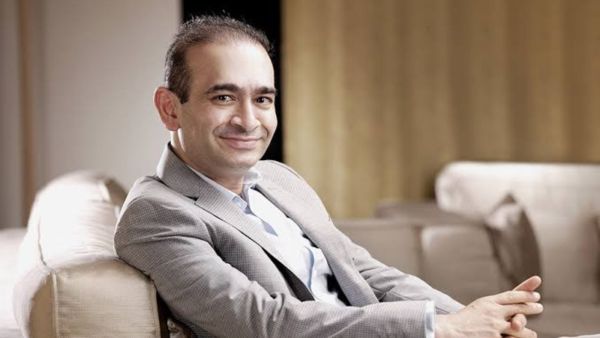
London: Fugitive diamond merchant Nirav Modi is liable to pay Bank of India over USD 11.5 million, including accruing interest on a personal loan guarantee, the High Court in London has ruled.
The 55-year-old jeweller, who remains in prison fighting extradition to India in a separate USD 2 billion Punjab National Bank (PNB) fraud and money laundering case, had disputed the enforceability of the personal guarantee related to a loan to a Dubai-incorporated firm, Firestar Diamond FZE, associated with him.
In a judgment handed down at the London Circuit Commercial Court on Tuesday, June 23, Justice Simon Tinkler found in favour of the Bank of India after a lengthy legal process complicated by paperwork transfer delays within the UK prison service.

“Mr Modi was validly served with the October 2025 Modi Demand. That was a valid demand for a liability to the Bank under the Personal Guarantee,” Justice Tinkler ruled.
“The Personal Guarantee is not, as a matter of Indian law, void/unenforceable. Mr Modi is therefore liable under the Personal Guarantee to the Bank for the principal amount due of USD 4,105,189.34,” he said.
The judge also pointed to “the interest on that sum for which Mr Modi is liable”, which adds up to an estimated USD 11.5 million until March 2026, with further interest accruing following that date.
“The interest calculated on the basis set out by the bank is to be added to the principal sum in calculating the total amount due,” the judge concluded.
Bank of India, represented by Milan Kapadia of Fladgate LLP, had been pursuing the case since 2018 when allegations began to circulate regarding companies associated with Modi.
“This case is a commercial banking recovery claim by Bank of India against Mr Modi as guarantor. It does not concern, and makes no findings in respect of, the wider fraud allegations against Mr Modi or the Punjab National Bank fraud,” Fladgate clarified, following this week’s judgment.
There were three main issues before the judge to determine: whether Modi had been validly served with a demand; whether that demand related to a liability he owed to the bank; and whether the personal guarantee was enforceable.
On all fronts, Justice Tinkler found in favour of Bank of India after the court also heard from Indian law experts in a case Modi had largely chosen to represent himself as a “Litigant in Person”.
At several hearings over the past year, he sought adjournments on the grounds of suffering from severe vision loss, clinical depression and prison constraints.
The judgment records “significant disruption” caused when Modi was moved from HMP Thameside in south London to HMP Pentonville in the north of the city last October, without arrangements being made to transfer his case papers. The prison authorities at Pentonville also failed on two occasions to produce Modi to court despite valid court orders.
“The (prison) governor provided a full statement that recognised, and apologised for, the errors made. It also identified changes to training and processes that the governor would put in place to ensure that these incidents were not repeated,” Justice Tinkler’s ruling notes.
Modi, meanwhile, remains behind bars wanted in connection with three sets of criminal proceedings in India – the Central Bureau of Investigation (CBI) case of PNB fraud, the Enforcement Directorate (ED) case relating to the alleged laundering of the proceeds of that fraud and a third set of criminal proceedings involving alleged interference with evidence and witnesses in the CBI proceedings.
In April 2021, then UK home secretary Priti Patel had ordered his extradition to face these charges in the Indian courts after a prima facie case was established against him. Since then, the businessman went on to submit several unsuccessful bail applications as well as appeals in the UK courts.
In March, he lost a last-ditch attempt to reopen his extradition case alleging “real risk of torture” in India. Since then, he is believed to have applied to the European Court of Human Rights (ECtHR) in France for an injunction, with confidential proceedings ongoing.